


Published : 27 Jul 2020, 03:37 AM
Updated : 17 Oct 2022, 11:10 AM


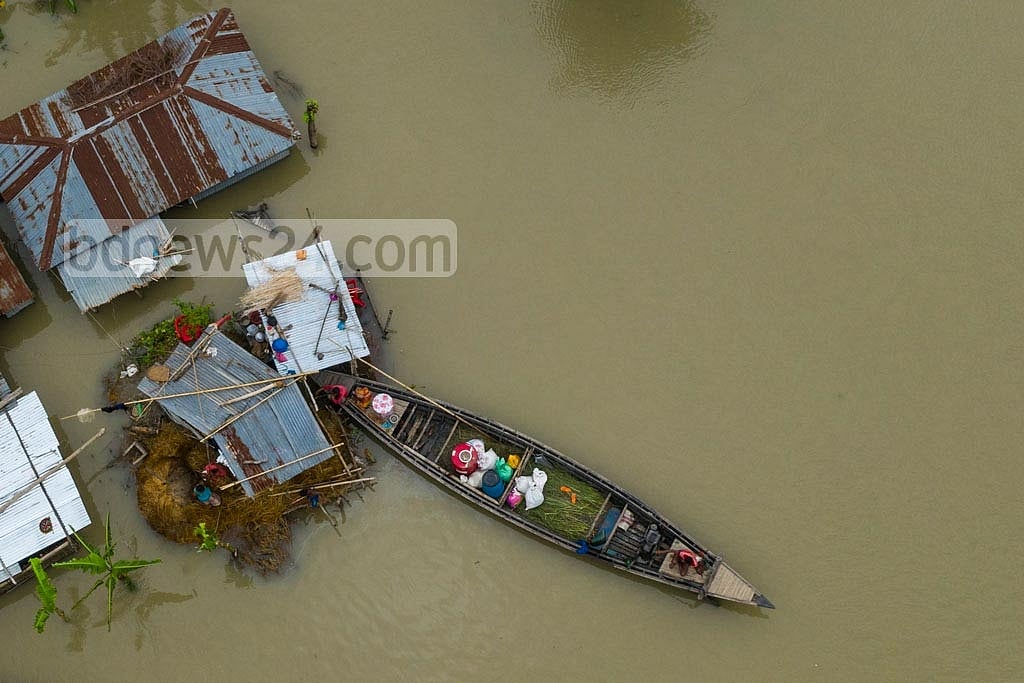

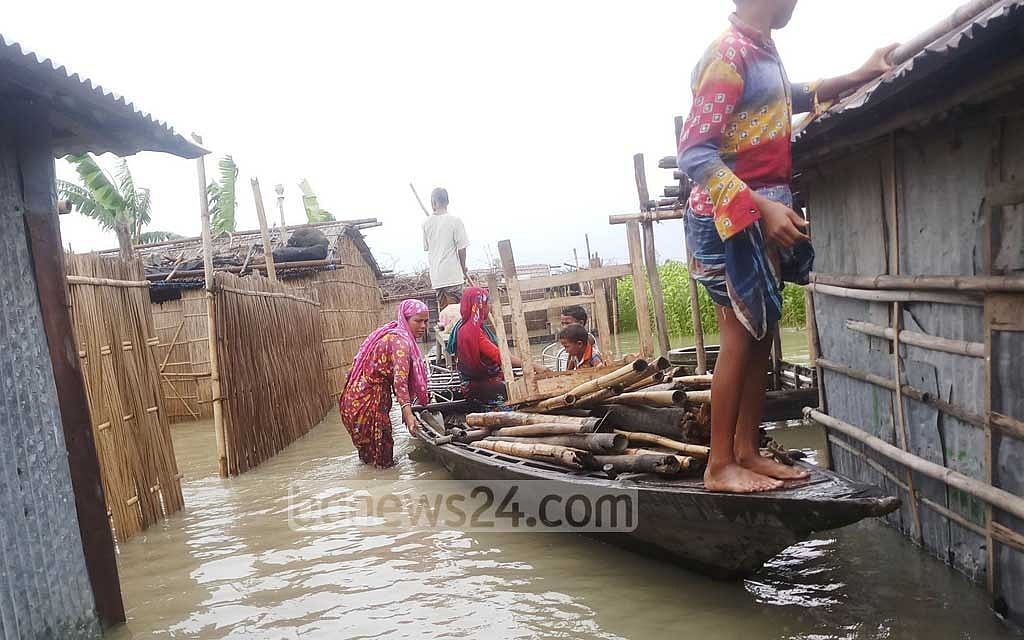
The floods this year have not spread to much of the country like previous years, but they have lasted longer in a sign that the nature of the natural disaster is “changing” at a time of climate change.
“It appears that the floods have come early this year. I don’t know whether the season of floods has advanced,” said AKM Saiful Islam, a professor at the Institute of Water and Flood Management in the Bangladesh University of Engineering and Technology.
As much as 42 percent areas of the country were flooded three years ago, but the floods did not last long like this year when 31 percent of the country has gone under water.
In 18 of these districts, water rose after receding three times, making entire July the month of flooding. Usually, floodwaters recede in Bangladesh after a week or two.
“The water cannot move and spread because many roads have been built and they have blocked the tributaries,” Saiful said.
“This is a new picture. It appears that the course of the flash floods have changed as well,” he added.
The expert warned that lengthy floods will cause damage to dams and riverbank erosion. “Erosion may become disastrous this year,” he cautioned.
The floods have caused scores of deaths as well. At least 96 people have drowned while 13 others died from snakebite, and eight more from lightning strikes.
Ayesha Akhter, the assistant director at Health Emergency Operation Centre and Control Room, said they have received reports of eight deaths and more than 1,200 new water-borne disease infections in the 24 hours to Sunday morning.
Medical teams from the Directorate General of Health Services were working in the affected areas. The government is also distributing water-purifying tablets and other drugs, according to her.













