


Published : 07 Jun 2016, 08:19 PM
Updated : 19 Oct 2022, 05:18 PM


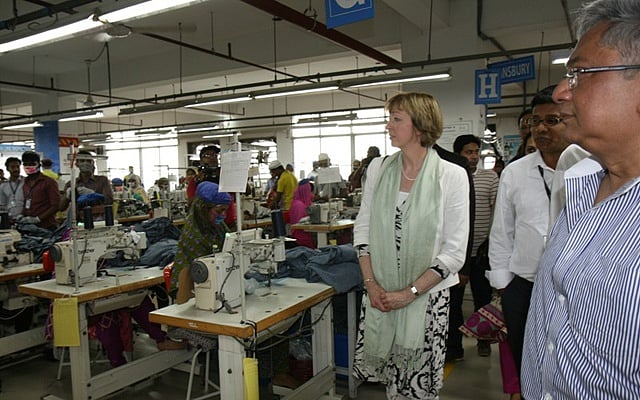
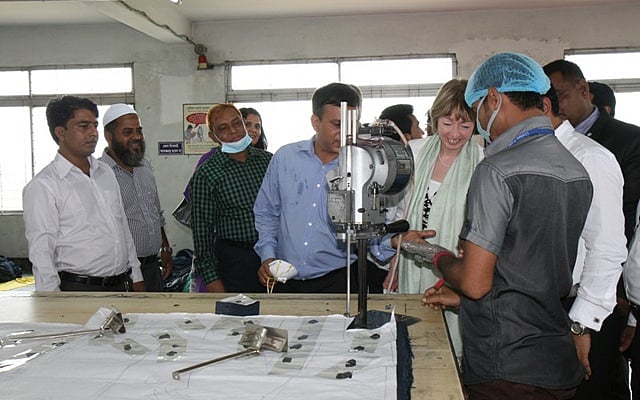
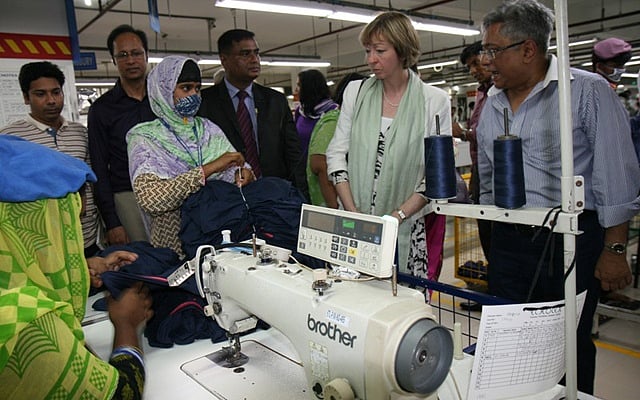
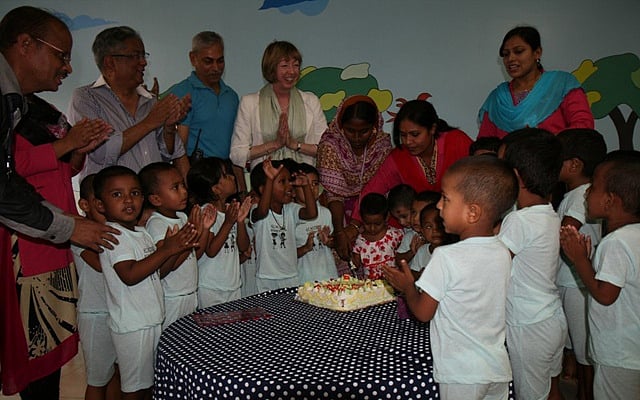
Alison Blake visited two readymade garment factories on Monday in Gazipur on the outskirts of Dhaka, where the British agencies finance skills development training.
The High Commission on Tuesday said during the visit, Blake reaffirmed the UK’s support for Bangladesh’s RMG sector.
The apparel sector plays an important role in sustaining Bangladesh’s economic growth and reducing poverty. It is also vital for women’s empowerment in Bangladesh, she said.
Since the Rana Plaza tragedy in April 2013, the UK has increased its support to improving safety and workplace conditions.
Britain also funds skills training for RMG workers to help them to contribute towards increasing the overall productivity of the sector.
At Echotex Ltd, the envoy visited the training centre and emphasised the importance of skills development.
“Investing in the skills development of its workforce, as Echotex has done using its in-house facilities, will help it do this,” she was quoted as saying.
At Dalas Fashions Ltd., the British envoy congratulated the factory on making progress to address remediation issues.
“While much progress has been made towards improving workplace safety in the RMG sector, continued efforts are needed to carry out factory remediation.
“It is important that momentum is not lost and that remediation remains a top priority for the industry,” she said.













