


Published : 03 Oct 2018, 01:01 AM
Updated : 19 Oct 2022, 02:20 PM


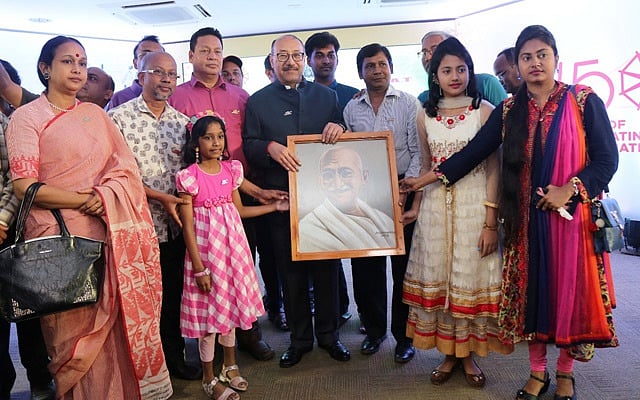
High Commissioner Harsh Vardhan Shringla inaugurated the programme at the chancery in Dhaka, recalling the relevance of Gandhi’s values and his teachings.
He also told the gathering about the initiatives being undertaken by the government of India to commemorate the 150th birth anniversary of Gandhi who is fondly called ‘Bapu’.
Around 300 admirers of Gandhi from all walks of life and various corners of Bangladesh, including Gandhi Ashrams in Barishal, Naogaon and Jamalpur, joined in celebrating the Indian independence hero.
Similar programmes were also organised in the assistant high commissions in Chittagong, Rajshahi, Khulna and Sylhet.
"Gandhi proved that non-violence can change history. Let us be inspired by his courage and conviction as we continue our work to advance peace, sustainable development and human rights for all of the peoples of the world," UN Secretary-General António Guterres said in a message.
The high commissioner quoted Prime Minister Narendra Modi’s write-up in newspaper: “He remains a shining beacon of hope for millions of people across the world who seek a life of equality, dignity, inclusion and empowerment. The impact he left on human society has few parallels.
“At a time when inequalities are not uncommon, Bapu’s emphasis on equal and inclusive growth can herald an era of prosperity for the millions on the margins. In an era where climate change and environmental degradation have become central issues of discussion, the world can refer to the thoughts of Gandhiji. More than a century ago, in 1909 he differentiated between human wants and human greed.
Quoting the late independence leader’s own words, High Commissioner Shringla said: "Non-violence is the greatest force at the disposal of mankind. It is mightier than the mightiest weapon of destruction devised by the ingenuity of man."
He said there would be number of events in commemorating Bapu’s 150th birth anniversary.
Tuesday’s commemorative event was jointly organised by the Indian High Commission and the Gandhi Ashram Trust, Dhaka.
The establishment of Gandhi Ashram Trust is rooted with the 'Peace Mission' of Gandhi immediately after the communal riots in 1946 at Noakhali.
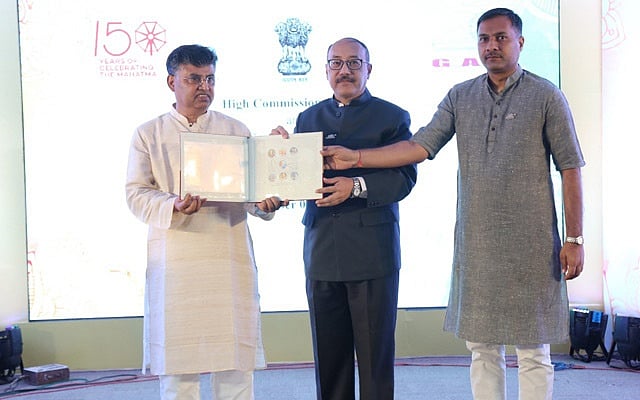
Gandhi Ashram Trust President Swadesh Roy also spoke on the occasion and together with the high commissioner, released the commemorative stamp on Gandhi. The stamp was earlier released by Prime Minister Narendra Modi in New Delhi on Tuesday.
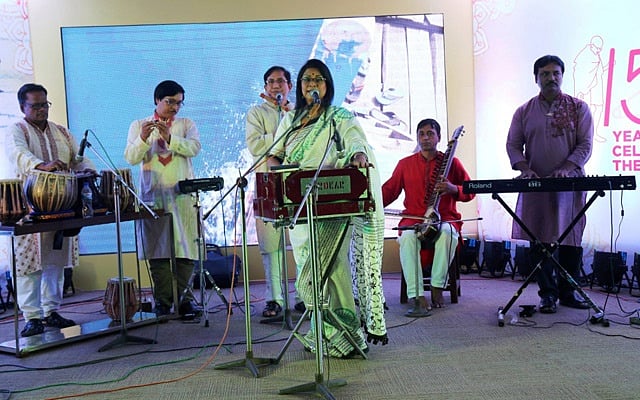
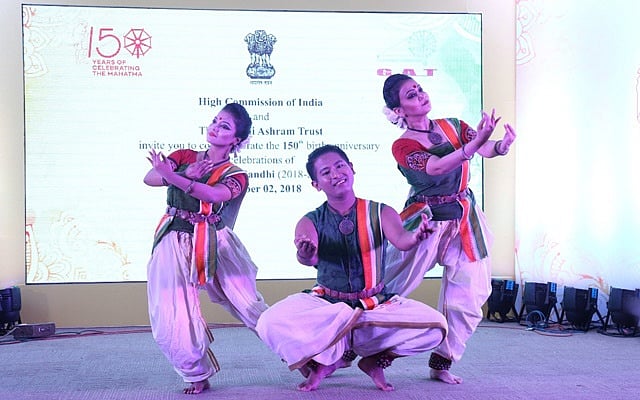
Tagore song exponent Rezwana Choudhury Bannya sang Gandhi’s favourite hymn ‘Vaishnava Jana Toh” to an enraptured audience followed by a cultural programme by the students of Indira Gandhi Cultural Centre, Dhaka who presented Gandhi’s favourite Tagore song.
Prizes were given out to the winners of the inter-school quiz competition Bapu@150 and the documentary “Mahatma: A great soul of the 20th century” was screened.
Guests were also given hampers of handkerchiefs made of Khadi, handwoven clothes which was popularised by Gandhi during the protests to boycott British products.













