Published : 03 Jul 2019, 05:08 PM
Updated : 17 Oct 2022, 11:42 AM


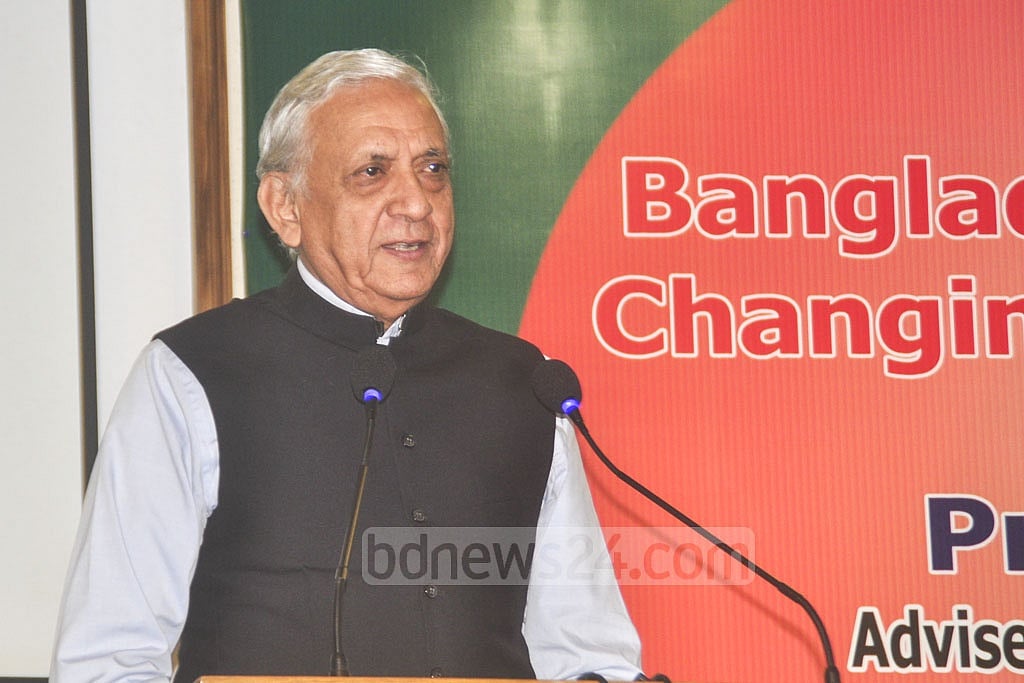
“But we’ve also other neighbours to take into account. We can’t ignore them. That’s why we’ve opened our trade and economic relation with China.”
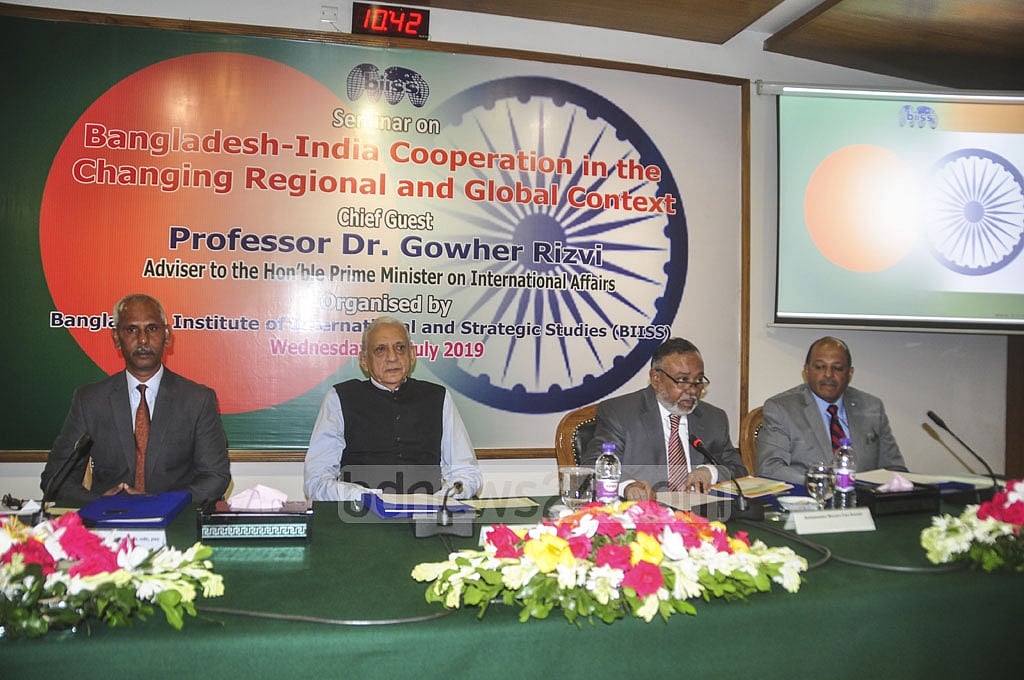
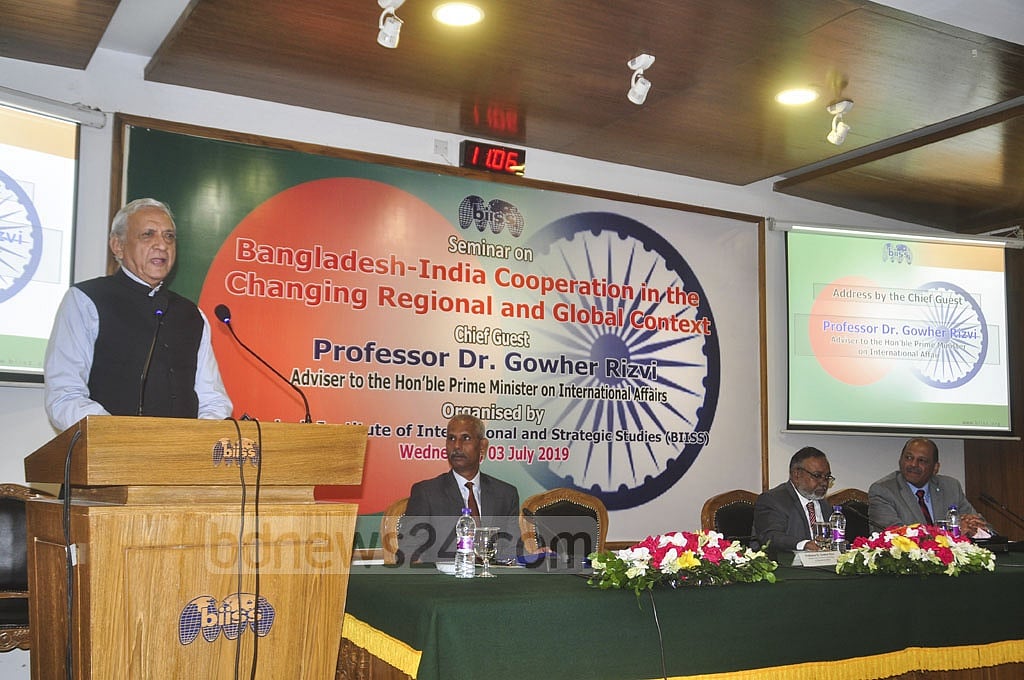
He was speaking at a seminar jointly hosted by the government think-tank Bangladesh Institute of International and Strategic Studies or BIISS and Indian think-tank Institute for Defence Studies and Analyses or IDSA in Dhaka on Wednesday.
As Bangladesh has aimed at to be a prosperous and developed country, its relations with neighbours are “extremely important”, said Rizvi.
Rizvi made the comment as the current “strategic partnership” between Bangladesh and China is a source of discussion in New Delhi. Bangladesh joined the much-hyped belt and road initiative which India did not. Prime Minister Sheikh Hasina is currently in Beijing at her first visit after coming to power for the third consecutive term.
The prime minister's international affairs adviser said Bangladesh as a sovereign state knows “how to maintain our independent position. This is not titling towards anybody,” he said while allying India’s concern about the relations with China.
The seminar at the BIISS discussed the India-Bangladesh relations in the changing regional and global context.
Rizvi termed the current global context “turmoil” in which he said, “The United States which traditionally upheld stability now becomes the source of instability”.
“The respect of international laws, international agreements, and bilateral agreements are being thrown in the bins,” he said. “We don’t know where and when it will stop.”
IDSA Director General Ambassador Sujan R Chinoy said both India and Bangladesh have “shared values and inter-connected destinies”.
“Today Bangladesh is the most important neighbour of India. Ties with Dhaka are the key pillar of India’s security,” he said, adding that Bangladesh for India is a “key player” in fulfillment of India’s east policy.
BIISS Director General Major General A K M Abdur Rahman spoke about the context of the seminar and said world economy is also “intricately linked with geopolitics”.
“As the world continues to shift from a unipolar to a multi-polar reality, the international system is exposed to profound instability.
“Regionally, both the Pacific Ocean and the Indian Ocean regions are becoming increasingly troubled waters due to great power rivalry,” he said.
“Therefore, an analysis of the balance of soft power between China and the US is required to understand the future trajectories of their economic and security potentials, and their abilities to provide public goods.
“However, while connectivity remains a crucial prerequisite for economic development, but a rule-based platform for such initiative is essential to ensure its feasibility,” he said.
Both India and Bangladesh have “a lot to contribute to the future of this region”.
“I firmly believe that if two countries can change their respective maps by exchanging of enclaves in one of the most peaceful manner, then I’ve all the reasons to believe all the outstanding issues between Bangladesh and India can also be resolved in a similar fashion,” he said.