


Published : 29 Apr 2020, 03:53 AM
Updated : 03 Aug 2022, 02:38 PM


The Geneva-based UN labour agency issued the statement on Tuesday as the pressure mounts on countries to ease their lockdown restrictions to tackle the economic downturn caused by the virus.
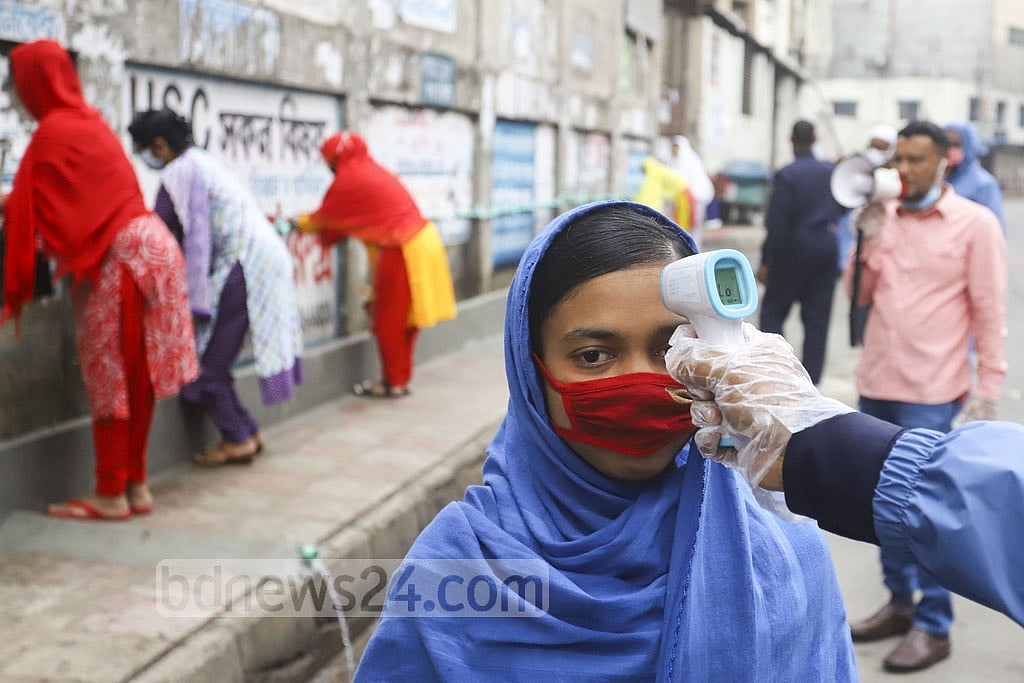
The call comes amid raising concerns as several factories in Bangladesh also resumed operations on Sunday, a month after a nationwide lockdown.
“As some industries begin to slowly resume operations, the ILO has developed a three-pronged strategy to ensure a safer return to work in the context of Bangladesh. The first step is the adoption of several safety and health measures at work based on dialogue between employers and workers, and a shared understanding of coronavirus risks," said Tuomo Poutiainen, country director of ILO Bangladesh.
"To prevent transmission of the virus and safeguard workers, the ILO has developed Covid-19 specific OSH guidelines, together with the Department of Inspection for Factories and Establishments (DIFE),” Tuomo Poutiainen added.
The agency called on governments to adopt protective measures, with active involvement and dialogue with employers’ and workers’ organisations.
All employers need to carry out risk assessments and ensure their workplaces meet strict occupational safety and health criteria beforehand, to minimise the risk to workers of exposure to COVID-19, the ILO said in a statement.
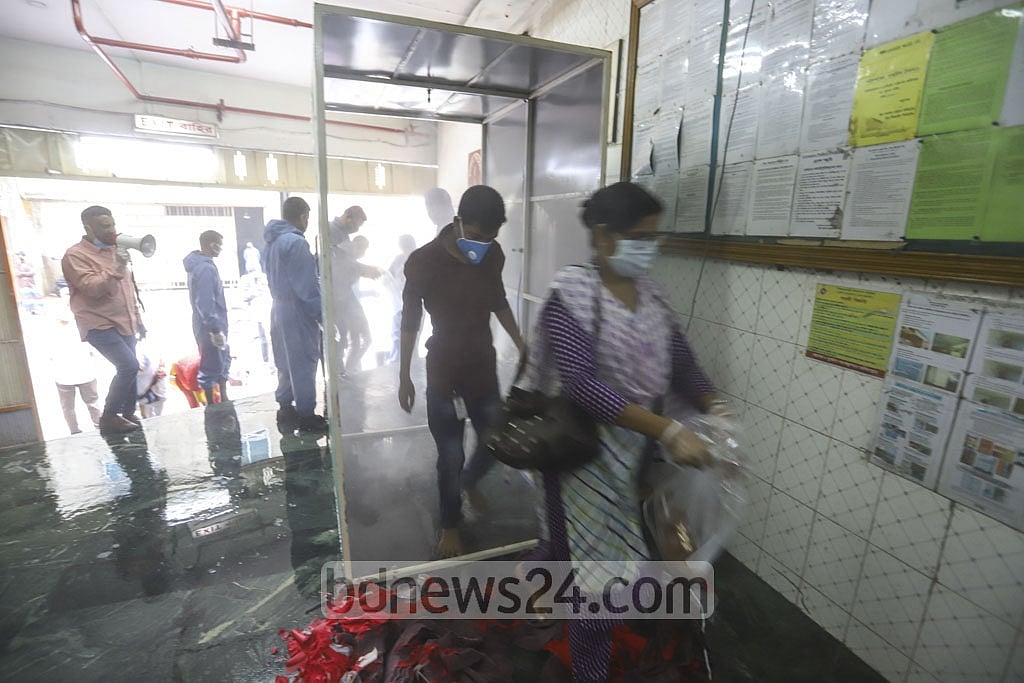
Workers entering the factory through a ‘disinfection tunnel’ installed to protect them from the coronavirus. Photo: Asif Mahmud Ove
“It’s only by implementing occupational safety and health measures that we can protect the lives of workers, their families and the larger communities, ensure work continuity and economic survival,” Ryder added.
Without such controls, countries face the very real risk of a resurgence of the virus. Putting in place the necessary measures will minimise the risk of a second wave of contagion contracted at the workplace, the labour agency said.
To ensure a safe return to work and to avoid further work disruptions, the ILO recommends mapping hazards and assessing risks of contagion in relation to all work operations, and continuing to assess them following a return to work, adopting risk control measures adapted to each sector and the specifics of each workplace and workforce.
These may include reducing physical interactions between workers, contractors, customers and visitors and respecting physical distancing when any interactions occur, improving ventilation in the work place, regularly cleaning surfaces, ensuring workplaces are clean and hygienic, and providing adequate facilities for handwashing and sanitisation, providing arrangements for isolating suspected cases and tracing every contact, providing Personal Protective Equipment to workers where necessary and at no cost, providing mental health support for staff and providing training, education and informational material about health and safety at work, including proper hygiene practices and the use of any workplace controls, including PPE.













