In a report released on Tuesday, it particularly focused on the government’s crackdown on civil society and the media and political opposition.
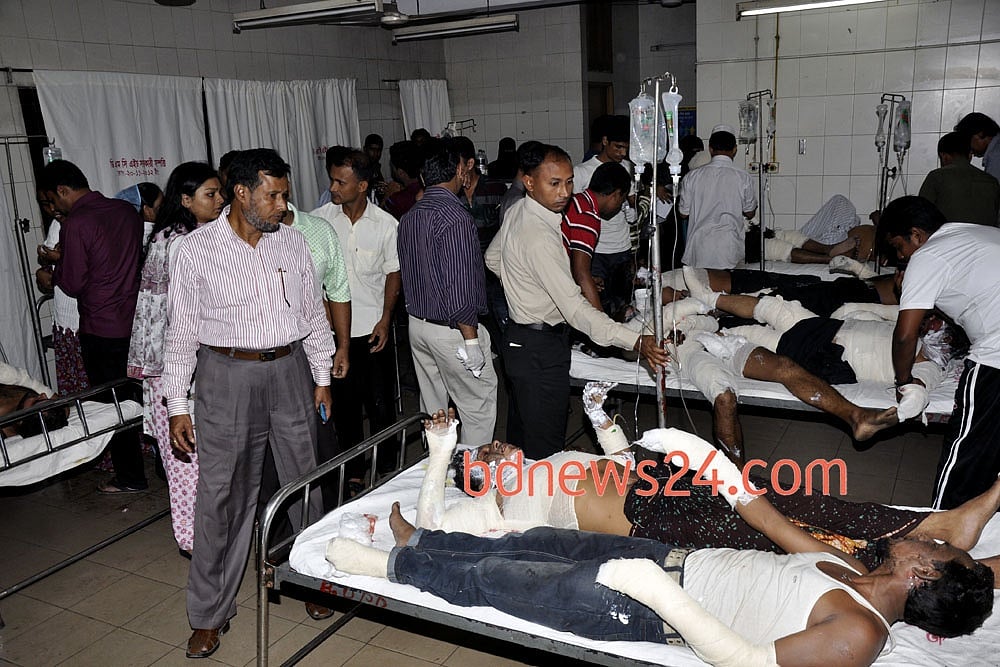
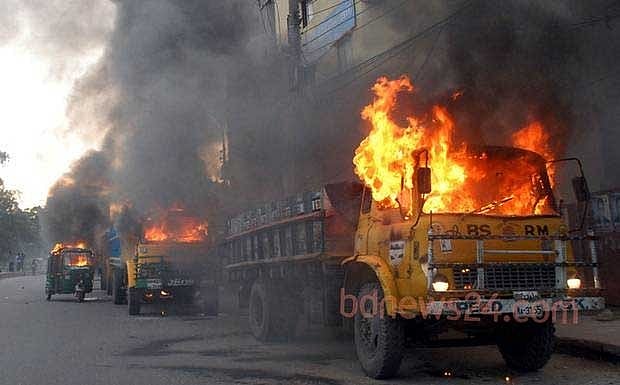
Nothing has been said in the report about killing of people by setting fire to or fire-bombing vehicles. No mention is there either about the Jamaat-e-Islami and its student wing’s attacks on law enforcers last year.
But it did not stop short of criticising the International Crimes Tribunal for trying war criminal Abdul Quader Molla.
The human rights organisation considered Adilur Rahman Khan and Nasiruddin Elan as victims of the government’s persecution though they were charged with distorting the report on the government move on Hifazat-e Islam in Dhaka City’s Motijheel.
The New York-based NGO, however, did not make any criticism of BNP, Jamaat and Hifazat’s violence in its annual report though these parties had also perpetrated violence during their movement.
The Jamaat was in the news for its violence against the trial of war crimes almost all of the last year. The Hifazat had agitated for fulfilling their demands against woman development and free mixing of sexes in public.

As for the BNP, it had also enforced prolonged spells of deadly general strikes and blockades demanding an election-time government when many people ended up dead with burn injuries.
The human-rights organisation, which has a controversial stance on the trial of crimes against humanity in Bangladesh, criticised the execution of war criminal Quader Molla.
He was executed on Dec 12 after having been sentenced to death by the International Crimes Tribunal. This evoked huge protests by some foreign quarters, including Pakistan and some human-rights outlets.
Molla’s family and defence had claimed that he was not that person who had, in fact, committed crimes against humanity. Later, Pakistan was up in protest terming him a friend of ‘United Pakistan’.
The government ‘arbitrarily’ arrested members of the main opposition party, the Bangladesh National Party, the human rights organisation said.
“Atheist” bloggers were arrested, as was a “prominent newspaper editor” Mahmudur Rahman. In August, human rights “defenders” Adilur Rahman and Elan were arrested, it added.
“The government also increasingly accused those who criticised its actions or policies, ranging from the World Bank to Grameen Bank founder and Nobel laureate Muhammad Yunus, of being involved in plots against it.”
On many occasions the government employed ‘violent and illegal’ measures against protesters, including against followers of the Hifazat-e Islami movement, the report said.
The Human Rights Watch also criticised the measures against those who had protested against the trials of suspected war criminals.
It criticised the government for ‘failing to initiate any investigations into ‘credible allegations of unlawful deaths’ at the hands of its security forces.
“Measures to protect labor rights after a series of factory deaths fell far short of international standards,” the Human Rights Watch added.
Asia Director at Human Rights Watch, Brad Adams, said, “This year has been tragic for Bangladesh, with political unrest leading to unnecessary deaths of protesters, security personnel, and bystanders.”
“Violent street protests broke out in Bangladesh in February and have continued through the year, killing nearly 200 and injuring thousands.
“While the political parties have failed to restrain their supporters from engaging in violence in the run to Jan 5 polls, state forces, on occasion, used excessive force to restore law and order,” it said.
“Despite pledges, the government failed to improve worker conditions in garment and other industries after the deaths of more than 1,100 workers in the April 2013 collapse of the Rana Plaza building,” said the Human Rights Watch.
“In a positive move…,” it said, “The courts also ordered all charges to be dropped against Limon Hossain, a young man shot and maimed by security forces in a botched operation in 2011.”
It also criticised the trial of the BDR mutiny, especially because of sentencing to death in trials ‘with serious due process concerns’.
“This government came to power promising democracy and a return to the rule of law, but instead has become increasingly authoritarian and intolerant,” Adams said.
“The crackdown throughout this year on any form of dissent has been shocking, and has exacerbated the country’s human rights crisis.”
The Human Rights Watch also criticised the International Crimes Tribunal for having issued an order on London-based magazine The Economist and many others for critical remarks and reporting on the tribunal.