


Published : 25 Apr 2021, 11:49 PM
Updated : 08 Apr 2022, 12:54 PM


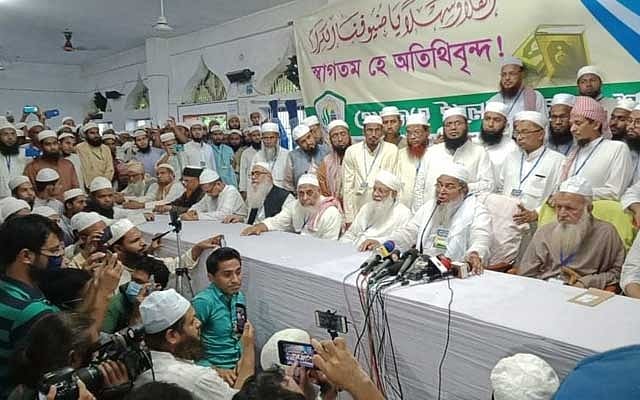
The radical group’s chief Junaid Babunagari made the announcement in a video message posted to Facebook on Sunday night.
The organisation took the decision considering the “overall situation of the country” and upon following advice of the key figures in the group’s central committee, he said.
Hifazat will continue its organisational activities through a new convening committee, he added without giving further details.
The Qawmi madrasa-based Islamist group has been under pressure due to arrests of its top leaders after violent and deadly protests against Indian Prime Minister Narendra Modi’s visit in March over his government’s policy towards Muslims.
Citing information gleaned during interrogation from the arrested Hifazat leaders, their mobile phones and footage of their speeches, the police say that they were planning to grab state power despite being an “apolitical” organisation.
Earlier on Sunday, the education board overseeing the Qawmi madrasas announced a ban on politics by the students and teachers of the institutions. Hifazat leaders are often accused of using innocent young students in violent protests.
After mayhem in Dhaka’s Motijeel in 2013 under the leadership of Shah Ahmed Shafi, Hifazat came under the spotlight in recent years over its position against statues.
Hifazat supremo Shafi died after resigning as the chief of the Hathazari Baro Madrasa of Chattogram in a meeting in September last year.
Shafi’s family alleged he died of “heart failure” due to “the stress from the unexpected” incident.
Following an investigation into a case over his death, the police said recently that they found Babunagari responsible for the death of Shafi.
After taking charge in mid-November last year, the new Hifazat leaders objected to the installation of statues of the Father of the nation Bangabandhu Sheikh Mujibur Rahman.
Mamunul Haque, who raised the issue of Bangabandhu’s statue first, was a joint secretary general of the new 151-strong committee headed by Babunagari, who strongly supported Mamunul.
Mamunul is among a number of top leaders of the group now behind the bars on charges that include the violence in 2013 and in March this year.













