


Published : 12 Aug 2015, 06:33 PM
Updated : 19 Oct 2022, 06:54 PM


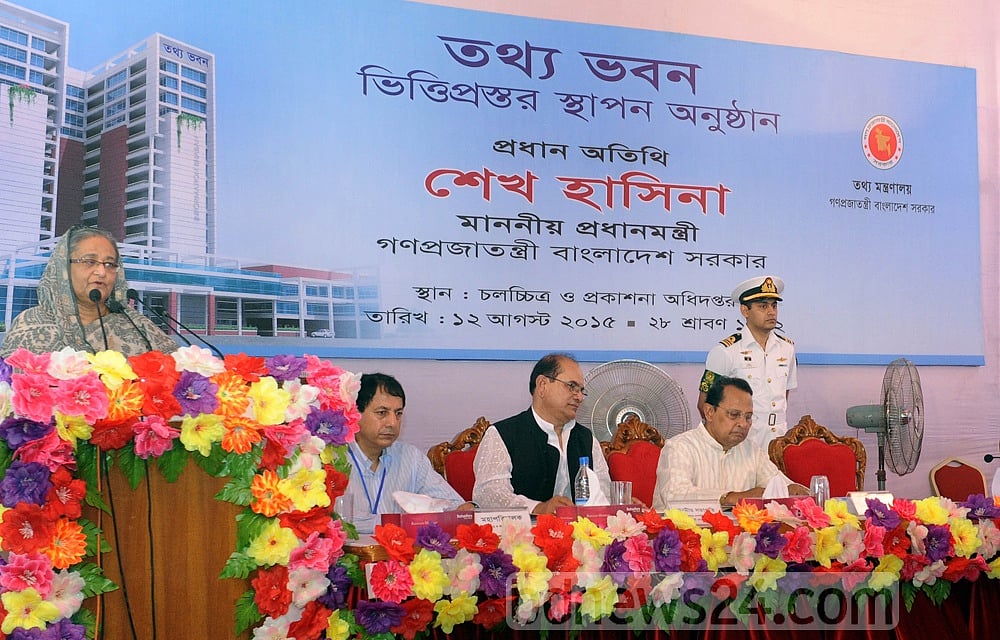
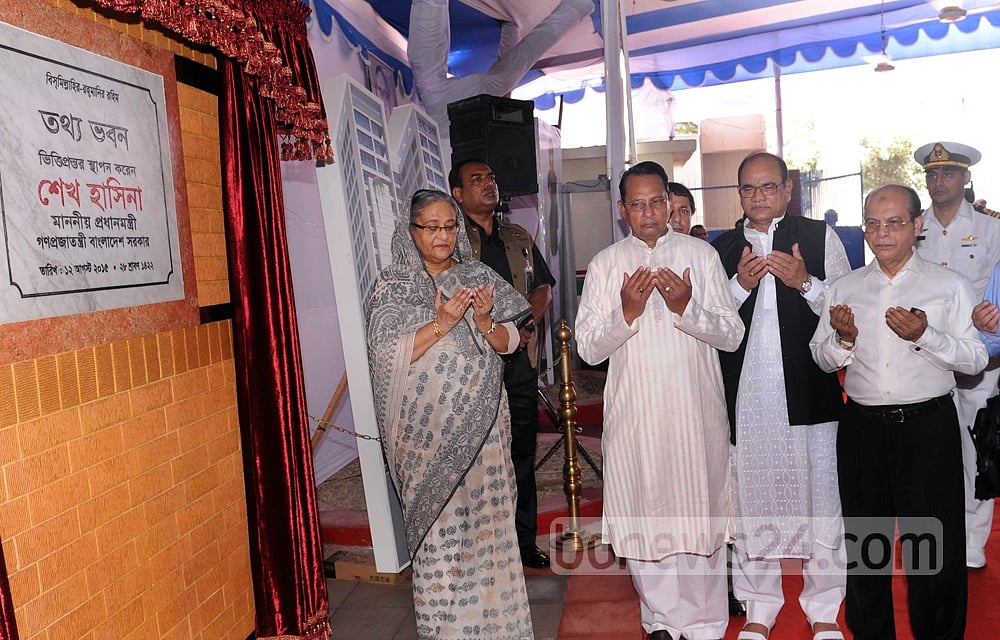
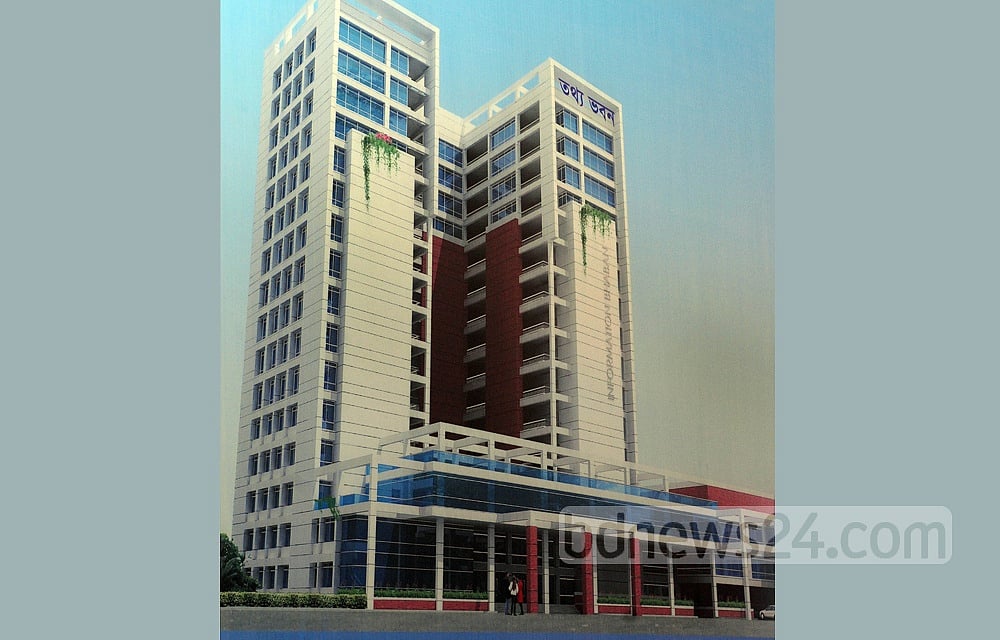
"Some of these people were bootlickers of military rulers, some enjoyed positions under successive military junta, some worked loyally for the men in uniform," a furious prime minister remarked at an event for laying the foundation stone of the "Tathya Bhaban" on Wednesday.
"These people never talked of democracy before, but as we make our system more and more free, the effect of democracy seems to rub on to them and they want more," she said.
"During military rule, was their conscience in cold storage?" she asked.
Hasina was reacting to the Tuesday discussion organised by the ‘Udbigno Nagarik Samaj’ (Concerned Civil Society) which called for a constitutional amendment to balance the powers of president and prime minister and suggested a commission to work that out.
"These people are not considering the adverse effect of such suggestions," said Hasina.
M Hafizuddin Khan, an adviser to the 2001 caretaker government headed by Justice Latifur Rahman, had attended the ‘Udbigno Nagarik Samaj’ programme on Tuesday.
Hasina had questioned the acceptability of the 2001 general polls held under Latifur Rahman’s administration.
Khan was the comptroller and auditor general before he was made an adviser.
Another member of the ‘Udbigno Nagarik Samaj’, former chief election commissioner ATM Shamsul Huda also served as the CEC during the regime of the military-backed caretaker government headed by Fakhruddin Ahmed in 2007-08.
Among the others to attend Tuesday’s ‘Concerned Civil Society’ initiative were Rasheda K Chowdhury, who served as adviser to the caretaker governments led by Fakhruddin Ahmed, political scientist Rounaq Jahan, local government expert Tofayel Ahmed and lawyer Shahdeen Malik.
Also were Central Secretary of SUJAN – Citizens for Good Governance – Badiul Alam Majumdar, Policy Research Institute of Bangladesh Executive Director Ahsan H Mansur and Manzoor Hasan, the Executive Director of the South Asian Institute of Advanced Legal and Human Rights Studies.
"These people cannot see any democracy anywhere in Bangladesh now. And they keep asking for more," said Hasina, adding: "We want more democracy and that is why is why these people can speak freely which they are doing."
"I have risked my life to rescue democracy," said Hasina, recalling her 11 months in a special prison during the military-backed caretaker regime before her return to power in the December 2008 election.
"Those who cannot find any democracy now should think of the situation before 1996 and between 2001 and 2008. I request them to compare the situation then and now," the prime minister said.
Bangladesh just had one government-sponsored TV channel, she said, but now it has 32 private satellite channels, 24 FM radio stations and 32 community radio stations.
"We gave the country so many private channels but I find it ironic that in most of them, we suffer the heaviest criticism," Hasina said.
"I am prepared for criticism but also please accept our considerable achievements and talk about them," she said.
Hasina said rich business people who control private TV channels must not just see it as business. "They should use the TV for development of the country."
About religion and secularism, Hasina made it clear her government would create a level playing field for all to practise their religion freely and without fear.
"But please do not hurt anybody's religious sentiment," Hasina said.
She warned against a surge of religious radicalism and said everyone should work to point out its dangers.













