


Published : 02 Oct 2016, 05:39 PM
Updated : 19 Oct 2022, 05:30 PM


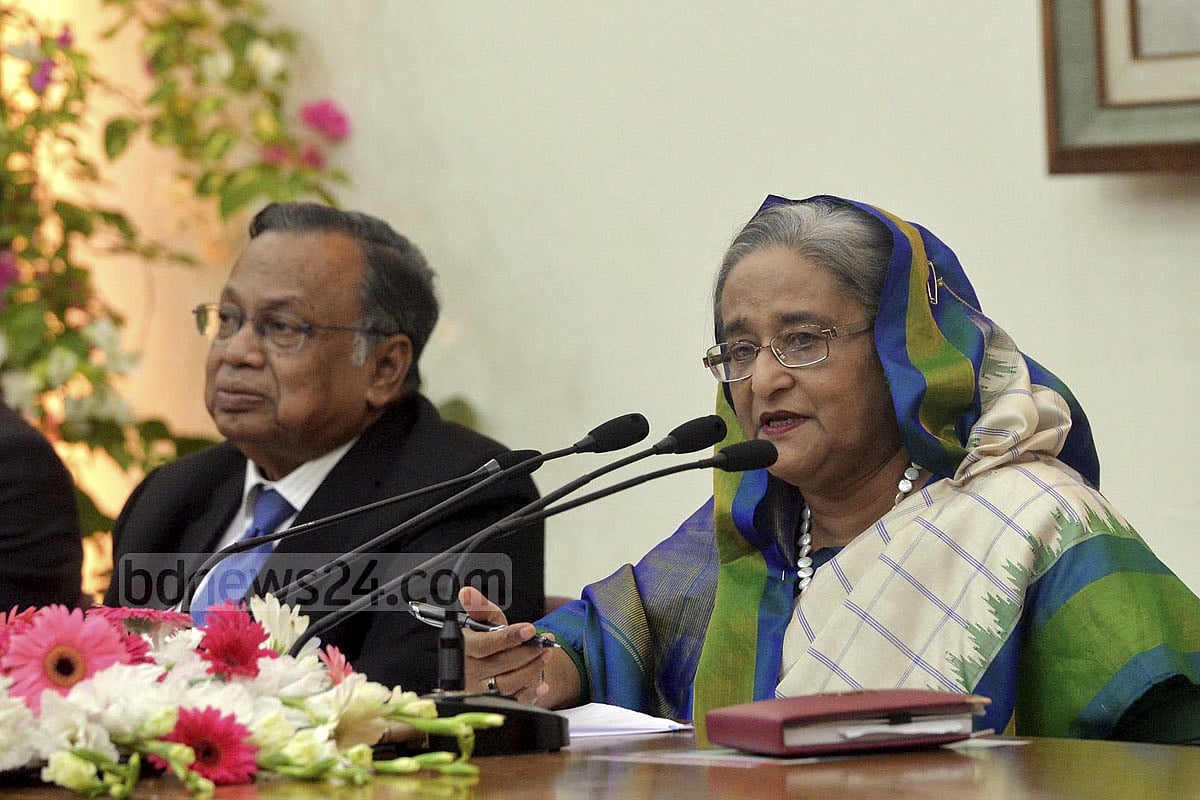
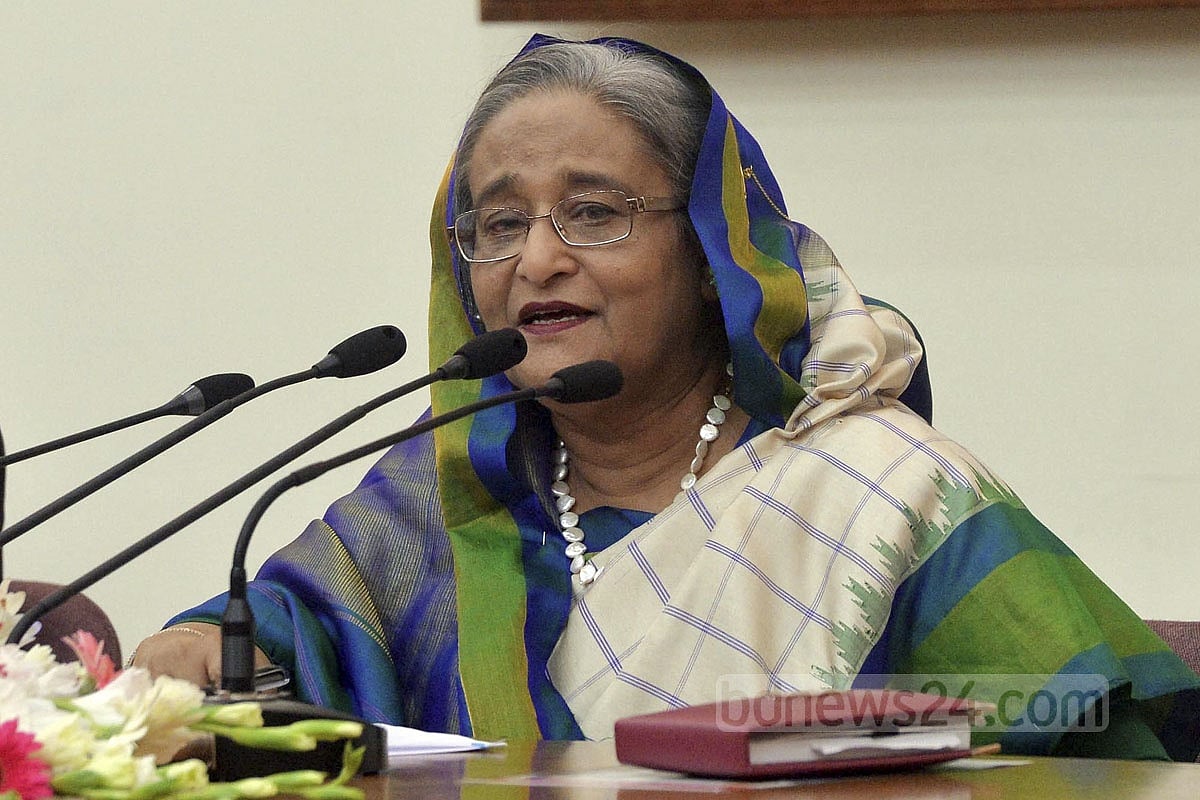
Her remarks came in her response to a question on Sunday at a press conference on her recent visits to Canada and the US.
In the question-answer session which followed the prime ministerial briefing, Daily Samakal Editor Golam Sarwar asked Sheikh Hasina how she planned to recast her party at its 20th national council slated for Oct 22-23.
The Awami League chief responded by saying that the changes would be made in line with recommendations made by delegates and councillors at the council session.
"It has been 35 years for me. I will be most happy if they give me the chance to retire."
"But I'll be here. I won't leave the party. But if a new leader is elected, I will be happier," said Hasina, daughter of Father of the Nation Bangabandhu Sheikh Mujibur Rahman.
After Bangabandhu's assassination in 1975, she was elected president of the Awami League in her absence in February 1981. She returned home from Delhi, where she had been living in exile, in May that year and took over the leadership of the party.
With Sheikh Hasina at its helm, the Awami League has gone to power three times in the 20 years since June 1996.
She led the party to power for the first time in 1996. The second time was in 2008 and the third in 2014.
The prime minister on Sunday said, "Handling so much responsibility in all this long time has not been easy."
She said the party would decide who would get what posts at the national council.
"Whatever I do, I always do it after taking everyone's opinion into consideration. Everything that has been done so far was done following recommendations from all. Everyone's opinion is still being taken. We are not sitting idle."
The Awami League was formed on Jun 23 in 1949 at Rose Garden in Old Dhaka's KM Das Lane. Among those instrumental in its formation were Moulana Abdul Hamid Khan Bhashani, Huseyn Shaheed Suhrawardy and Shamsul Haq.
Throughout the 1950s, a young Sheikh Mujibur Rahman, eventually to become Bangabandhu, remained busy in organising the party in every nook and corner of the then East Pakistan.
Bhashani left the party in 1957 to form the National Awami Party. Following the death of Suhrawardy in December 1963, Sheikh Mujib revived the Awami League, which had after the imposition of martial law in Pakistan in October 1958 become part of the National Democratic Front, and in 1966 announced a Six-Point programme for regional autonomy.
Bangabandhu was put on trial, along with 34 others, in the so-called Agartala conspiracy case in June 1968 but was released in the face of a mass upsurge in February 1969.
Under Bangabandhu’s leadership, the Awami League won a majority of seats, 167 out of a total of 313, at Pakistan’s first general election in December 1970.
Prevented from taking power by the Yahya Khan military junta, the party went for an armed struggle for Bangladesh’s independence in March 1971 even as Bangabandhu was arrested and flown to West Pakistan to stand trial on charges of waging war against Pakistan.
The War of Independence, led by Acting President Syed Nazrul Islam and Prime Minister Tajuddin Ahmad, culminated in the emergence of a sovereign Bangladesh in December 1971.
Bangabandhu returned from Pakistani incarceration in January 1972 and took over as prime minister.
Until Sheikh Hasina was elected leader of the Awami League in May 1981, the party had been divided into three factions with no single powerful figure to lead it out of the doldrums it was in.
Her arrival reunified the party, which would go on to wage a long struggle against dictatorship until December 1990.













