


Published : 08 Mar 2019, 01:55 AM
Updated : 08 Apr 2022, 02:04 PM


She said this is part of their “concerted” effort to drive women’s participation in higher education.
She spoke at a roundtable in the high commission on Thursday ahead of International Women’s Day on Friday.
In 2017-18, Australia delivered $1.3 billion in development assistance for gender equality and women’s empowerment worldwide.
In Bangladesh, Australia has contributed to the achievement of gender parity in primary education enrolments, and completion rates and continues to be a “strong supporter” of skills development for girls as part of the Gender Equality and Women’s Empowerment Strategy.
International Women’s Day is a time to celebrate and reflect on progress made but also to recommit to addressing persistent barriers to gender equality and women’s empowerment, the high commission said in a statement.
An all-female leadership team at the Australian High Commission - High Commissioner Niblett, Deputy High Commissioner Penny Morton and Senior Corporate Officer and Consul Sanuki Jayarajah, is driving change through their engagement on gender equality, it added.
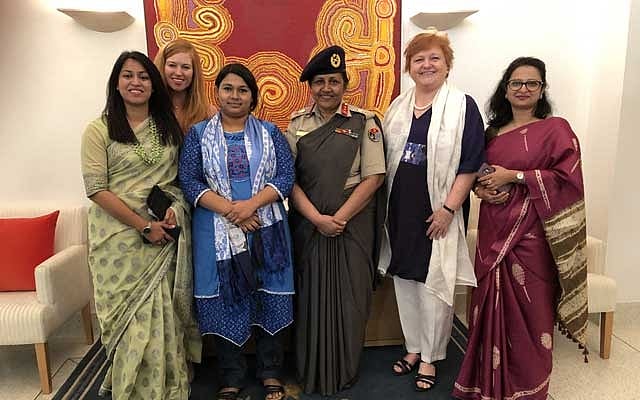
This year on the occasion of the International Women’s Day, drawing on the theme of ‘Think Equal, Build Smart, Innovate for Change’, Niblett hosted a roundtable discussion to celebrate the success of Bangladeshi women in non-traditional roles in the military, police, media and the engineering sectors.
The Australian High Commission celebrated with Bangladesh’s first female Major General Susane Giti, crime reporter for Ekattor TV Nadia Sharmeen, Additional Deputy Police Commissioner working on countering violent extremism Mahfuza Liza, and Associate Professor and Chairperson of the Department of Robotics and Mechatronics at Dhaka University Lafifa Jamal.
These trailblazing Bangladeshi women highlighted the importance of family support, especially of fathers and male family members, to their success in working in non-traditional fields.
The need for inclusive leadership in driving change was considered central to achieving gender equality.
High-level support was required, for example, to introduce policies that enable women to seek career advancement and leadership positions, such as maternity leave, flexible working arrangements and work-based child care facilities.
The discussion highlighted common threads in the challenges faced by women in Bangladesh and Australia including the need for equal pay for equal work, flexible working arrangements and recognition of caring responsibilities.
“Australia recognises the importance of empowering women and girls everywhere to seek opportunities in all fields, in Bangladesh, in Australia and elsewhere,” High Commissioner Niblett said.
“The participation of women is central to inclusive economic prosperity, social development and peace and security,” she added.













