


Published : 18 Apr 2016, 12:29 AM
Updated : 11 Apr 2022, 09:50 PM


The Memorial was built to mark the formation of Bangladesh's historic government-in-exile on Apr 17, 1971.
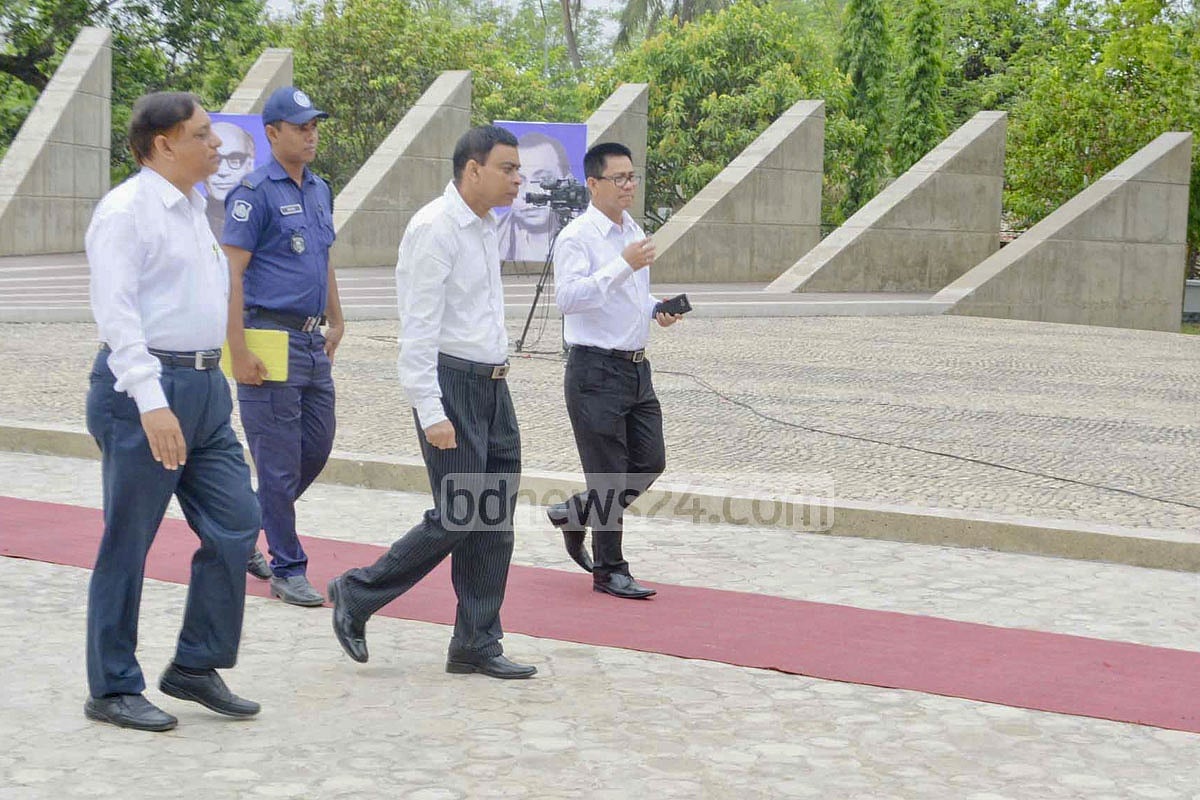
Meherpur Deputy Commissioner (DC) Parimal Singha, Additional DC Hemayet Hossain, Liberation War Affairs Secretary MA Hannan and Khulna Divisional Commissioner Abdus Samad visited the memorial around 9am on Sunday.
Despite instructions to take one's shoes off at the monument, they had them on, roamed around, and took photographs.
Locals, including freedom fighters, present there were upset with the disrespect shown to the monument.
DC Hemayet, however, regretted the incident, saying, “It was a mistake.”
The first government-in-exile was formed on Apr 10, 1971 in Kushtia district.
But the oath-taking of the exile cabinet was held on Apr 17 in a mango grove of Badyanath Tala on the Bangladesh-India border.
Later, it was renamed 'Mujibnagar' and the provisional government in exile there came to be known as the 'Mujibnagar Government'.
Mujibnagar was also declared the first capital of independent Bangladesh.
Vice president Syed Nazrul Islam took oath there as the acting president of the provisional government in exile in the absence of Bangabandhu Sheikh Mujibur Rahman.
The government consisted of Tajuddin Ahmad as the first prime minister, M Monsur Ali as finance minister, Khondaker Mostaq Ahmad foreign minister and HM Qamruzzaman as the home, and relief and rehabilitation minister.
Col Ataul Gani Osmani was appointed the commander-in-chief of the Bangladesh liberation army 'Mukti Fauj'.
Tajuddin Ahmad addressed the nation a day after the government was formed. With it, the world came to know that a government had been formed for a nation in the making.
The skilled leadership of the 'government-in-exile' won the war within nine months, paving the way for the birth of a new nation on Dec 16, 1971.













