


Published : 22 Jun 2022, 02:13 AM
Updated : 03 Aug 2022, 10:15 AM


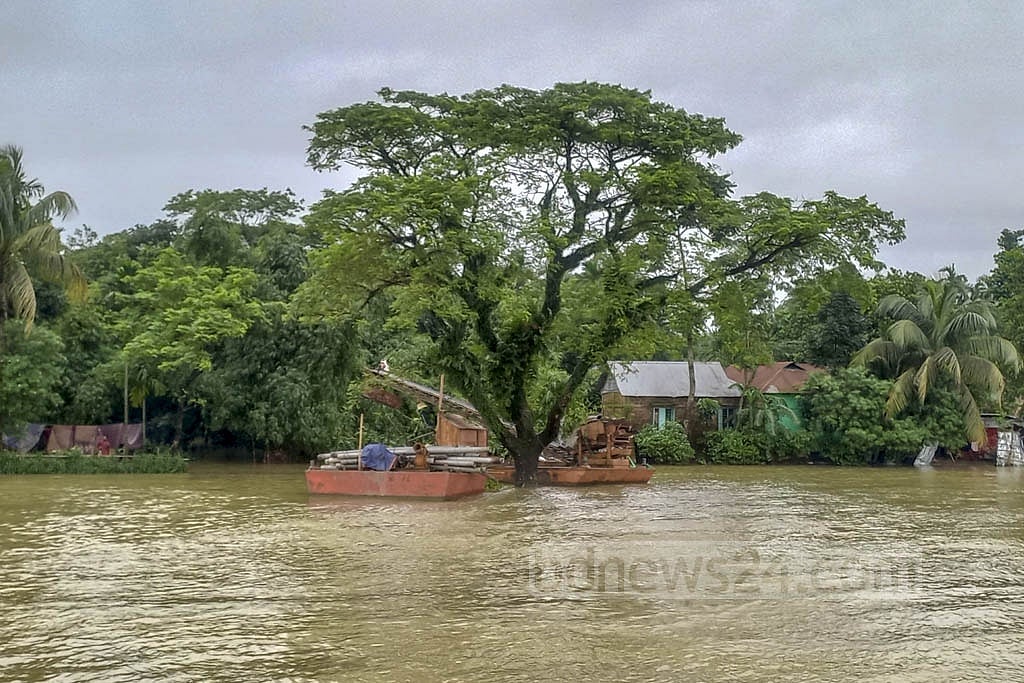
The Flood Forecasting and Warning Centre or FFWC on Tuesday said the flood situation in Sylhet, Sunamganj, Netrokona, Habiganj and Moulvibazar districts might improve with little possibility of heavy rains inside the country and upstream over the next 48 hours.
Md Arifuzzaman Bhuyan, executive engineer at the FFWC, said the waters of the Surma River have gone down a little since Monday but are still above the danger mark.
Professor AKM Saiful Islam of BUET's Institute of Water and Flood Management, however, thinks it may start raining again after Jun 28. "We may see another round of flooding. We can't say floods have stopped."
Prime Minister Sheikh Hasina visited flood-affected areas in Netrokona, Sunamganj and Sylhet on Tuesday and later gave instructions to the local administration and Awami League leaders to combat the flooding.
The people of Bangladesh are always confronting natural disasters and the infrastructure in disaster-prone regions should be built accordingly, she said.
The monsoon brings heavy rains to South Asia between June and October, often triggering floods, especially in low-lying areas like Bangladesh, where rivers swollen with waters pouring out of the Himalayas often burst their banks.

Particularly heavy monsoon rain has brought the worst floods in more than a century in some parts of low-lying Bangladesh and has killed at least 36 people over the past month.
As many as 17 people died by drowning, while 12 others were bitten by snakes as other reasons caused six deaths, the Directorate General of Health Services said. Among them, 18 are from Sylhet Division, 15 from Mymensingh and three from Rangpur.
The DGHS reported that 2,934 people were afflicted by flood-induced water-borne diseases from May 17 to Jun 20. As many as 2,179 of them were suffering from diarrhoea.
As the situation starts to improve in Sylhet, it might get worse in Kishoreganj, officials said.
Bogura, Sirajganj and Tangail districts might see things take a turn for the worse, according to the forecast.
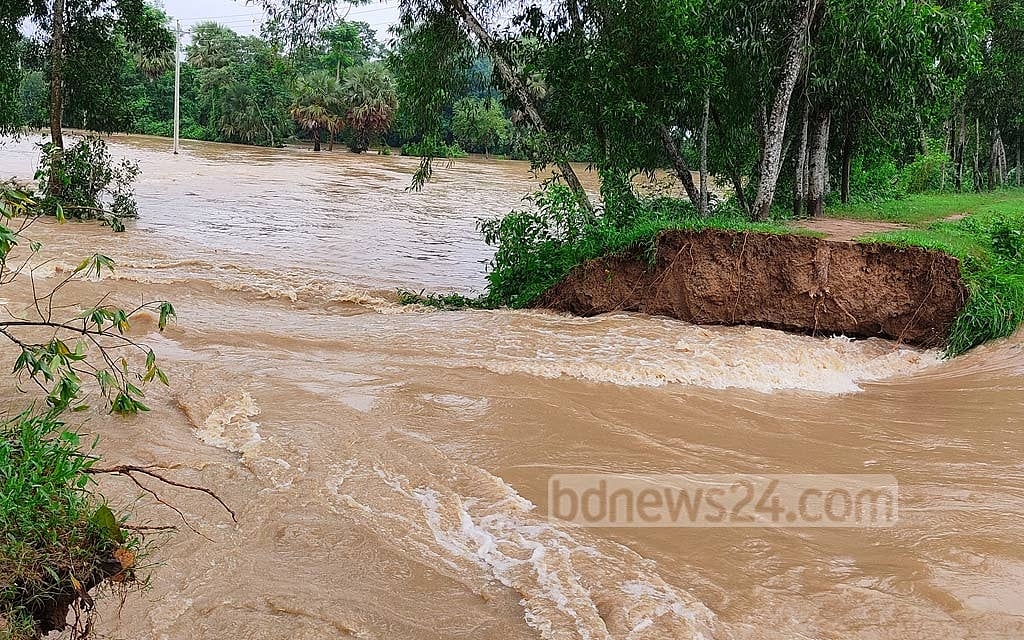
The Water Development Board said Shariatpur, Faridpur and Rajbari might be hit by floods in the next 24 hours with the water flowing downstream from the northeast of the country.
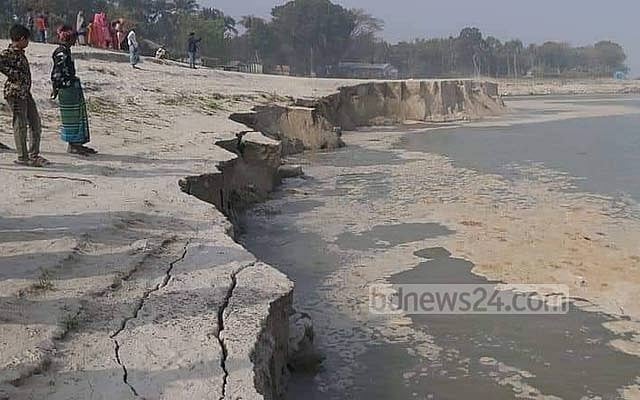
Meanwhile, in Faridpur, rising waters and strong currents of the Padma River caused the river protection dam and other structures to crack.
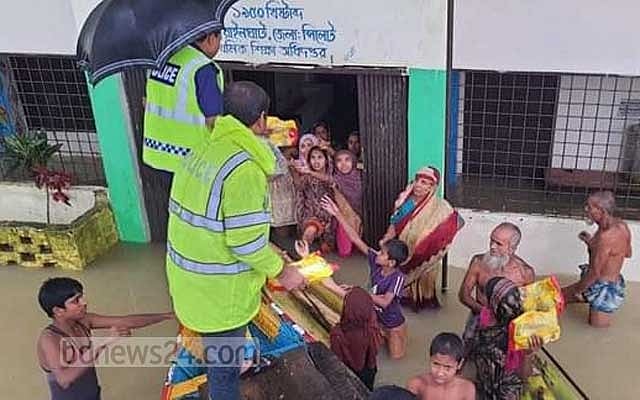
Flood-affected people sheltering at centres opened by the authorities in Sylhet complained of a lack of food while officials sounded helpless.
Alim Uddin and his family have been at Mirza Jangal Girls' High School in Sadar Upazila for six days. Well-off people in the neighbourhood provided meals to the people at the shelter sometimes. "We haven't eaten a full meal a day."
Asma Aktar and others at Kishorimohan Government Primary School also said they were skipping meals.
Bidhayak Roy Chowdhury, CEO of Sylhet City Corporation, said they allocated only 1 kg of flattened rice and 250 grams of molasses for each of the around 12,000 people at the 80 centres in the city.
Councillors and locals were also providing the people with food in the shelters, he said.
Mayor Ariful Haque Chowdhury said the government has allocated 30 tonnes of rice for around 250,000 flood-affected people in the city.













