Published : 27 May 2026, 03:31 AM
Updated : 28 Aug 2026, 01:34 AM


Not just cattle, but animal feed is also seeing booming business at sacrificial cattle markets.
Seasonal traders are earning up to Tk 100,000 a day by selling straw and grass.
At the same time, hundreds of temporary vendors selling wheat and chickpea bran, rice husk, and mustard seed husk are also making good profits at the markets.
After purchasing cattle from the market, buyers must continue feeding the animals until slaughter.
To keep livestock healthy, straw, fresh grass, bran and husk worth millions of taka are changing hands every day at the markets.
Buyers, however, are grumbling about the steep prices this year.
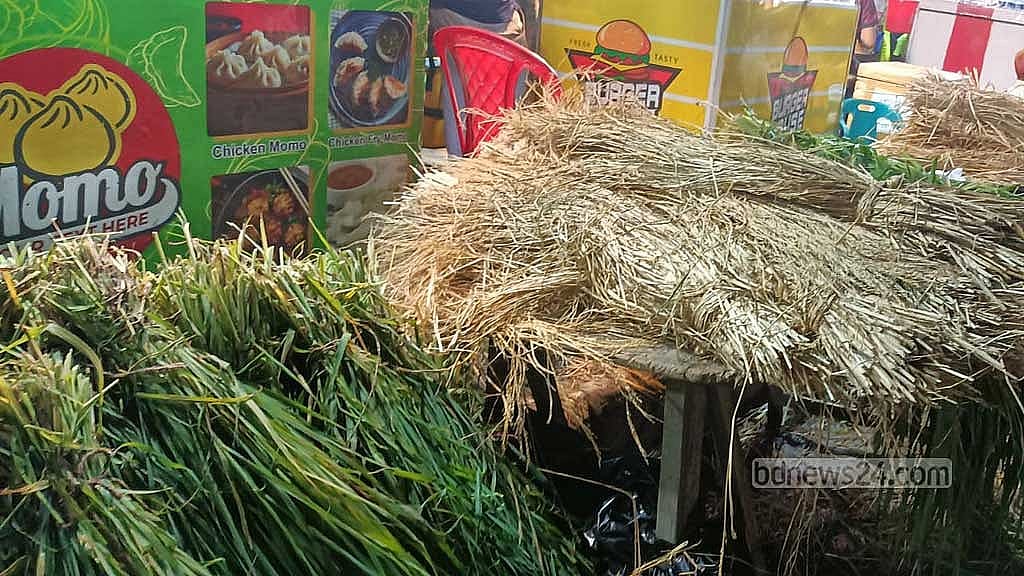
Visits to three cattle markets in Dhaka showed each straw and grass vendor turning over Tk 30,000 to Tk 40,000 a day, with sales surging on the eve of Eid to as high as Tk 100,000
At the entrance of Dhalpur Malatilata Kitchen Market near the Golapbagh cattle market, seven to eight animal feed vendors have set up stalls.
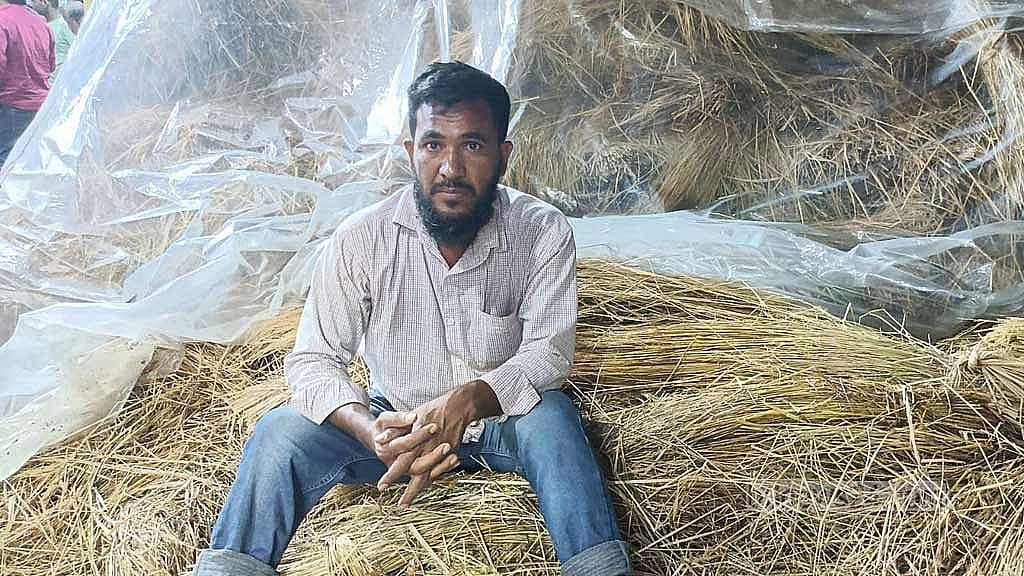
Among them is Md Alam from Dinajpur, a professional straw seller. He and his brother Jasim earn their living by selling straw year-round.
Speaking to bdnews24.com around 10pm on Monday night, Alam said: “My brother and I sell straw throughout the year. During Eid-ul-Azha we come to Dhaka. My brother sells straw at Shanir Akhra, and I sell it here.”
They collect straw from Dinajpur, Rajshahi, Jamalpur, and Sherpur and transport it to the capital.
According to Alam, the high cost of truck rentals and transportation has driven up straw prices.
“We buy straw cheaply from villages, but truck fares to Dhaka are high. The market space also costs a lot. Bringing one truck of straw from Rajshahi costs Tk 45,000.”
“The bundles of straw that we used to sell for Tk 15 now have to be sold for Tk 25 to Tk 30.”
When asked about earnings during the Eid season, he said: “When we return home, the two of us take back around Tk 500,000 to Tk 600,000.”
Unlike Alam, most of the other sellers at the market are seasonal traders. One of them is Shariful Islam Sagor, who sells straw, grass, husk, bran, and several other products.
He said, “I only set up shop during Eid-ul-Azha. I’ve been doing this for the past two years. I buy from wholesalers and sell in retail. In the last two or three days before Eid, sales usually reach around Tk 100,000 to Tk 150,000.”
It was learned that seasonal traders buy straw bundles at a wholesale rate of Tk 15–20 each and later sell them for Tk 30–40 per bundle.
Sohel Mia sells fresh grass at the Sultani market in Ghatarchar after cutting it from the riverbanks of Keraniganj.
He said, ““Depending on the size, small bundles of grass are selling for Tk 20 and larger bundles for up to Tk 50. I’m selling grass worth Tk 30,000 to Tk 40,000 every day.”
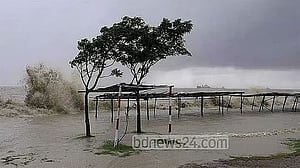
From Monday morning until noon, heavy rain and bad weather reduced sales. But when the weather improved in the afternoon, farmers, cattle traders, and Eid buyers flocked to the market for straw and grass.
Rain has also caused waterlogging at cattle markets across Dhaka on Tuesday, with Shanir Akhra market also under water and mud.
At the entrance of that market, seasonal vendor Amena Khatun was sitting on a wooden platform selling straw and fresh grass. bdnews24.com spoke to her at 11am.
She said, “At first sales were a bit slow. Last night business was good. But the morning rain reduced sales. Once the rain stops, sales will increase again. The cattle can’t stay hungry!”
Asked about daily sales, she referred to last year’s experience: “On the last day before Eid, profits are very good. Last year I sold nearly Tk 100,000 worth in one day. It could be the same this year.”
Amena is hopeful that sales will increase in full swing today and tomorrow.
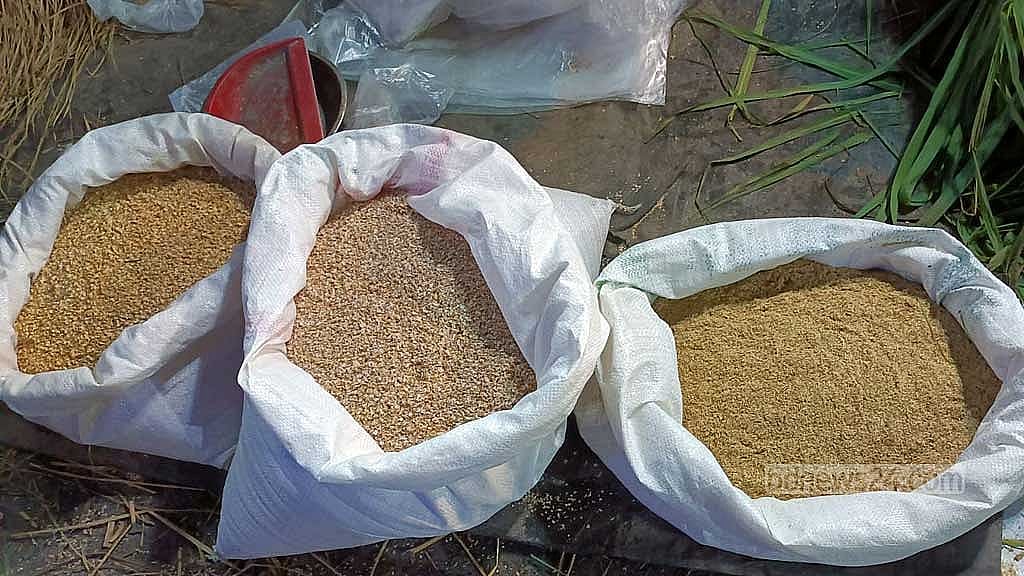
Meanwhile, wheat bran, chickpea bran, paddy husk, and mustard seed husk are also being sold in the markets.
Buyers are paying Tk 70 per kg for wheat or rice bran, Tk 60–70 for mustard seed husk, and Tk 40 for paddy husk.
At Golapbagh market, Rashidul Hasan is selling mixed granular cattle feed in small polythene packets for the convenience of retail buyers. Each packet is being sold for Tk 70–80.
Rashid said, “This arrangement is for people who buy one or two cows. These packets are in high demand.”
He added that several hundred packets are being sold every day.
Meanwhile, cattle traders and retail buyers are expressing frustration over the increased prices of animal feed at the markets. They say they are being forced to buy at these prices.
Mansur Ali Khan, a cattle trader from Kushtia who brought 18 cows to the Sultani market, said:
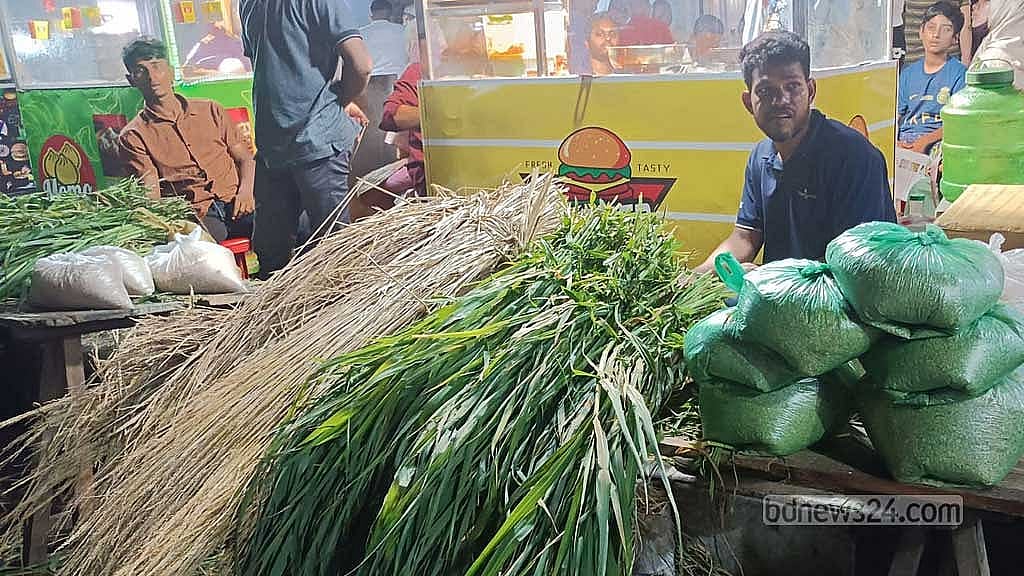
“When we arrived last Wednesday, we brought several sacks of straw with us. But those ran out within a few days.”
“Here in the market, they charge much higher prices for straw and grass. Back in our area, this grass is often thrown away, but here we have to buy each bundle for Tk 35 to Tk 40…”