Published : 27 Sep 2024, 07:44 AM
Updated : 21 Aug 2026, 11:55 AM


After becoming a mother, Dhaka resident Tanisha Ahmed found it challenging to continue her job. Family responsibilities made it difficult for her to leave her young child at home. Although her family was joint, she considered enrolling her child in a daycare centre. However, she felt uncertain about the quality of care provided by government-run child daycare centres and worried that her child would not receive the mental peace she desired.
While private centres offered better quality, Tanisha could not afford the higher fees. Ultimately, she chose to resign from her job.
Government facilities claim to provide activities like sports, art, alphabet recognition, nursery rhymes, and entertainment for the children of working mothers. However, these centres have yet to gain the trust of mothers.
Housemaid Asma Khatun has no relatives in Dhaka. Residing near the Rayerbazar killing ground, she worries when she leaves her two sons, aged 3 and 5, at home while she works.
When asked why she does not send her children to a daycare centre, Asma said: “There’s nothing nearby. I take them to my neighbour’s house instead.”
Officials from the Ministry of Women and Children Affairs say that 119 child daycare centres are currently operational, funded through the revenue sector and projects. Of the 43 centres under the revenue budget, 25 are located in Dhaka.
Additionally, the Ministry of Social Welfare manages 20 child daycare centres across the country, catering to children aged 5 to 9 years.
Under the women and children affairs ministry, there are six middle-class daycare centres in Mirpur, Azimpur, Eskaton Garden Road, Segunbagicha, the Secretariat, and Khilgaon.
Eight low-income centres are located in Moghbazar, Kalyanpur, Mohammadpur, Khilgaon, Rampura, Azimpur, Faridabad, and Kamrangirchar.

Officials say that if separate centres are established for the working women of the lower and middle classes, there will be no variation in facilities.
WHAT IS THE REALITY?
In Dhaka’s Adabor, there is a children's daycare centre serving working mothers from both middle and lower-income classes. Outside the centre, a citizen charter board displays 11 rules and benefits.
It says the centre operates from 8:30am to 5:30pm and offers balanced and alternative meals to combat malnutrition. Indoor play facilities are also promised.
However, the centres have yet to reach a level where mothers feel reassured about their children's care.
Upon visiting the daycare centre in Sunibari Housing, no children, teachers, or officials were present after 5pm, only a caretaker was there.
She said children arrive by 8:30am, but the “madam” arrives around 9:30am. To meet her, the caretaker advised visiting after 10am.
The centre spans about 900 square feet, with one room for studying, another for eating, one for napping, and one for play. There is also a toilet and a storeroom, with one room designated for administrative work.
Three years ago, a law was enacted regarding the establishment and operation of child daycare centres across public, semi-public, autonomous, and private sectors.
The following year, the Ministry of Women and Children Affairs prepared a draft of the “Child Day Care Rules, 2022.”

Although the draft regulations propose separate playrooms based on age, such provisions are absent at the Adabor child daycare centre. The draft policy specifies a minimum space of 3,000 square feet, averaging 50 square feet per child, which has not been adhered to.
The entrance and interior of the centre lack adequate lighting, necessitating the use of electric lights even during the day. The first room has no windows, and the air is stale. Some walls are stained with dirt, while others have peeling paint. The floor also appeared damp. Outside the building, spoiled food and rubbish attracted flies.
The draft regulations mandate the inclusion of breastfeeding corners and fire extinguishers in daycare centres.
Teacher Tanzila, known by her first name, said: “Children can be fed in the bedroom. However, there’s no breastfeeding corner or fire extinguisher. This is not a government building; it operates from a rented flat. I’m not aware of what arrangements are available in the building. I just joined a month ago.”
Daycare officer Shompita Sultana told bdnews24.com that they gathered all necessary information for establishing a breastfeeding corner in 2023, but work has yet to commence.
She was unaware of the mention of fire extinguishers in the regulations and said this would be communicated to the authorities.
When asked why the centre’s area is so small, she said: “There are no government buildings in the vicinity. No one wants to rent large flats for a daycare centre. Everyone demands advance rent, which is not within the government budget. Therefore, the centre operates in a small flat.”
Currently, the centre has no openings for new admissions. It accommodates 50 children, with an additional 15 on the waiting list.
In Lalmatia, the Mohammadpur daycare centre operates within a government building. On a recent afternoon, two officials and one caretaker were present.
The centre currently enrolls 80 children. Among the four rooms, one is designated for officials, while each has a toilet for children and staff.
Upon entering through the collapsible gate, two children were seen resting in the sleeping room. There were no beds; four mattresses were laid directly on the floor. The bed sheets and pillow covers appeared grimy.

When asked if he attended school, one child named Md Tamjid replied, “I stay here.”
A girl, approximately 4 or 5 years old, sat quietly on the stairs. When asked about playtime, she dashed into the inner room without responding.
Initially reluctant to speak, daycare officer Nisha Pal later said: “There are currently no vacant seats.”
One caregiver in the room said, “A few seats can be freed up for admissions.”
Nisha then said, “Children receive all facilities. The centre operates from 9am to 4pm, five days a week. Everyone receives the same meals.”
At this centre, children are served milk with semai or suji for breakfast. Lunch consists of rice paired with fish or meat on two days, eggs on two days, and vegetables and lentils on the remaining days. For the afternoon snack, biscuits, a fruit, and any two items of juice are provided.
However, the draft regulations do not ensure the provision of separate, balanced meals based on the children’s ages and health. Infants under 6 months are not admitted here.
Nisha said, “We do not admit children under 6 months to 1 year. These infants require individual caregivers, which we do not have here.”
When parents requested to see inside the daycare centre, the official said: “There’s no provision for tours.”
When contacted, daycare officer Kamrun Nahar acknowledged the crisis, saying: “Everything is very limited here since it’s all government-operated. We have two maids, two caregivers, one cleaner, and one caretaker.”
She told bdnews24.com about the differences in service quality among several daycare centres, saying: “The service quality for lower-income, middle-income, revenue, and project-based daycare should not differ. If the centre’s officials perform their duties correctly, there should be no such disparity. All daycare centres under revenue and projects have the same salary, food, and routine.”

For the children of working mothers from lower-income backgrounds, these two centres charge Tk 200 for admission and Tk 100 monthly as fees.
DAYCARE SERVICES QUALITY VARIES SIGNIFICANTLY
Panthapath’s Pani Bhaban hosts a daycare centre under the Department of Women and Children Affairs project.
A visit to the daycare centre on the ground floor of the building revealed a stark contrast in the environment and quality of services compared to the two revenue sector centres.
The entrance to the centre is wide and well-ventilated, with 60 seats available.
The admission fee is Tk 3,150, with a monthly charge of Tk 1,200 for children aged two and a half years.
The centre offers a varied menu, with semai for breakfast, khichuri with meat for lunch, and vegetable and chicken soup in the afternoon.
However, the same meal is not provided every day, and there is no differentiation in meals based on the children's ages.
Twelve staff members are responsible for the care of the 60 children, and the facility includes a breastfeeding corner, CCTV cameras, and fire extinguishers.
The entire centre spans 4,500 square feet.
While this project-based centre offers more facilities than revenue sector childcare centres, it is still not fully equipped. A musty odour was observed within the premises.
During the visit, a caregiver was observed reprimanding a crying child, asking, “Why are you crying?” This only caused the child to cry louder.
Outside the centre, a mother working at a private university said: “Where else can I find a daycare of better quality? Some issues must be accepted.”
Although meals are provided at the daycare, she still cooks for her child at home.
In the office area, a couple was requesting daycare official Sultana Poli to admit their child because the child’s grandmother would be leaving home for a while, and the costs at private centres are too high.
However, with no available seats, Poli told them: “This centre is fully booked. There are 105 children on the waiting list.”
Meherunnesa Moni, assistant director (daycare branch) of the Department of Women Affairs, told bdnews24.com: “While the regulations are in place, they have not been fully implemented.
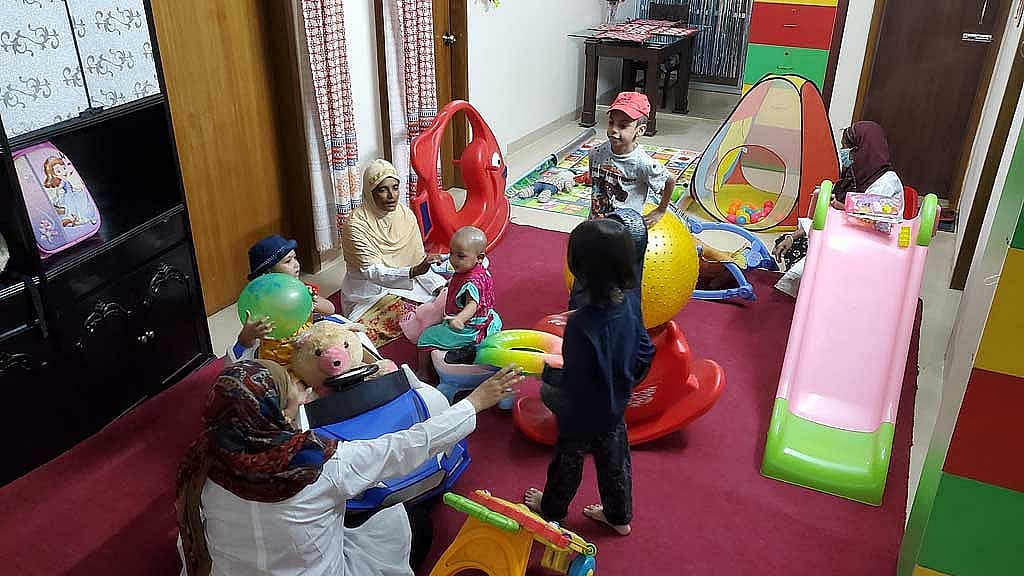
There is a difference in the quality of services between revenue sector centres and those under projects. Revenue centres have a lower budget and lack qualified health teachers. These weaknesses contribute to the disparity in service quality.”
The quality of services is reportedly so poor that middle-class mothers are discouraged from enrolling their children in revenue sector centres.
Moni said children of garment workers, factory labourers, and domestic workers typically attend these centres.
She acknowledged the shortage of childcare centres in the country, which leaves many parents unable to secure placements for their children.
“There should be area-based daycare centres, but we do not have them in our country. However, to alleviate the crisis, plans are underway to construct 60 more centres nationwide, although operations have yet to begin even after a year,” she added.
HIGH COSTS IN PRIVATE DAYCARE CENTRES
The monthly cost for a child in a private daycare centre ranges from approximately Tk 8,000 to Tk 15,000, depending on location, quality, and the child's age.
Kids Paradise BD, a private daycare centre located on Road No. 28 in Dhanmondi, primarily caters to relatively affluent mothers who enrol their children there.
The centre’s director Tanima Farhana said, “Higher costs are necessary to maintain quality of service, and rental prices are also steep. Stringent regulations for private centres have led to the closure of many daycare facilities, creating difficulties for working mothers.”
She suggested that government incentives and training are needed to lower costs in private centres, along with the improvement of government facilities and an increase in project-based centres.
Tanisha left her job a few years ago. Although she was satisfied with the private centre's services but could not afford the high costs.
Reflecting on her experience, she said: “If private fees were within my budget, I could have enrolled my child there and possibly continued my job.”
NECESSITY OF DAYCARE CENTRES IN WORKPLACES
The Labour law mandates that workplaces with 40 or more women must provide separate facilities for children under six.
However, the actual number of daycare centres in workplaces remains low.
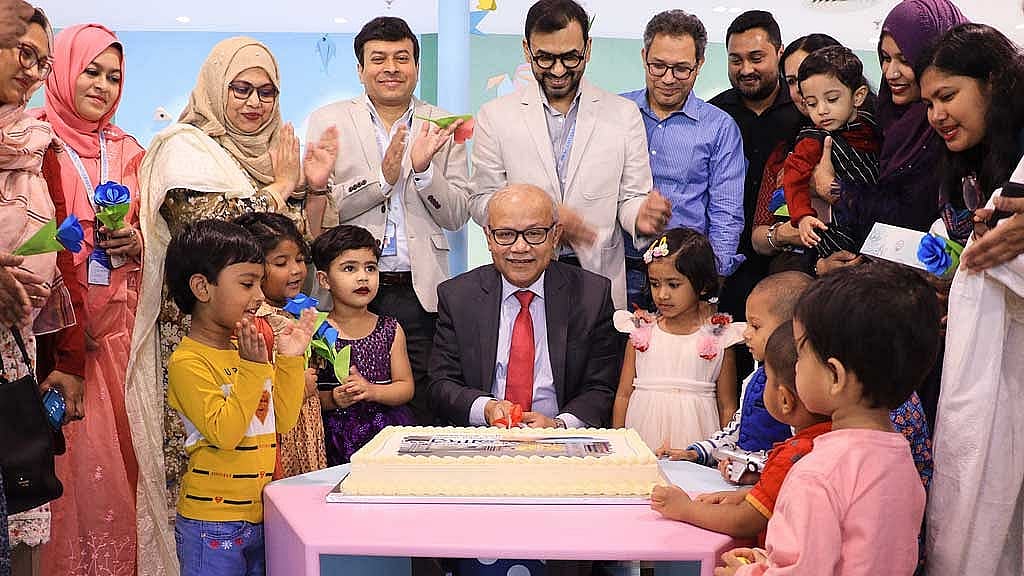
In 2016, a centre named Pushpita was established in Motijheel’s Dilkusha commercial area, initiated by 21 private banks.
BRAC Bank opened a daycare facility called “Crèche” at their headquarters in Tejgaon in 2017, followed by “Ador” at BRAC University in February 2024.
The Ador centre cares for the children of BRAC University teachers and staff, accommodating about 30-35 children at a minimal cost according to the university's Office of Communications.
Dhaka University also has daycare centres in two faculties and an institute, taking care of 45 children in the Institute of Education and Research, 25 in the Faculty of Business Education, and 10 in the Faculty of Social Sciences.
Women affairs department’s Meherunnesa emphasised the necessity of daycare centres at workplaces in addition to government and private facilities.
She told bdnews24.com, “There should be private institutions to enhance the quality of daycare services, where staff can receive training.”
When asked about the delay in finalising daycare regulations after two years, she said: “There are still areas that require review. However, the authorities can better explain the reasons for the delay.”
[Writing in English by Arshi Fatiha Quazi]