Published : 15 Nov 2024, 08:03 AM
Updated : 28 Aug 2026, 01:14 AM


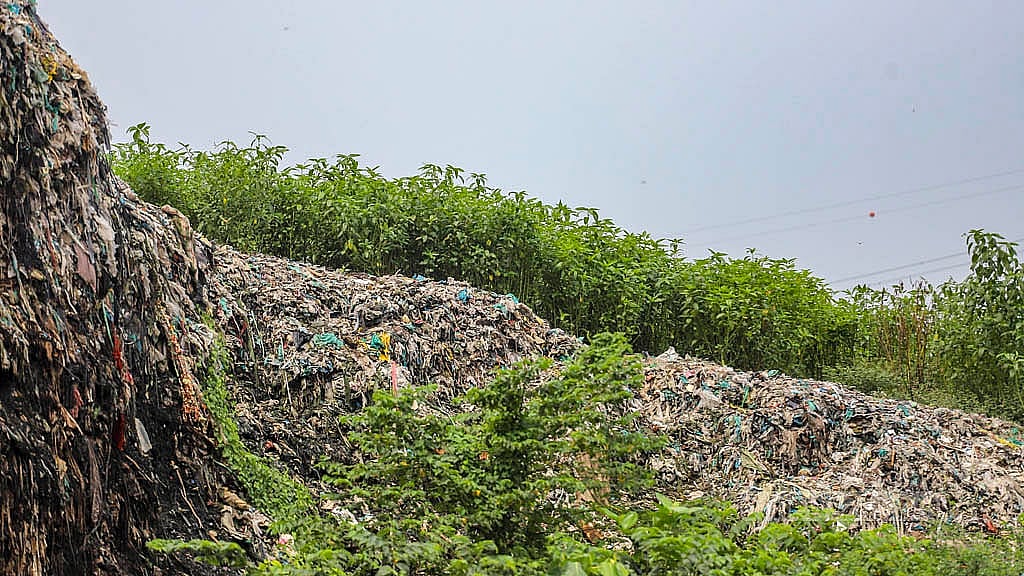
Rising atop towering heaps of waste, patches of red amaranth stand tall, Malabar spinach leaves spread wide, and bottle gourd vines creep across the ground.
This is not a village vegetable patch; it is what one sees upon visiting the Matuail sanitary landfill, the largest waste disposal centre where Dhaka South City Corporation dumps garbage.
Spread over several hectares, red spinach, Indian spinach, jute leaves, pumpkin, mustard greens, and other vegetables are grown here and eventually make their way to the kitchens of Dhaka residents.
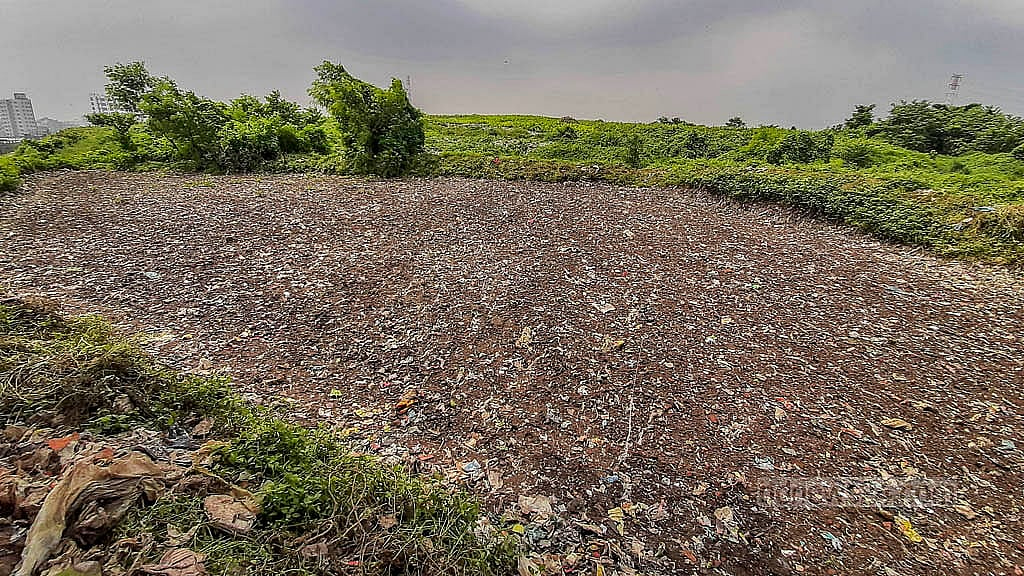
In Dhaka’s two city corporations, the current waste collection system lacks segregation. Waste is collected in three-wheelers, transported to secondary transfer stations or regional waste containers, and then deposited at the landfill sites.
This raises questions: how safe are vegetables grown in an area almost certainly containing health-hazardous waste?
Dhaka has faced such health risks before.
In 2019, farming fish in 16 lagoons at the Pagla Sewage Treatment Plant in Shyampur, run by Dhaka Water Supply and Sewerage Authority, or WASA, sparked widespread criticism.
Now, vegetable cultivation is taking place at the environmentally hazardous Matuail landfill.
Allegations have surfaced that these farming activities occur with payments to the city corporation, though the corporation denies this.

WHO’S RESPONSIBLE FOR THIS FARMING?
Obtaining information from those farming in the Matuail landfill was challenging, as they were hesitant to speak openly with the press.
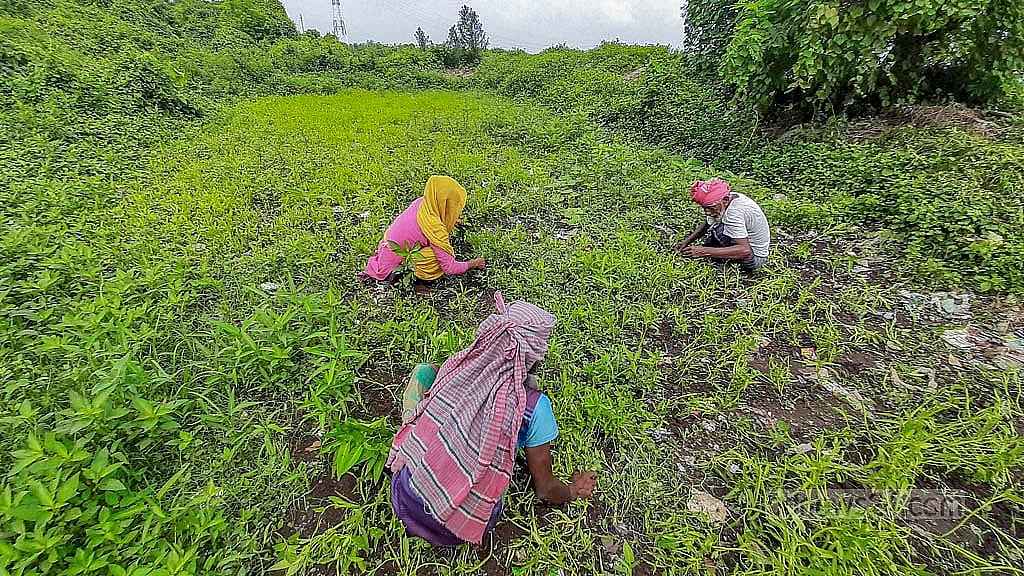
Delwar Hossain, one of the farmers, told bdnews24.com that he cultivates red spinach, radish greens, and Indian spinach across nearly 0.607 hectares.
He has already harvested and sold some of the greens and expects to gather bottle gourd and mustards soon.
When asked where the vegetables are sold, Delwar said: "I sell them wholesale at Jatrabari, at Tk 10 to Tk 20 per bunch. After that, I don’t know where they go. Some buy directly from me too."
On the question of who permitted him to farm there or if he pays anyone, Delwar was initially silent, then simply replied, "city corporation."
Mowallem Sardar, a nearby factory worker, told bdnews24.com: "Some locals farm here. The city corporation provides the space and collects money in exchange."
He added, "These vegetables mainly go to the Jatrabari wholesale market, with some also reaching Karwan Bazar."
Sanitation worker Jahanara Begum confirmed this information, saying, "Farmers come here in the morning, pick vegetables, and take them to Jatrabari or local markets. This has been going on for years."
RESEARCH FINDINGS
While no specific study has yet been conducted on vegetables from Matuail, research by the Bangladesh Food Safety Authority recently examined the presence of harmful substances in vegetables and fruits, revealing traces of heavy metals and pesticide residues.
On Sept 23, the findings were presented at the Food Safety Authority’s training room.
The research team collected a total of nine types of vegetables from six districts in Dhaka and Mymensingh divisions. These included potatoes, eggplant, okra, tomatoes, red amaranth, pointed gourd, cabbage, cucumber, and green peas.
Prof Shafiqul Islam and Associate Prof Mohammad Golam Kibria from Bangladesh Agricultural University led the study on the presence and concentration of heavy metals in vegetables.
The study found high levels of heavy metals like lead, chromium, and cadmium in the vegetables, with red amaranth having the highest concentration.
Long-term consumption of these contaminated vegetables could increase the risk of cancer and other life-threatening diseases, the researchers warned.
Red spinach contained cadmium levels of 704.32 micrograms per kilogramme or kg, significantly higher than the safe limit of 190 micrograms per kg. Brinjal contained 275.66 micrograms, okra 349 micrograms, and tomato 195 micrograms per kg.
The research also found excessive levels of chromium in beans, cucumbers, okra, pointed gourds, and red amaranth. Lead contamination was found across nine types of vegetables, including eggplant, cabbage, beans, cucumbers, okra, pointed gourds, tomatoes, and red amaranth. Cadmium levels also exceeded safe limits in eggplants, okra, tomatoes, and red amaranth.
CONCERNS OVER HEAVY METAL CONTAMINATION
One of the researchers Kibria from Bangladesh Agricultural University's soil science department, highlighted the risks of growing vegetables in landfill areas.
He told bdnews24.com: “When landfills contain lead or battery disposals, industrial waste, or any household waste, these materials are certainly not eco-friendly and contaminate the soil. Before planting crops, we stress the importance of healthy soil, though heavy metals exist in soils across Bangladesh. But when concentrations reach extreme levels, the soil becomes toxic.”
“If vegetables are grown in landfill areas, plants absorb nutrients and other substances from the soil, including harmful elements. This raises health risks. While peeling certain vegetables, like potatoes and cucumbers, reduces exposure to harmful substances, we usually don’t peel leafy greens—we eat them whole after cooking.”
Emphasising the risks, he said: “Growing vegetables in such areas is risky. We can’t always know how much contamination enters our food system from this soil, nor the long-term health effects on humans, which also needs further study.
“My recommendation is not to grow vegetables in these areas. Instead, we could grow flowers or non-edible plants that could even be profitable. Such plants can absorb heavy metals, helping to cleanse the soil in the process.”

SEVERE HEALTH RISKS FROM CONTAMINATED VEGETABLES
Public health expert Lelin Chowdhury has raised concerns over potential health risks tied to the prolonged consumption of vegetables grown in the Matuail landfill.
“The Matuail landfill is a mix of medical waste, household garbage, and street waste. With no set standards or sorting, this is cause for concern,” Lelin said.
“While some types of waste, like vegetable and fruit scraps, can enrich the soil, other types—such as radioactive iodine or cancer medications from medical waste—introduce harmful chemicals. These can be absorbed by vegetables, spreading radiation or introducing dangerous heavy metals like lead, chromium, and cadmium from battery or medical waste,” he added.
Lelin warned that consuming vegetables grown in such contaminated conditions poses significant health risks.
“These vegetables can increase the risk of cancer, disrupt normal cell function, and affect thyroid and hormonal balance in our bodies,” he said.
“Heavy metals can harm the liver, kidneys, stomach, and nervous system, leading to severe diseases, including cancer, heart disease, and neurological issues. Vegetables from such areas should not be consumed without proper testing,” he advised.
FOOD SAFETY AUTHORITY VOWS ACTION AFTER TESTING MATUAIL VEGETABLES
Zakaria Alhafiz, chairman of the Bangladesh Food Safety Authority, or BFSA, said they would conduct sample tests on vegetables grown in the Matuail landfill to check for harmful heavy metals.
“We are aware of the situation and are reviewing the matter. A letter has been issued to collect information, and it's currently under assessment. We haven’t confirmed the presence of harmful substances in these vegetables yet, but work will begin shortly,” Zakaria said.
When asked if the authority would take action if contaminants were found, Zakaria said: “Yes, absolutely. We act based on scientific evidence. We first collect samples and then proceed according to the results.”
BFSA officials caution against cultivating vegetables in such areas due to health risks.
Professor Mohammad Shoaib, BFSA’s member for food industry and production, said: “Vegetable farming here is undoubtedly harmful. Even those working on these sites are exposed to various chemicals. Our research from 2008 on Aminbazar and Matuail landfill workers showed high levels of heavy metals, including lead and cadmium, in their bodies, which is extremely dangerous.”
He added that soil samples could also be collected from the area to check for heavy metal accumulation.
“This type of farming should not be encouraged. Growing vegetables in such waste dumps is harmful to those consuming them, whether grown for personal use or sale,” he warned.

DSCC STATEMENT
The DSCC said that vegetable cultivation in this area was not supposed to occur without their knowledge and took responsibility for the incident.
Mohammad Safiullah Siddique Bhuiyan, chief engineer of the DSCC’s Waste Management Department and director of the Matuail Sanitary Landfill Expansion Project, told bdnews24.com: “It is true that vegetables are being cultivated here. It used to be widespread, but it has decreased. However, I would not say we have completely stopped it. But since I took charge in 2021, it has reduced compared to before.”
“We are trying to restrict the area by putting up boundaries. For many years, a livelihood has been built around this waste, and the 'street children' have been involved. We’ve been working to remove these ‘outsiders.’ Some leakage is occurring, and I won't deny that. That's when these activities are taking place.”
He also said when efforts are made to stop the cultivation, those involved create ‘trouble.’
“We had arranged with city corporation staff to evict them, but later, these groups came together and tried to create issues in the office. If these vegetables enter the food chain, it will affect not only local people but also those in other areas where the produce is sold.”
However, he denied allegations of allowing vegetable cultivation for money.
The DSCC said, “That’s a completely absurd claim. They’ve said that out of desperation. It seems that some insignificant individuals involved may have asked for money, promising to make arrangements. While this may have happened in isolated incidents, there is no room for allowing this. I will work to identify those responsible and take the strictest actions.”
[Writing in English by Arshi Fatiha Quazi]