Published : 09 Jun 2016, 07:33 PM
Updated : 11 Apr 2022, 09:58 PM


The foreign ministry on Thursday said during a debate in parliament, the MP commended the role of the government, and said Bangladesh as a ‘secular’ South Asian democracy was a ‘political model’.
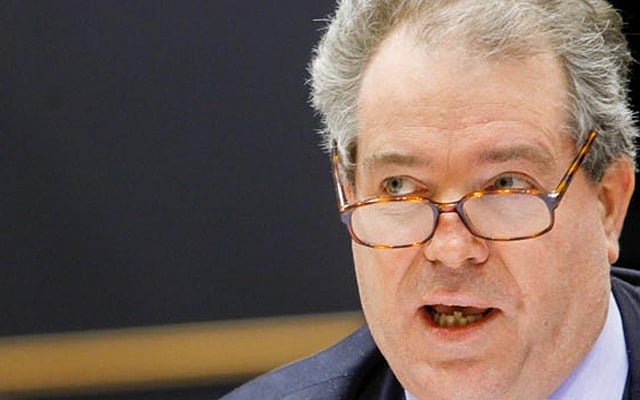
“Bangladesh is championing in religious tolerance, freedom of expression, women’s rights, education, values which is recognised greatly in Europe,” he was quoted as saying by the foreign ministry.
He, however, said such values are threatened “not by the government, but by the Islamist extremists”.
Tannock urged the opposition parties and the BNP, in particular, to end links with the Jamaat-e-Islami.
The European Parliament earlier in a resolution had also asked the BNP to sever its ties with the Jamaat.
Tannock, a British MP, during his speech also said that the Members of the European Parliament should not compare the sophisticated and trained law-enforcing agencies of Europe with those in Bangladesh and thereby, refrain from condemning the government.
The debate took place, as scheduled, after Dutch Foreign Minister Bart Koenders, on behalf of the vice-president of the European Commission and high representative of the European Union, gave a statement on Bangladesh situation on June 7.
The Dutch minister referred to the long-term partnership between the EU and Bangladesh in trade, investment and development, and said it is ‘still growing.’
He maintained that the EU and Bangladesh were addressing new challenges such as continuing sustainability in the RMG sector and more recently, they were comprehensively addressing migration and mobility.
Koenders said Bangladesh needed to engage all development partners to become a middle-income country by 2021 which he termed ‘the most important policy objective and very ambitious target of Bangladesh’.
Following his statement, at least 20 members of the European Parliament took part in the debate.
The foreign ministry said in general, the MEPs lauded the “modern and secular credentials” of Bangladesh and its ‘tremendous diversity’.
They also praised the government’s commitment to combating terrorism and ‘zero-tolerance policy’ towards any violation of human rights.
The MEPs condemned the increasing attacks by “Islamist extremists” on secular writers, bloggers, religious minorities and expressed concern at their killings.
With the rise of religious fundamentalism and intolerance in Bangladesh, some MEPs also urged the European Parliament to help the country in her fight against these threats.
Several parliamentarians praised the progress made after the 'Sustainability Compact' but also maintained that ‘zero tariff facility’ cannot be unconditional.