Published : 22 Jul 2022, 11:50 PM
Updated : 22 Jul 2022, 11:50 PM


The Bangladesh government has welcomed the judgment delivered by the International Court of Justice, or the World Court, that rejected the preliminary objections of Myanmar to the genocide case over the country’s treatment of the Rohingya.
The ruling on Friday paved the way for the case to be heard in full, as the Rohingya refugees continued to live in squalid camps in Bangladesh with little hope to return to their homeland Myanmar.
Myanmar, now ruled by a military junta that seized power in 2021, had argued that Gambia, which brought the suit, had no standing to do so at the World Court, formally known as the International Court of Justice.
But presiding Judge Joan Donoghue said the 13 judge panel found that all members of the 1948 Genocide Convention can and are obliged to act to prevent genocide, and the court has jurisdiction in the case.
The court will now proceed to hearing the merits of the case, a process that will take years.
Gambia, which took up the cause after its then-attorney general visited a refugee camp in Bangladesh, argues that all countries have a duty to uphold the 1948 Genocide Convention. It is backed by the 57-nation Organisation for Islamic Cooperation in a suit aiming to hold Myanmar accountable and prevent further bloodshed.
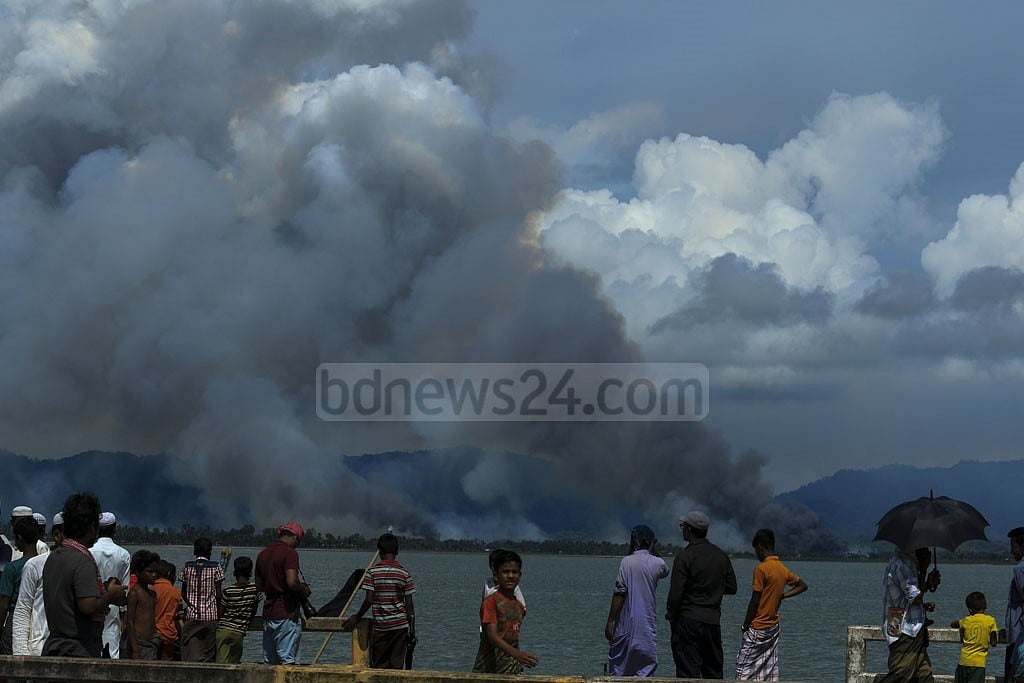
A separate UN fact-finding mission concluded that a 2017 military campaign by Myanmar that drove 730,000 Rohingya into neighbouring Bangladesh had included "genocidal acts".
“The question of international justice and accountability will be critical in finding a durable solution to the Rohingya crisis,” the Bangladesh foreign ministry said in a statement after the ICJ ruling on Friday.
That would “also prove to be a confidence building measure for the sustainable repatriation of the Rohingya to their homes in Myanmar with their legitimate rights restored,” the statement added.