Published : 16 Jun 2015, 09:02 PM
Updated : 23 Apr 2022, 12:49 PM


A four-member appellate bench led by Chief Justice SK Sinha upheld the death penalty awarded to the war criminal by a tribunal over the charges of killing intellectuals in 1971.
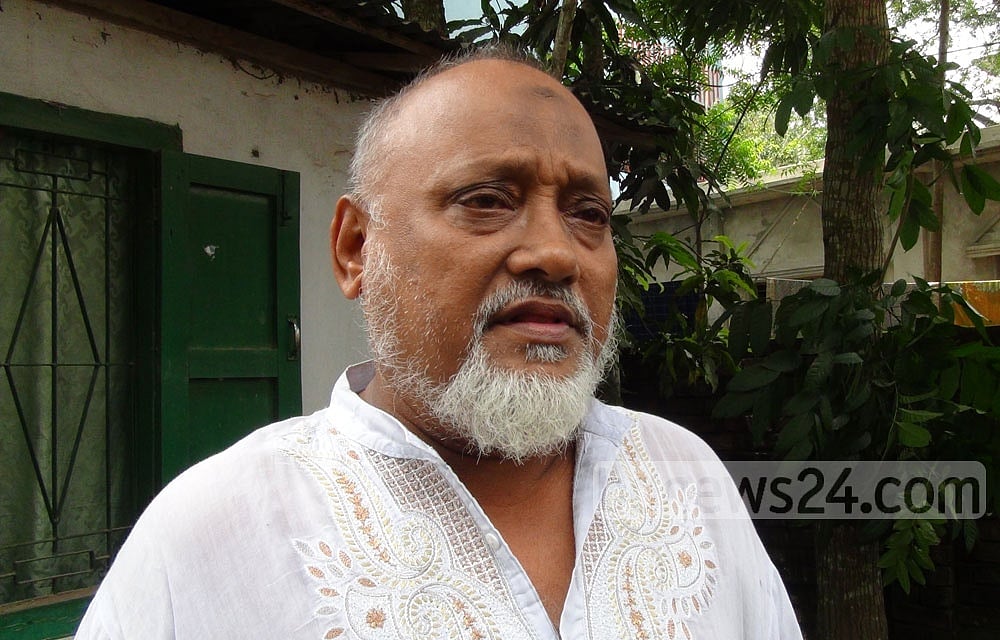
Rejecting the verdict of the Supreme Court, Mujahid’s brother, Faridpur unit Jamaat-e-Islami chief Ali Afzal Mohammad Khales said, “My brother has been framed by staging a farce of a trial and by faking the witnesses.”
He told bdnews24.com, “Our family rejects the verdict that is completely motivated and influenced by political vengeance.”
The International Crimes Tribunal on Jul 17, 2013 sentenced Mujahid to death for killing journalists, professors, intellectuals and for communal violence during 1971.
Mujahid became the president of Jamaat’s erstwhile student organisation, the Islami Chhatra Shangha in July, 1971.
He became the president of Al-Badr, a force consisting of Chhatra Sangha activists, in October 1971.
The Al-Badr militia under his leadership spread out to different areas in Dhaka and Faridpur and committed murder, loot, genocide, abduction and other crimes against humanity, which became evident through the tribunal’s verdict.
However, his brother Khales claimed that Mujahid had been convicted falsely because he held an important position in the party.
“Except for taking political revenge, there is no other reason for this verdict. My brother is an innocent man.
“He has been framed and shown guilty of the crimes. We have been deprived of fair judgment.”
Mujahid’s son, Ali Ahmed Mabrur, echoed his uncle.
“Since we did not get justice from the tribunal, we had come to the Appellate Division. We had hoped to get justice,” he said.
“But today’s verdict has denied us justice. We are very annoyed.”
Khales claimed that Mujahid was not involved in any of the incidents that happened in Faridpur.
“Mujahid left Faridpur in 1970. During the whole of 1971, he was not even present in Faridpur.”
Out of all the charges brought and proved against Mujahid in the tribunal, two of them occurred in Faridpur.
The seventh charge, torture and killing of Hindu minorities in Faridpur’s Bokchor village, for which the tribunal had sentenced Mujahid to death, has been commuted to life in prison at the Appellate Division.
For the third charge of abducting and torturing Ranjit Nath of Faridpur’s Khabaspur, the tribunal had awarded him five years jail term, which has been upheld at the final verdict.
However, Mujahid’s family would not hold any protest against the final verdict of death penalty, said Khales.
“We do not want to do anything from our family’s side. But we will support whatever decisions the Jamaat will take,” Khales added.