


Published : 21 May 2021, 04:48 AM
Updated : 14 Oct 2022, 06:52 PM


It means the country’s mass inoculation drive against the coronavirus is coming to a halt amid the pandemic, if the US, or Canada or the UK does not lend a hand to overcome the crisis.
After signing a deal with the Serum Institute of India, the government launched the drive on Feb 7 with a plan to immunise 140 million citizens, or 80 percent of the population.
Bangladesh has received 10.2 million doses of the vaccine from India so far, including 3.2 million doses as gift.
The first and second doses of the vaccine, developed by the University of Oxford and AstraZeneca, are spaced eight weeks apart.
As per the contract, Bangladesh was likely to receive 5 million vaccine doses a month totalling 30 million doses over six months.
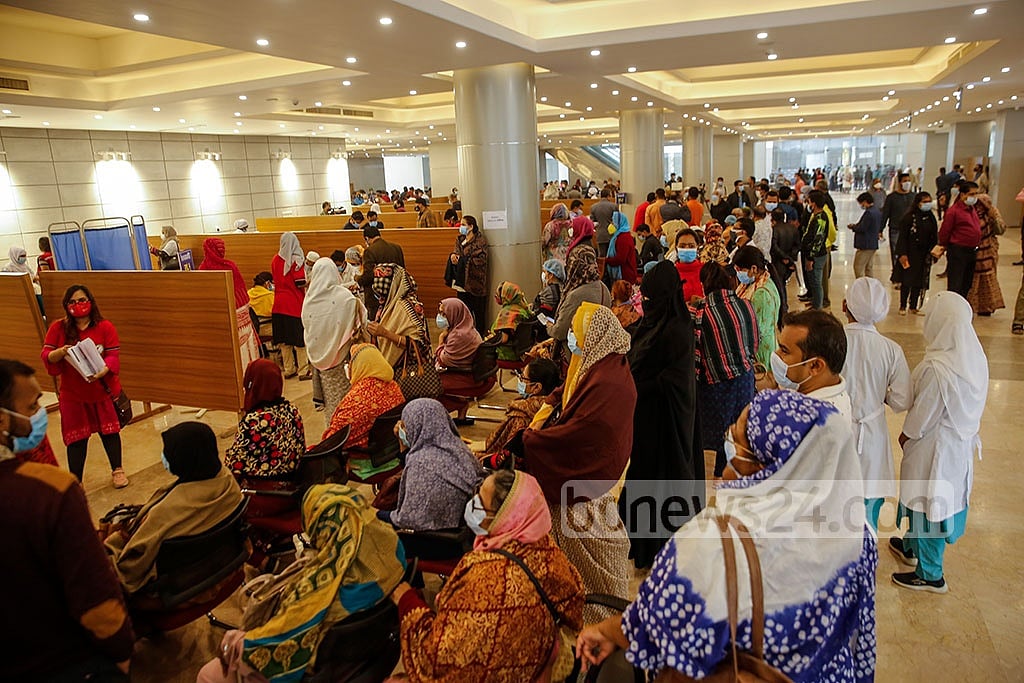
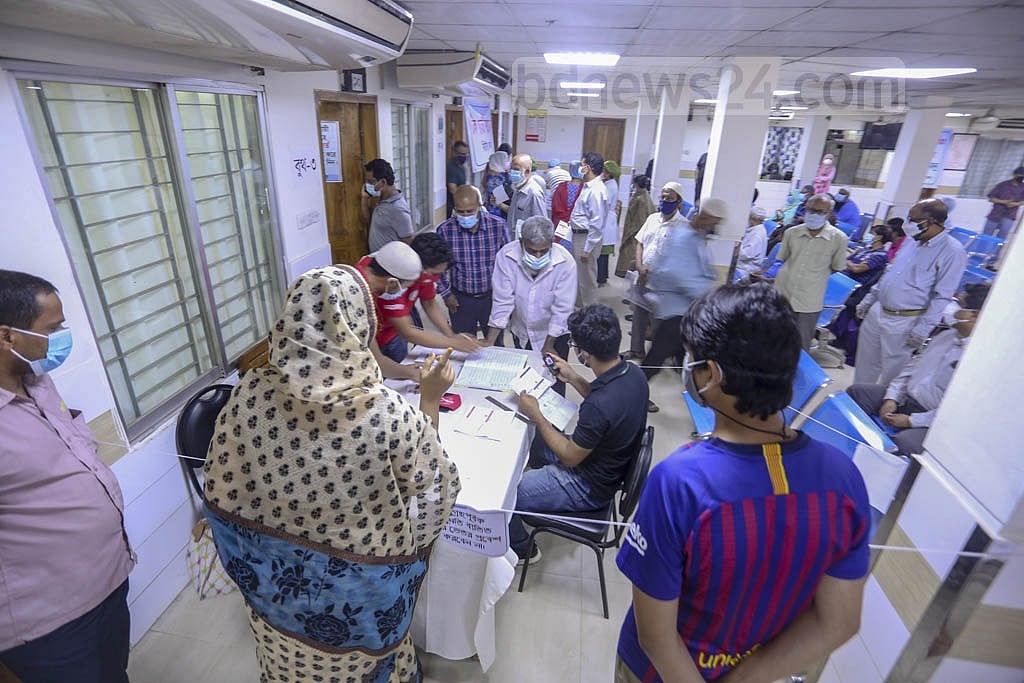
COVID-19 vaccination campaign under way at the National Orthopedic Hospital and Rehabilitation Institute, better known as Pangu Hospital, in Dhaka amid the national lockdown on Thursday, Apr 15, 2021. . Photo: Asif Mahmud Ove
Bangladesh then stopped giving its citizens the first dose by the end of April to save enough shots for the second dosing, but it was already too late.
Until Thursday, the Directorate General of Health Services or DGHS has administered around 9.8 million shots, including nearly 5.82 million first doses.
It means the country has only 400,000 shots with nearly two million people waiting for their second doses.
So, what about the around 1.5 million who will still be requiring the second dose after the remaining shots finishes?
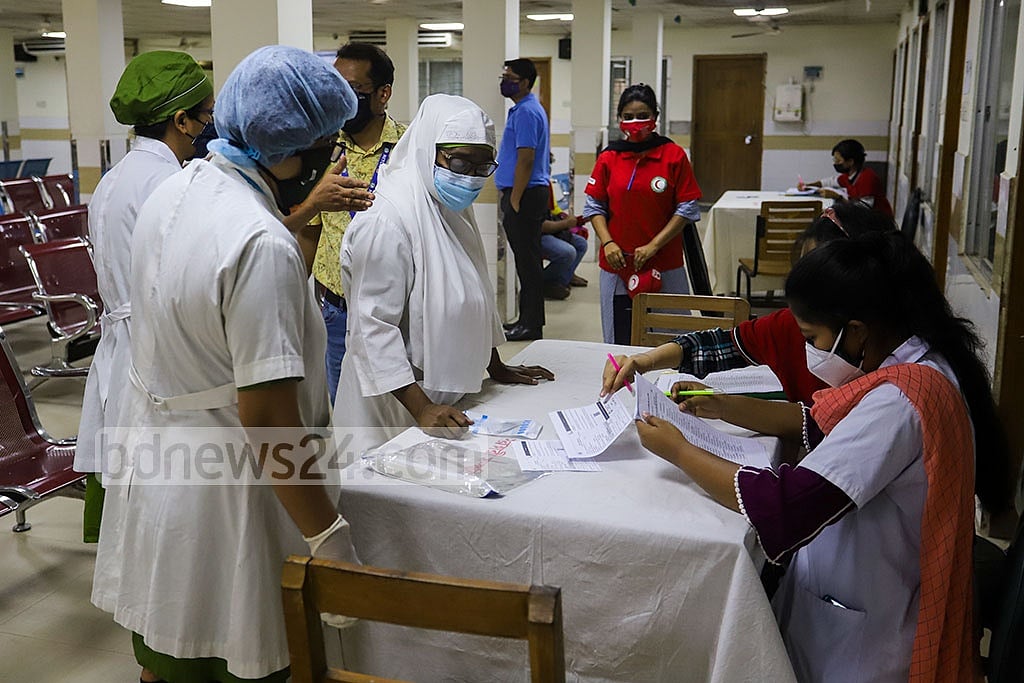
Health workers are pictured at the National Orthopaedic Hospital in Dhaka on Thursday, Apr 8, 2021, as the government starts administering the second dose of the Oxford-AstraZeneca COVID vaccine. The nationwide vaccination drive began on Feb 7, covering over 5.5 million people with the first dose of the vaccine. Photo: Asif Mahmud Ove
Bangladesh is also buying vaccines from Russia and China, but there is no indication that the commercial supply will begin anytime soon. A brief inoculation drive from medical and nursing college students, and medical technologists is set to begin next week with 500,000 doses of the Sinopharm vaccine sent by China as gift.
Dhaka’s Bangabandhu Sheikh Mujib Medical University or BSMMU is among the facilities that administered most doses so far.
It has given the first dose to 48,110 people. Until Thursday, 42,098 of them turned out for the second dose.
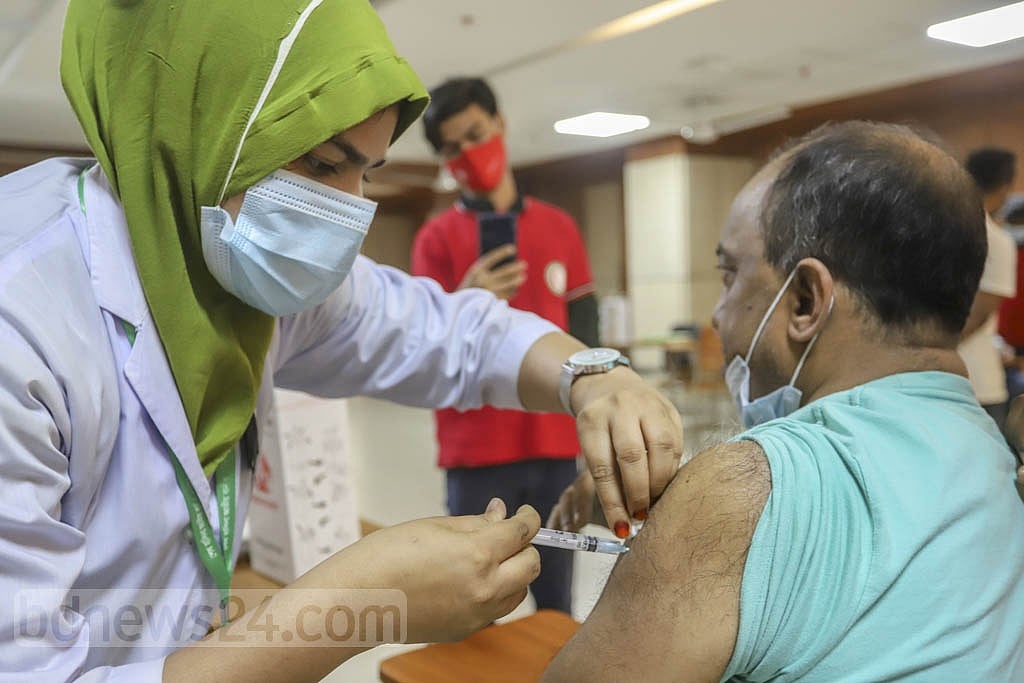
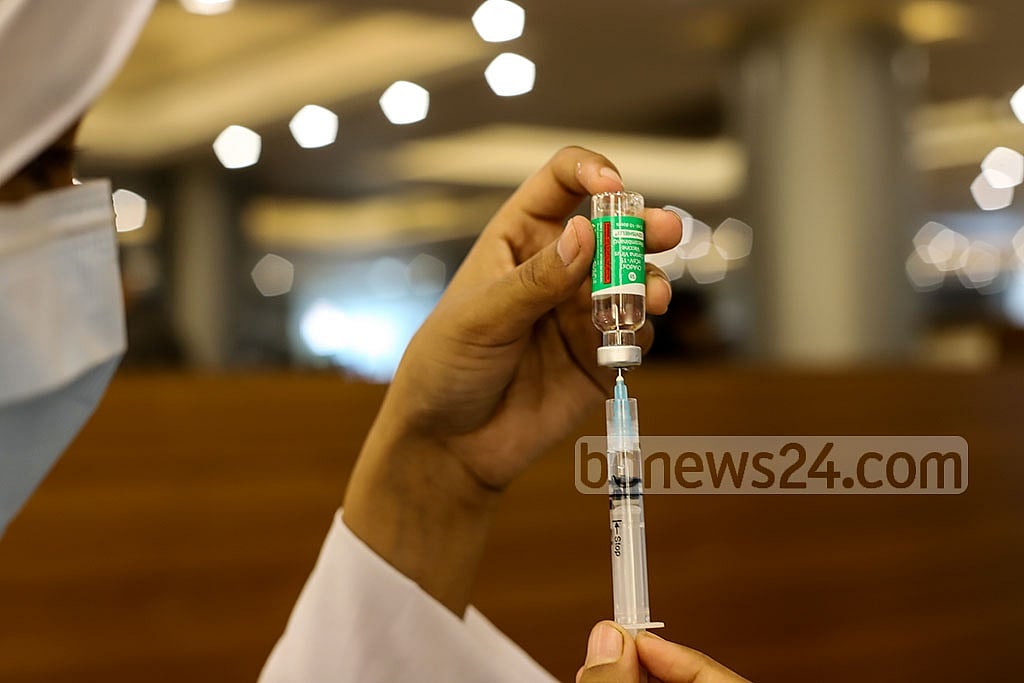
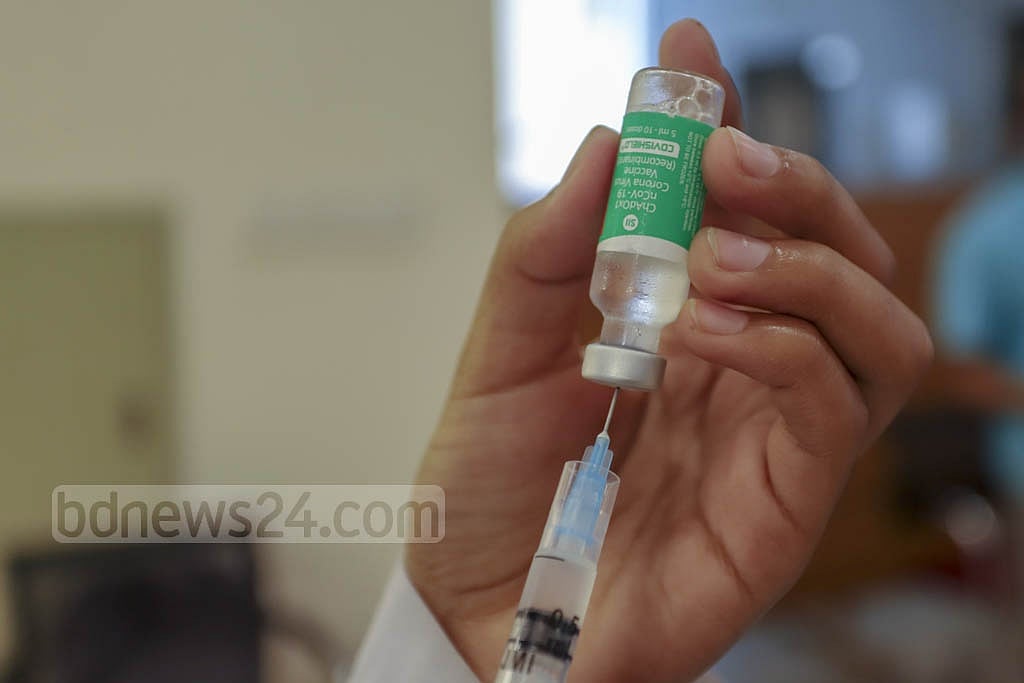
A health worker prepares a COVID-19 vaccine shot at the Bangabandhu Sheikh Mujib Medical University (BSMMU) in Dhaka on the first day of the nationwide inoculation drive, Feb 7, 2021. Photo: Asif Mahmud Ove
“We are about to halt the vaccination activities. We will continue it once we get the doses,” said the hospital’s director Brig Gen Zulfiquer Ahmed Amin.
The vaccination centres in Rangamati, Satkhira and Kushtia did not administer a single dose on Thursday, according to the DGHS.
Md Shamsul Haque, a line director at the DGHS, said it would be possible to continue the drive for around a week with the remaining 400,000 doses, if 50,000 shots are administered daily on an average.
“The situation is not the same everywhere. Some places have run out of vaccine while some others have enough doses for four to five days,” he said.













