


Published : 15 Jan 2018, 04:48 AM
Updated : 19 Oct 2022, 02:05 PM


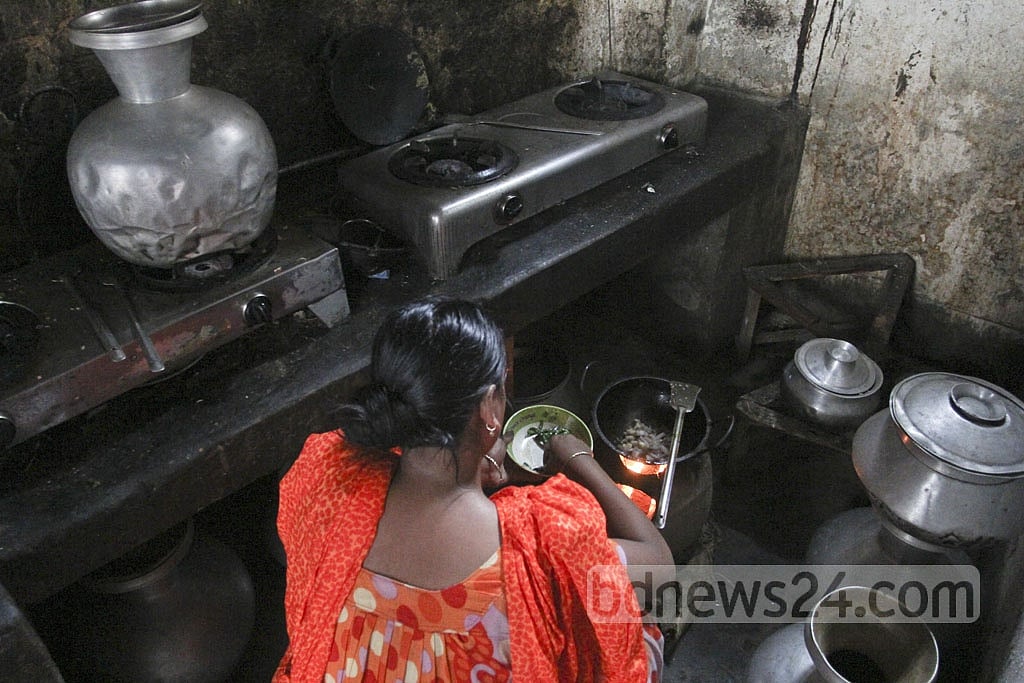

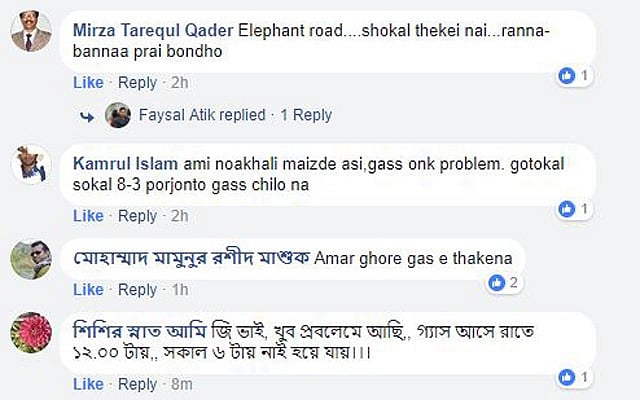
The authorities say a higher-than-usual demand is the reason behind such problem, though the consumers' rights groups suggested the situation only points to the mismanagement of the suppliers.
In some city areas, residents are suffering from the gas crisis for months while in some other areas, the trouble began with the increase of winter intensity.
Titas Gas Transmission and Distribution, however, says residents were putting their burners on longer than usual during winter, which has spiked the demand and created the crisis.
The daily supply is 1.7 billion cubic feet of gas against a demand of 2 billion cubic feet, according to the utility.
bdnews24.com spoke to the residents of Farmgate, Shaymoli, Adabar, Mirpur, Science Laboratory, Segun Bagicha, Jatrabarhi, Sutrapur, Gandaria and Lalbagh areas where most said they had been suffering from the gas crunch for quite some time now.
For Segun Bagicha resident Shirin Rahman, it means they have had to readjust their daily routine to gas supply schedule.
"For the past one week or so, our burners dry out before 8am and later we get some gas after 2pm. As a result, we need to start cooking very early in the morning - immediately after the Fazr prayers."
Adabar resident Shamima Parveen is also having a tough time to put together meals.
"The gas pressure starts to subside at 8am. After 3pm we get the pressure back. It was not like this before - just last one week we have been facing this."
Residents of other areas are also in a spot of bother.
School teacher Sharmin Ali, who lives at a house in Gendaria DIT plot, said she has started using gas cylinder because of the intermittent supply in the pipeline.
"I used to pay Tk 800 gas bill a month but now I spend between Tk 1200 and Tk 1300. The electricity bill has also gone up as well as we are using electric kettle and rice cooker for warm water and cooking rice, respectively," she added.
Mirpur resident Sahana Kader told bdnews24.com she had been using induction oven to cook food for the last few weeks when the crisis became acute.
Anjuman Mortoza's reaction was similar.
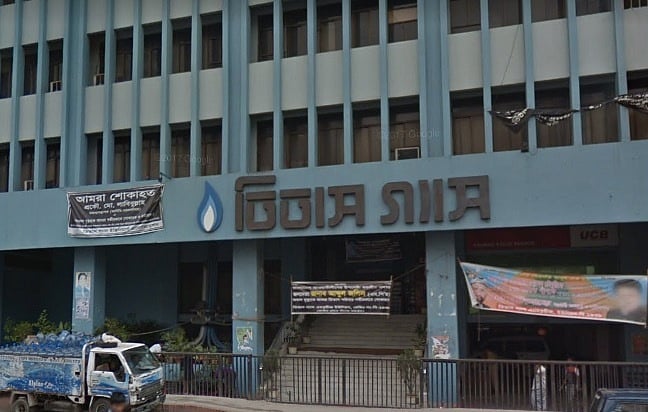
HM Ali Ashraf, director (operations) at the state-run Titas, has blamed the crisis on the rise in household demand during winter.
“Our supply hasn’t been cut. But the use has risen. That’s why some areas are getting slightly less gas. The problem will go away when the winter is over,” he said.
According to Ashraf, consumption of gas in households has risen by 20 percent during winter, raising the gap between the demand and supply.
Ruhin Hossain Prince, a secretary of the Communist Party of Bangladesh or CPB, thinks mismanagement at Titas is the reason.
“The overall mismanagement of gas has created the situation. We pointed out the problems with Titas on different occasions but there has been no redress,” he told bdnews24.com.
He also thinks the situation in winter is a result of lack of planning by Titas.













