


Published : 06 Sep 2020, 02:10 PM
Updated : 17 Oct 2022, 11:12 AM


While his mother was initially able to mollify him, it became increasingly difficult to make him understand the gravity of the situation as the days turned to months.
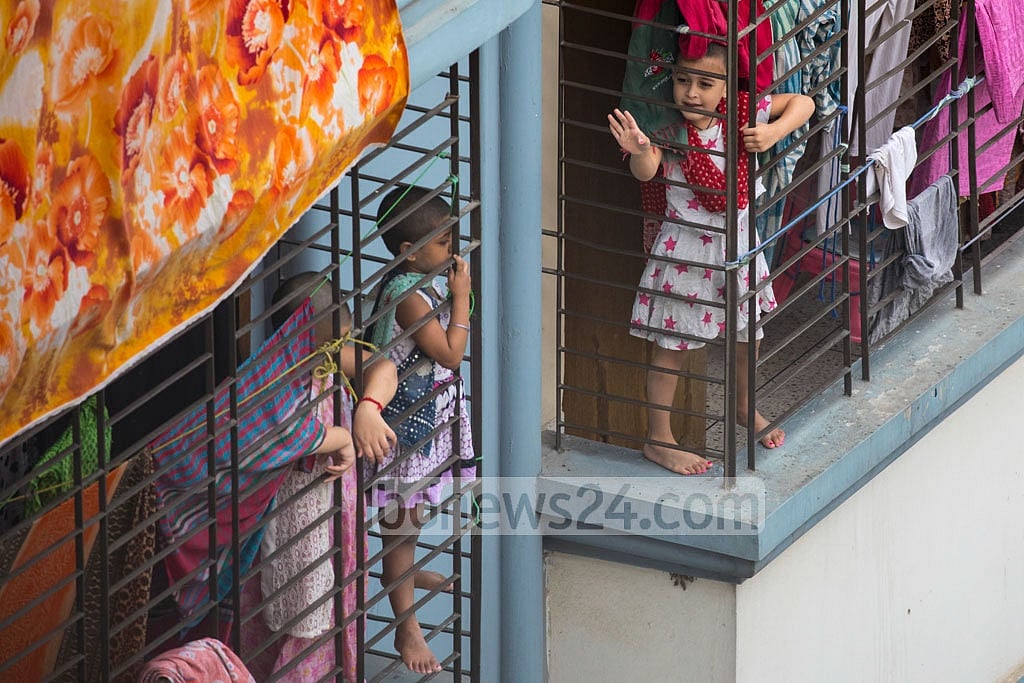
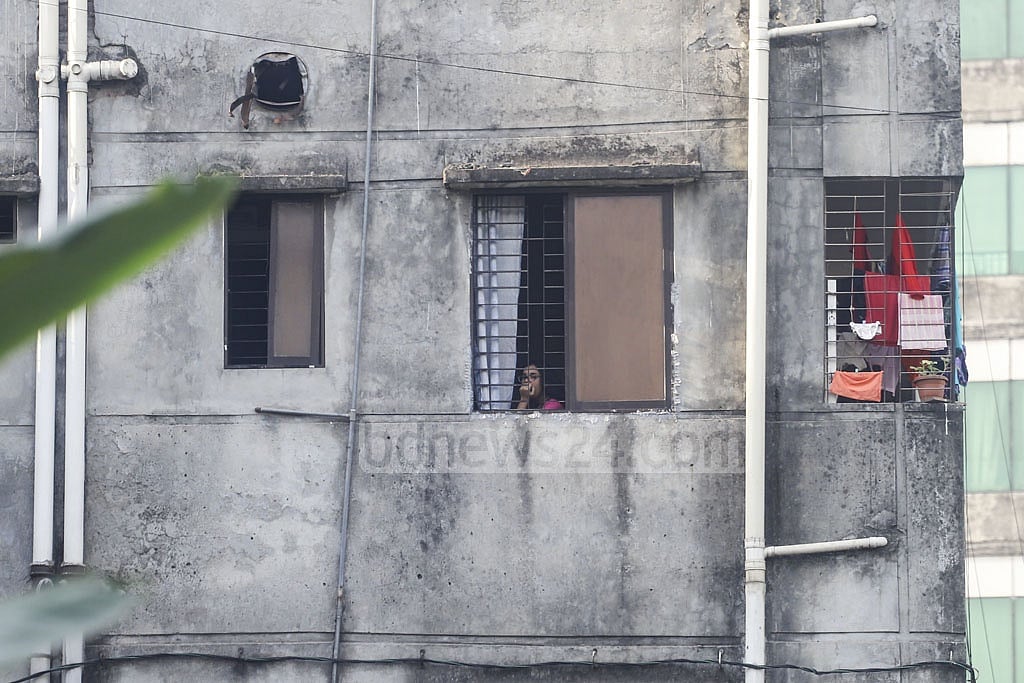
As the pandemic rages on, children like Safir are growing more restless as they remain confined within the four walls of their homes.
The situation, which is far from normal, could hamper the overall development of children, according to psychologists and educationists.
In a new report, the United Nations Children's Fund warned the impact of the global COVID-19 crisis on children extends far beyond the spheres of their physical health and could be lifelong.
It revealed the pandemic was having profound effects on children's mental health, social development, safety, privacy, economic security and beyond.
Bangladesh reported its first cases of novel coronavirus in March. Shortly afterwards, schools and educational institutions across the country were shut down in a bid to prevent the spread of the virus.
Even as many countries around are sending their children back to school, Bangladesh is yet to finalise its plans on reopening educational institutions.
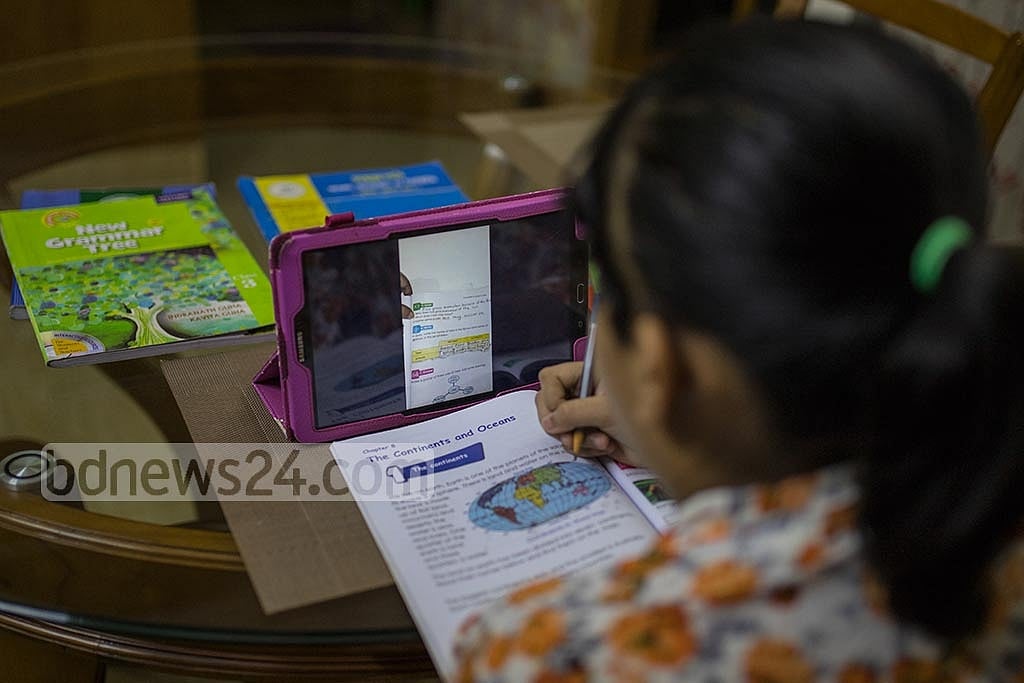
Different institutions in Dhaka are trying to continue the learning process through online classes but both the children and their parents are unaccustomed to it.
Safin has to attend online classes for an hour for six days a week, according to his mother Shahrin Bushra. But it becomes very difficult to make him sit through these classes, she said.
“Earlier it was okay. But now I have to force him to attend the online class. He wants to go back to school and be with his friends.”
To placate the child, Shahrin took him to his closed school twice.
“Children differ from each other. Earlier, he would prepare for his lessons at home. He used to do his homework on his own. But now he pays no attention to his lessons while at home. He can’t learn anything now,” she said.
Fatema Akhter Shammi, mother of twins Ayan and Ayman, is having a similar problem. Both her boys are first graders in Paradise Kindergarten and High School in Mirpur. But both of them are now itching to go back to school, said Shammi.
“They’ve been confined to our home for a while. They really want to go to school. One day, they called their teacher, cried and begged her to open the school. They complained about not being able to play or meet their friends. Later, the teacher explained the situation to them.”
People passing their time at home amid an ongoing coronavirus shutdown. Photo: Asif Mahmud Ove
“At home, all they want is to watch cartoons or play games on their mobile phones. I have to force them to do their studies. They lost their interest. One hour of online class once a week does not bring any benefit to them.”
School gives children a good exposure to many things they are now missing out on, according to Jharna Tripura, mother of Anannya Tripura Shreya, a first-grader in Viqarunnisa Noon School.
“We’re confining the children to homes to keep them safe but it has turned into a jailhouse for them. Annanya wants to go out, meet friends, go to school and playground. But it’s not possible now. I’m trying my best to explain the situation to her, but she’s getting cranky every day,” she told bdnews24.com.
Seven-year-old Arshiya Ayat Murtaza, a student of Mirpur Cantonment Public School and College, is also pining for a return to school.
“I want to go to school. I want to attend my classes with my friends and play with them. I don’t mind if the teacher scolds me, but I want is to go back to school. Staying at home is so boring,” Arshiya said.
Arshiya has an hour of online classes a week. She looks forward to the lessons as she gets to see her teacher and friends.
Arshiya’s elder sister Priyanti Arya is a student of class four in the same school. She attends three hours of online classes for five days a week.
“It’s very tough to attend online classes all at once. I get a headache and feel pressured. There’s no fun in attending classes this way,” Priyanti said.
“Earlier I used to long for a holiday but now I'm looking forward to the school's reopening.”
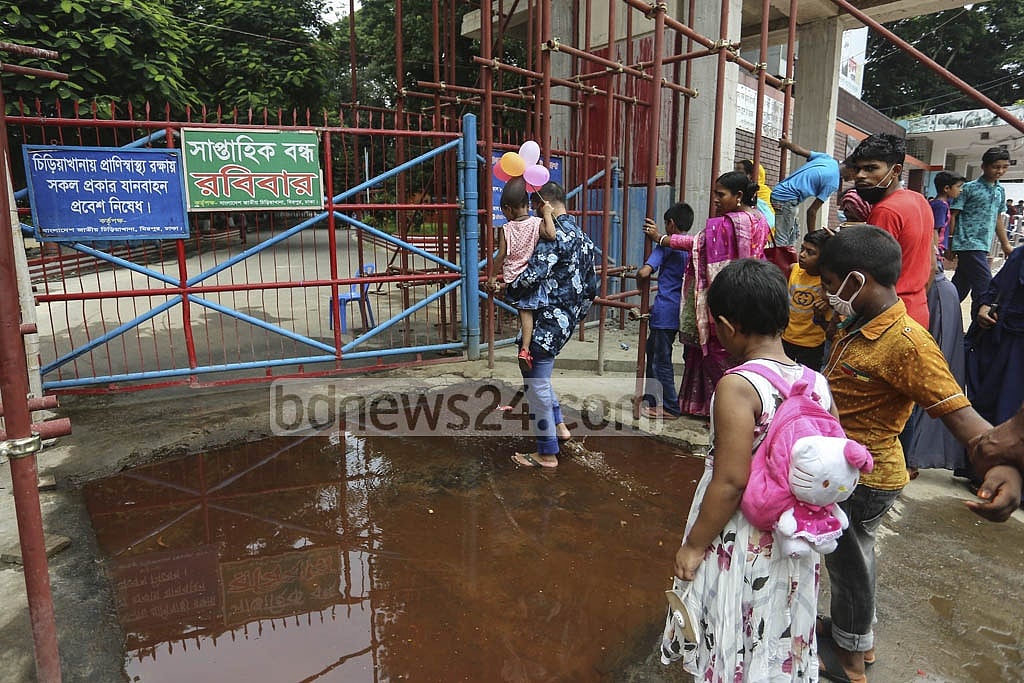
A group of children, who came to visit the Mirpur zoo in Dhaka along with their families during the Eid holidays, tries to take a peek inside from the main entrance. Photo: Asif Mahmud Ove
“Parents, family and the educational institution are crucial to the socialisation of a child. Children get their idea of culture from there. But the critical time we’re going through now is hindering the mental development of children,” he told bdnews24.com.
The former director of the National Institute of Mental Health and Hospital urged parents to come up with different strategies and ideas to ensure that children’s mental development is not hampered.
“Parents can play an important role in the mental development of their children if they are aware of these issues. They should be aware of the new technologies. The media should play an important role too.”
There is no other option but to get accustomed to the new reality, according to Prof Nilufar Akhter of NIMH. It will be more harmful for the children if they just idle away their time at home without attending the online classes, she said.
“To have classes online is an alternative for children to continue their education. Sometimes, when we have to accept the alternative for a longer time, it has an adverse effect physically and mentally. But it is more important to remain safe during the coronavirus pandemic.”
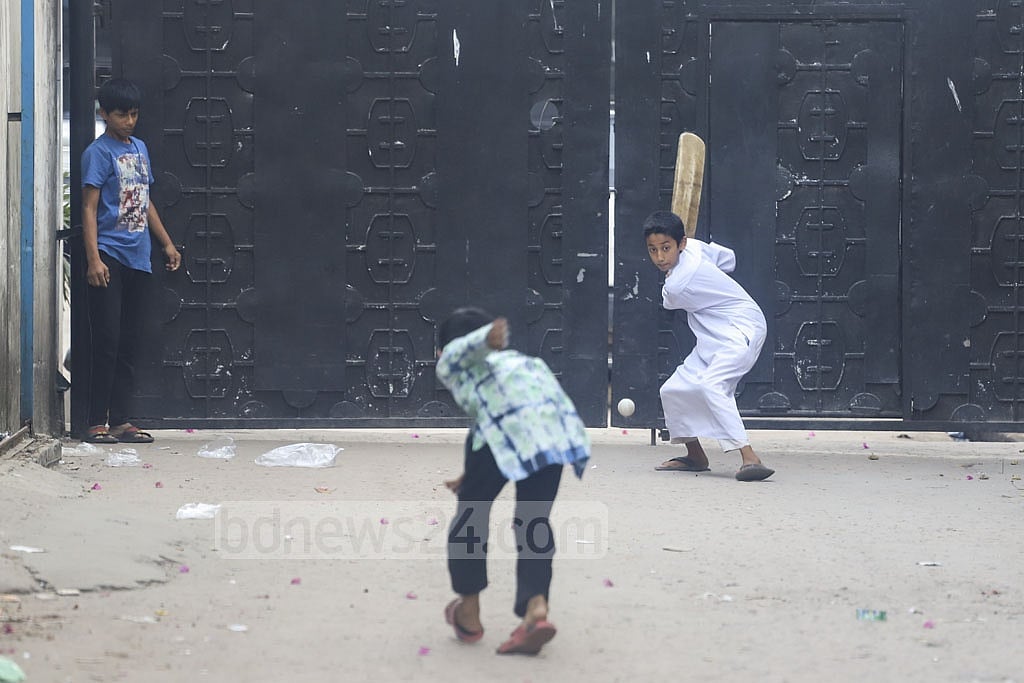
Children enjoying a game on an empty street during their holidays announced by the government to stem the coronavirus spread. Photo: Asif Mahmud Ove
>> Children should be allowed to communicate with their friends and family every day in accordance with a routine.
>> Their daily routine must include entertainment, work, socialising, sleep, eating healthy meals and physical activities.
>> Children should be encouraged to follow a specific routine to reduce screen addiction.
“Another issue is that the children must nurture a positive attitude. They should learn about the coronavirus every day to be aware of the situation, but only for a limited time. Too much exposure to the issue will give them stress,” said Prof Nilufar.
“We can keep them free of stress by engaging them in various activities such as reading, singing and dancing, drawing, gardening, eating and sleeping at the proper time and playing.”
Children first learn to socialise in their homes and then in the school, said Prof Mahfuza Khanam. Therefore, it is obvious that the closure of schools is a blow to the process of socialisation for children.
However, it is possible to recover from this loss if the family takes good care of the child.
“Besides their studies, children should be allowed to spend some time with friends online but not too much. Otherwise, they’ll be addicted to the screen.”
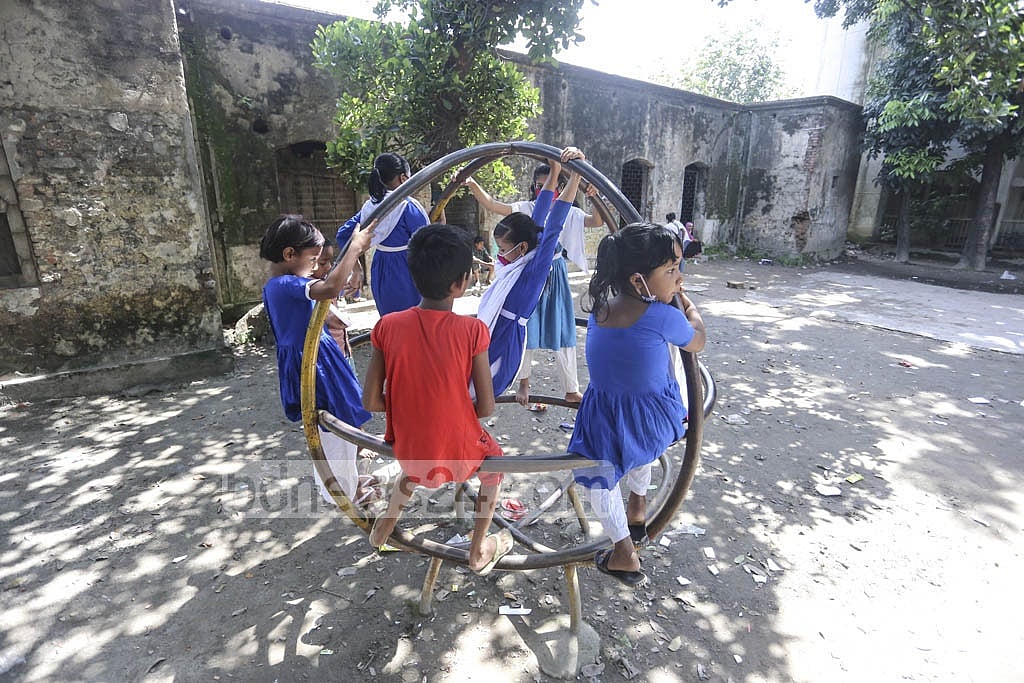
Students playing at Gabtoli Government Primary School on Thursday after the institution called them for distribution of biscuits of School Feeding Programme amid the coronavirus outbreak. Photo: Asif Mahmud Ove
“Sometimes parents say that they are friends to their children, which is totally absurd. Children should have their peers as friends, as they learn many things from sharing with each other. When children are stuck at home, they are spending time with people older or younger than them. This hampers their development."
“I won’t speak about the negatives only. It’s true that some children are affected badly, but it also has a positive impact. Children are resilient and recover on their own when they face any trouble,” he said.
If children have greater access to technology during the pandemic, it could be a blessing for the country's development in the future, according to Dr Mohammad Kaikobad, a professor of Bangladesh University of Engineering and Technology.
“Bangladesh is a country with a big population but it does not have an adequate workforce. We must remember that where there’s a problem, there’s an opportunity. Earlier, we were wasting three to four hours stuck in traffic. Now we are not wasting that time,” he said while pointing out that the country spends Tk 350 billion on foreign consultants every year.
“Children should be included in a positive culture. Of course, there’s are negatives to children having technological devices, but parents should play an important role to ensure that their studies are not affected. They should teach them humanitarian values,” said Dr Kaikobad.













