


Published : 09 Dec 2015, 09:33 PM
Updated : 23 Apr 2022, 01:21 PM


Government statistics show 87 percent of married women having experienced various degrees of violence at the hands of their husbands.
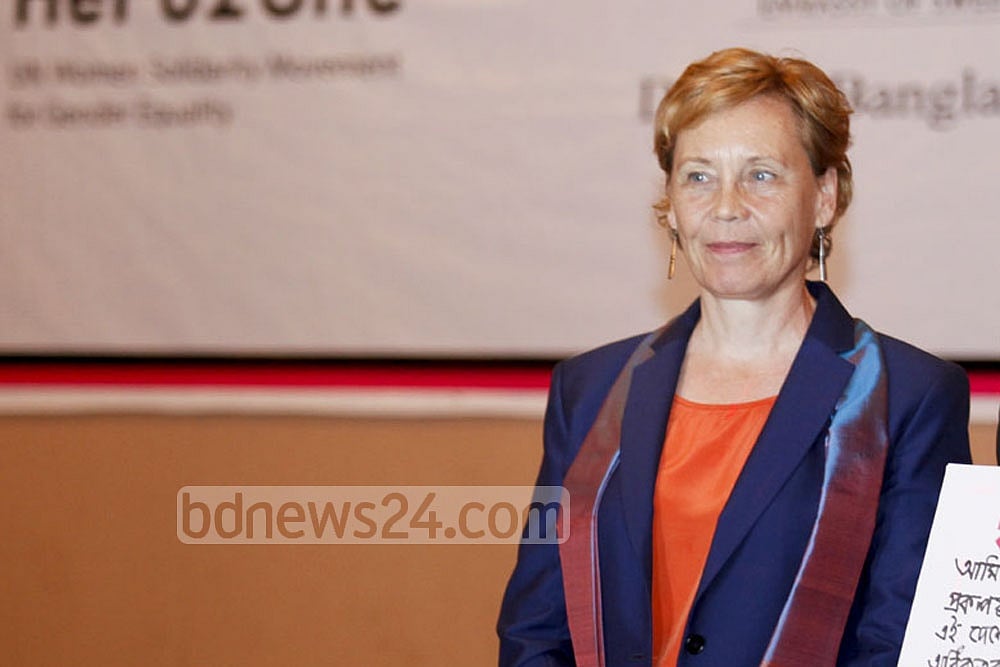
Country Representative of the UN Women in Bangladesh Christine Hunter believes there is something ingrained in this society that stands in the way of addressing this “complex social issue”.
“We have to change how women are valued (for preventing violence),” she told bdnews24.com in an interview on Tuesday, a day before the end of the 16-day activism for women.
“As long as women have less value as people than men, we can’t end violence,” she said.
The 16-day activism began with the observance of the International Day for the Elimination of Violence against Women on Nov 25 and will end marking Human Rights Day on Thursday.
“We need to draw attention to ways of preventing violence. We have to look at what causes it, identify where the risks lie and start addressing them,” the UN representative said.
For example, she said, women are mostly harassed in public places, universities and workplaces.
Even the Bengali New Year celebration in Dhaka was marred by harassment at the main gathering at Dhaka University this year.
As immediate steps, all must work together and look at how those risks at public places, work places and universities can be reduced.
“At the same time, we must start working to change the beliefs that allow men to use violence and the structures that don’t take it (violence) seriously.”
This year’s 16-day activism was the first after the adoption of the new sustainable development goals (SDGs) that highlighted the critical need of gender equality for sustainable development.
The 2014 Gender Inequality Index ranked Bangladesh at 115 out of 148 countries, making it second after Sri Lanka among the South Asian countries.
Equal participation of men and women will be needed to turn Bangladesh into a sustainable and equitable middle-income country as the government has envisaged it, said Hunter.
That means more women will enter the workforce in future.
The UN representative said certain “structural reforms” will be needed, as there are still policies that make women “less worthy” than men.
The change must begin with the mindset of the young people.
The UN Women recently launched projects in four public universities to tackle sexual harassment in line with the 2009 High Court directives.
“Women need to be valued equally as citizens, equally as members, equally as family members, equally as workers, equally as community leaders – not just individually, but as a group”.
She said some, but not many women, were in leadership positions in Bangladesh.
Women here only hold 20 percent of seats in parliament, short of the MDG target of 30 percent, she observed.
The representative said the UN Women would strongly support the government in pursuing the new SDGs, but lamented that the government’s seventh five-year plan did not address the issue of violence against women and unpaid work done by women.
On the other hand, she appreciated that the government showed “courage” by generating data on violence against women in Bangladesh.













