Published : 15 Apr 2017, 05:29 AM
Updated : 19 Oct 2022, 03:33 PM


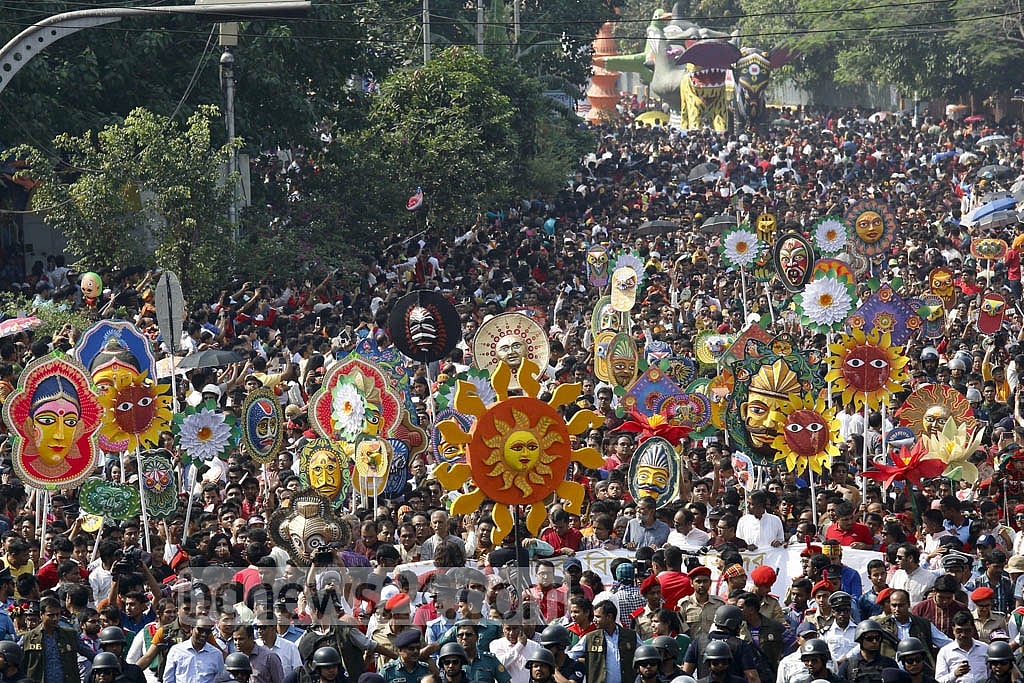
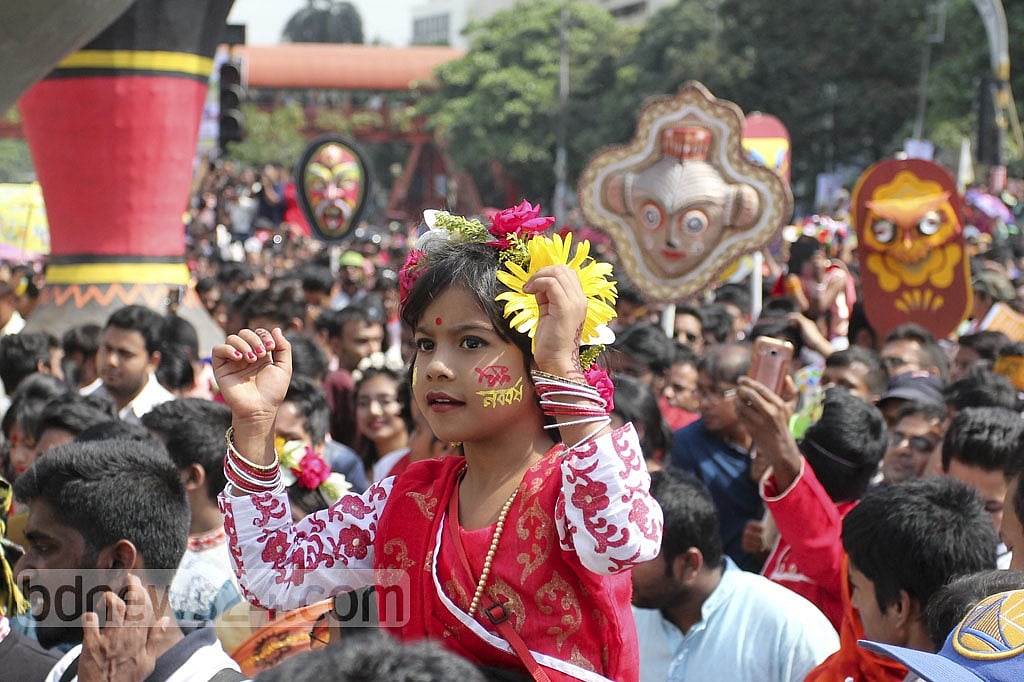
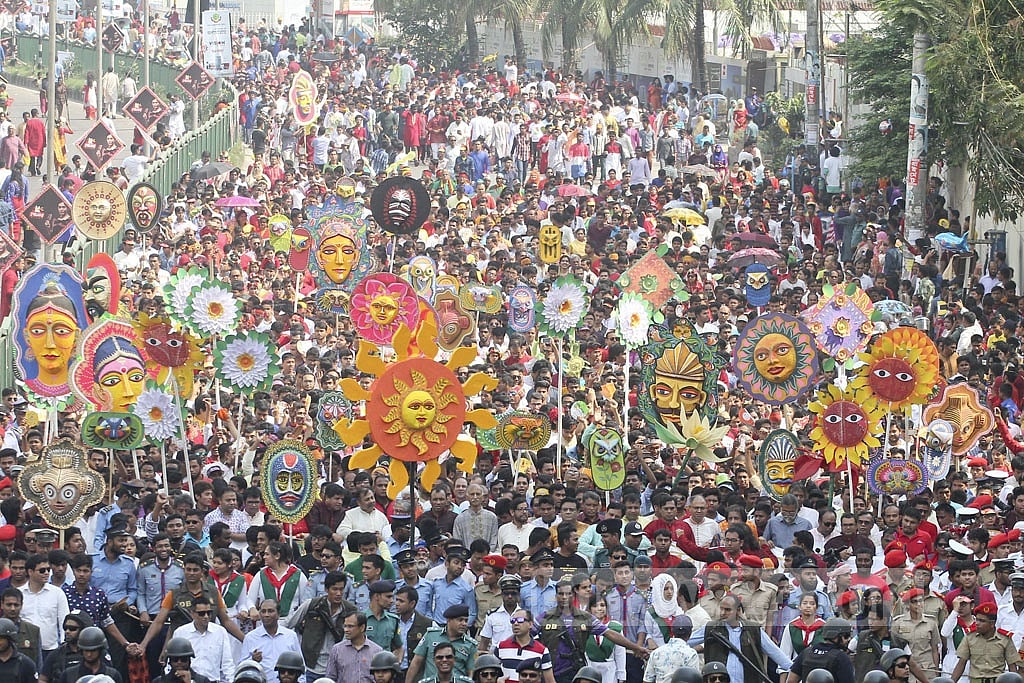
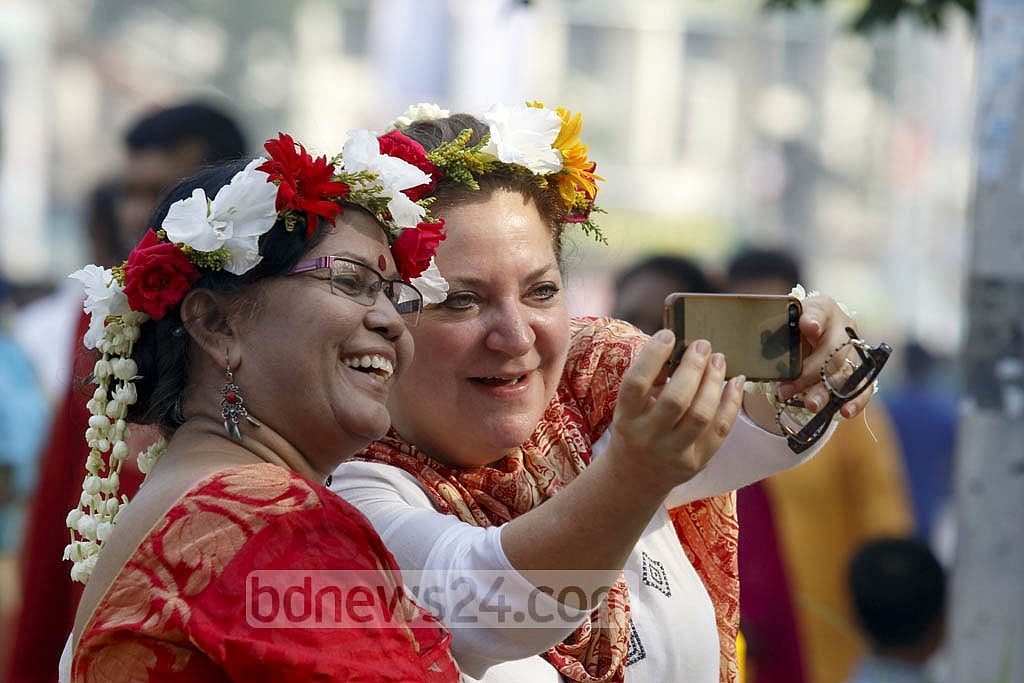
Despite the demand of the Islamists for a ban on the Pahela Baishakh celebrations which they say are 'un-Islamic, Bengali men wore colourful panjabi and women white saree with red lace to join the celebrations on Friday.
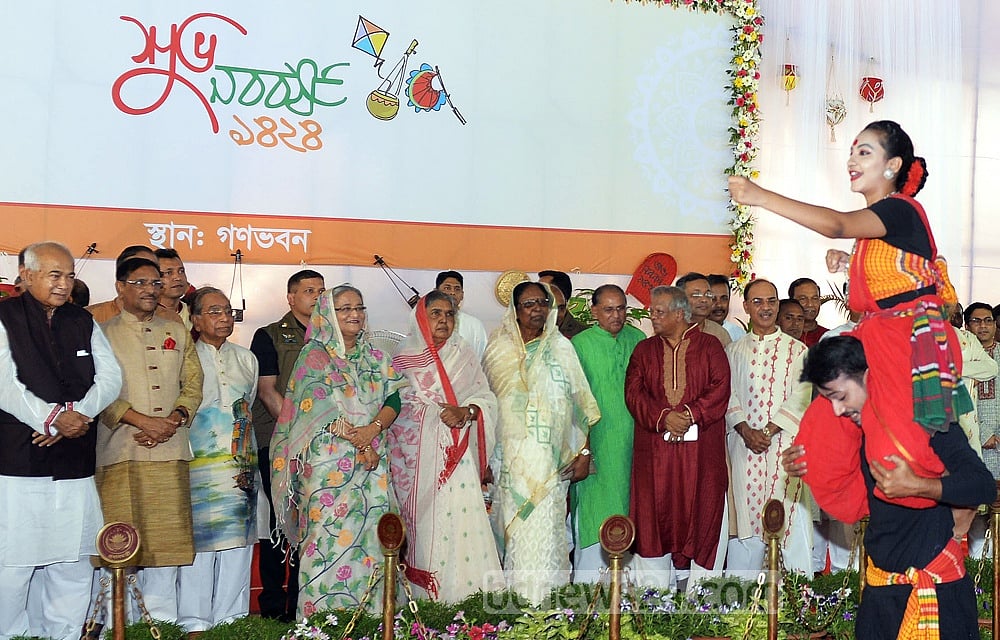
Prime Minister Sheikh Hasina remarked that Bangladesh will progress leaving behind the regrets of the past. She hosted a programme on the occasion at the Ganabhaban.
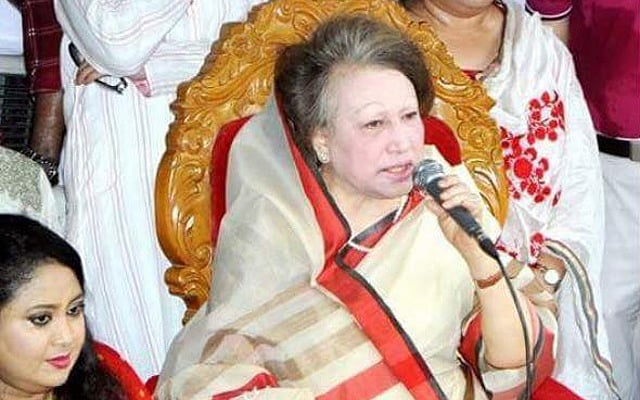
BNP Chairperson Khaleda Zia, at the party's Pahela Baishakh celebrations, vowed to work for the people's welfare.
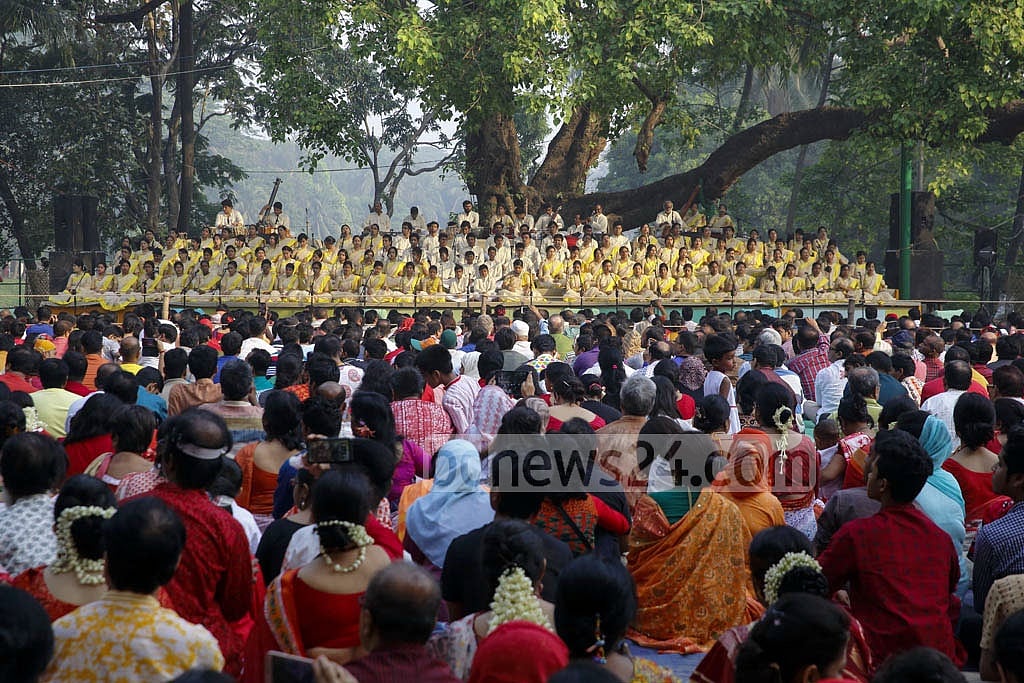
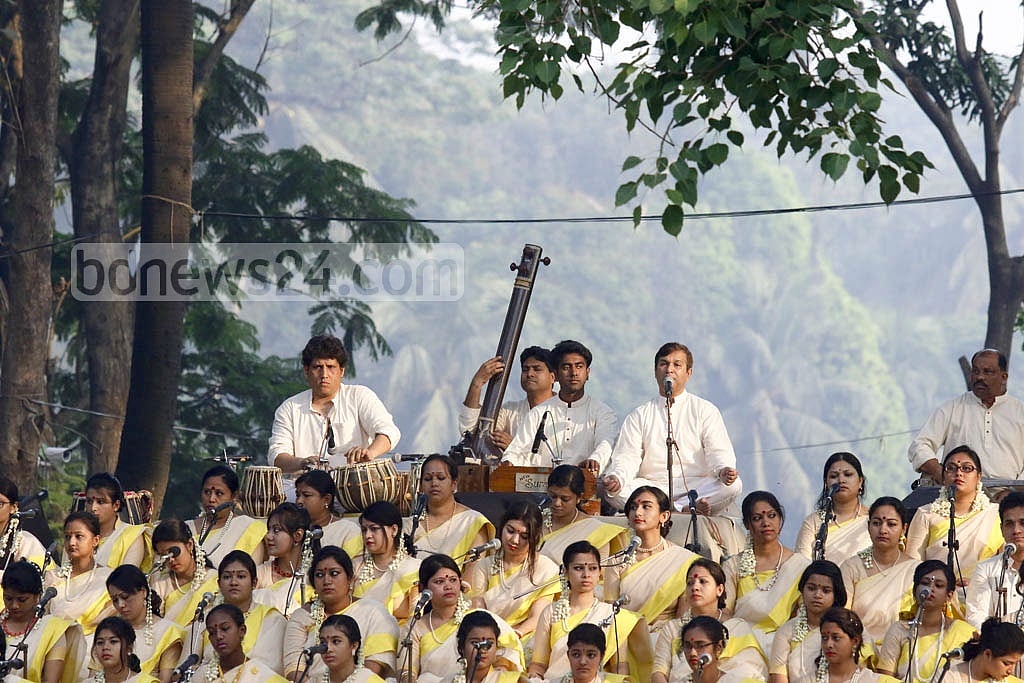
The day's programmes started with Ragas welcoming the New Year at Ramna Batamul at sunrise.
Chhayanaut President Sanjida Khatun, one of the initiators of the programme at the venue five decades ago, said, "This struggle will be for reaching out to the regular people with Bengali's self-identity, the history of Liberation War and the religion of truth. Culture, not arms, will be the weapon of this struggle."
She urged the young cultural activists to use the internet as a tool in this struggle.
Chhayanaut artistes welcomed the Bangla New Year with songs, dance, and recitations. A Palagan (folk musical) was also organised.
When the celebration was under way at Ramna, the 'Mangal Shobhajatra' procession started from the Dhaka University's Faculty of Fine Arts.
Revellers meandered through Shahbagh to Ruposhi Bangla Hotel and returned to the Faculty of Fine Arts after taking a turn past the TSC.
The values imbued in the procession introduced by the faculty in 1989 are still the same -- to fight back dark forces and evil practices.
"This year’s procession aimed to bring back those who have chosen the path of militancy. It was a strong protest against militancy," said Faculty Dean Nisar Hossain.
Old elements from the 1989 procession -- horses, tigers, elephants, puppets and trees -- have been used this year as well to give the procession a sense of continuity.
People of all ages and occupations, including foreigners, marched hand in hand and danced to the beat of drums with the promise to shun militancy and communalism -- a threat to global peace.
Taking part in the procession, Dhaka University Vice-Chancellor AAMS Arefin Siddique said, "We will march forward by uprooting the evil forces, terrorists. No one will be able to stop that parade."
Economics Professor MM Akash also sees no alternative to a cultural movement for eliminating 'new dangers' like communal changes in textbooks and demand for removal of statue along with the rise of militancy.
"I hope we will advance towards a proper democratic system through a cultural movement," he said.
As Bangladesh is celebrating the New Year in the shadows of growing militancy, law-enforcing agencies put in place unprecedented security measures. Many expressed dissatisfaction over the restrictions on carrying bags during the celebrations.
A host of cultural organisations, educational institutions, government and non-government offices organised events to celebrate the first day in the Bangla calendar.
Traditional dishes were served at jails, orphanages, hospitals and children's homes on the day.
People throughout Bangladesh had 'Paanta Bhat' (rice soaked in water) with mashed lentil or potato and green or red chilli.
Fish, especially Hilsha, is an integral to the celebrations of the Bengalis. But this year the prime minister urged all not to keep Hilsha on their platter because the breeding season is ongoing.