Published : 06 Oct 2025, 07:01 PM
Updated : 28 Aug 2026, 01:27 AM


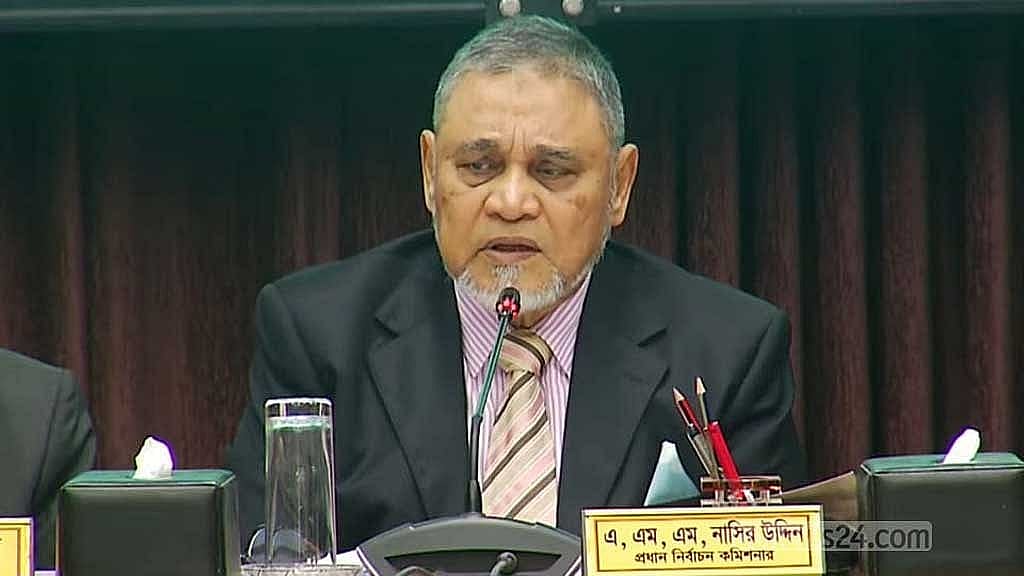
Chief Election Commissioner AMM Nasir Uddin has called on the media to help gather public input to ensure “equal opportunity for all” in the upcoming 13th parliamentary election.
Speaking at a dialogue on Monday, he acknowledged that it was not possible for the Election Commission alone to create a level playing field, stressing the need for cooperation from political parties, candidates, law-enforcing agencies, voters, the public, and the press.
The meeting, held at the Election Bhaban in Agargaon, brought together editors, senior journalists, and chief news editors from television channels, newspapers, and online outlets.
Nasir Uddin, four election commissioners, and other officials were present at the discussion.
At the outset, the chief election commissioner reviewed the commission’s preparations and announced that dialogues with political parties would take place after consultations with stakeholders concluded.
He said the EC felt “relieved” that the Reform Commission had advanced several initiatives.
“We are committed to a fair election,” he said.
“This dialogue is not a formality. We want to move forward with valuable suggestions. We want to evaluate your input. We want your cooperation in creating a level playing field.”
He also emphasised the role of the media in countering misinformation ahead of the polls.
Since assuming office in November, following the fall of the previous government, Nasir Uddin said the commission had taken several steps to strengthen the electoral process.
Among them was updating the voter list, which he described as crucial to restoring confidence.
He noted that women, who had “lost interest in voting,” were now more engaged.
The commission removed more than 2.1 million deceased voters from the rolls and added over 4.3 million excluded names, he said.
The gender gap in voter registration has narrowed, with the difference between men and women reduced from 3 million to 1.8 million.
The EC has also introduced an IT-supported postal ballot system for expatriates, which Nasir Uddin described as a hybrid national model.
Other groups, including election officials, law-enforcing personnel, and designated public servants would also be brought under the system.
“We have nothing to hide,” he said.
“We want to show the country and the world a transparent election. We need the cooperation of the media to be honest. We want to complete the work transparently. We will launch a public awareness programme for voters in a few days.”
In letters inviting participants, the EC described free, fair, and peaceful elections as the common aspiration of citizens, who want to cast their ballots in a festive atmosphere without hindrance.
The commission reiterated its commitment to ensuring equal opportunities for all.
The letter also pointed to updated laws and regulations, trained election staff, and other measures already in place.
Yet it said cooperation from political parties, academics, intellectuals, civil society, journalists, observers, and women leaders remained essential for an election of this scale.
The dialogue phase began on Sept 28 as the election regulators met civil society representatives and academics.
On Monday and Tuesday, sessions are scheduled for 10:30am and 2:30pm, including meetings with women leaders and election experts.
The Election Commission said the consultations would continue for one to one and a half months, ending with talks with registered political parties later this month.
The election itself is expected to be held in the first half of February, before Ramadan, with the official schedule to be announced in early December.