Home
+
Published : 23 Jun 2024, 03:33 PM
Medical teams from the Directorate General of Health Services have begun work in the flood-affected areas of Netrokona, delivering medicine and medical supplies to those affected.
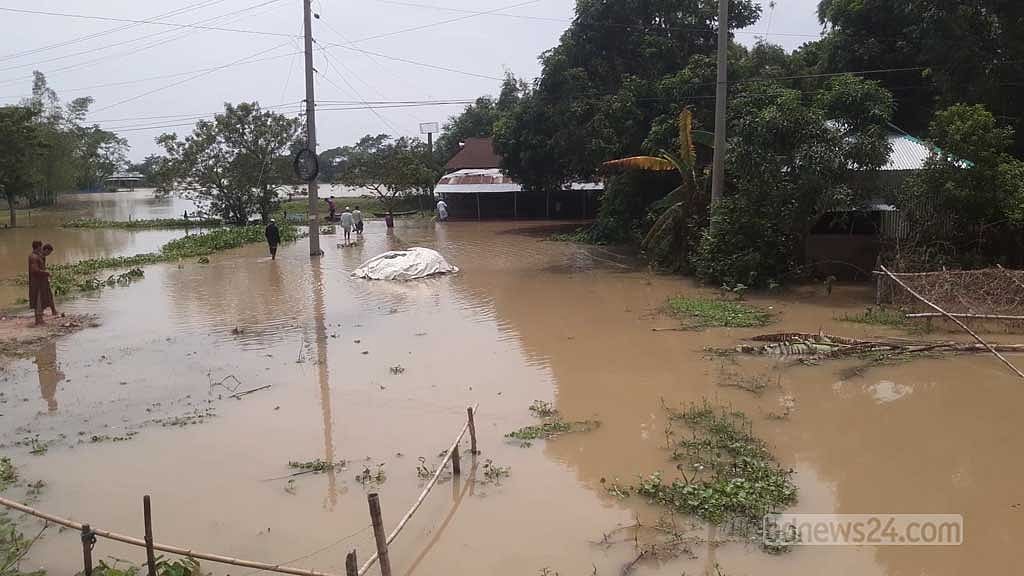
Meanwhile, as the water levels of the rivers and streams in the district have started to fall, the water has also receded from inundated areas. However, the suffering of those trapped by the water has not eased.
Netrokona Civil Surgeon Md Selim Mia said, “Flood water has started retreating in the district. But now there are worries of various diseases spreading among those affected by floods. Therefore, 86 medical teams have been formed to provide health care to them.”
“These teams are working in the areas where flood waters rose. They are helping with essential medicines, including water purification tablets.”
The workers at the Upazila health complexes, union health sub-centres, and DGHS doctors are all working on the issue, he said.
Selim said, “I hope there will be no health problems and everyone will get treatment."
In addition to the Kalmakanda, Sadar, and Barhatta areas of the district, the number of people stranded by the water has started to decrease in Madan, Mohanganj, and Khaliajuri in the Haor region.
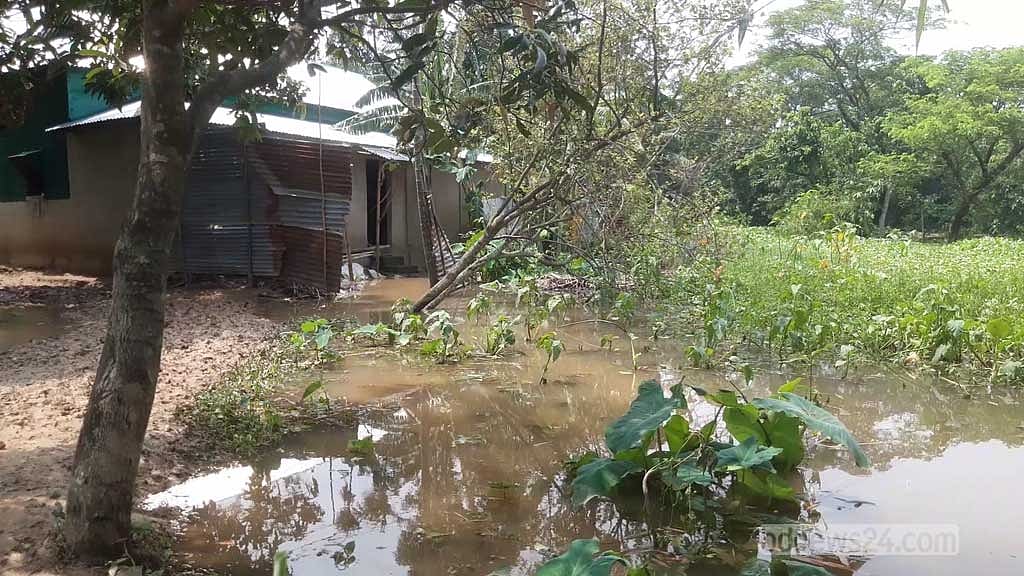
Those areas where the water has retreated from the houses are covered with mud and dirt. As a result, people are having difficulties leaving their homes and going elsewhere.
In addition to the shortages of food for cattle and children, there is also a lack of fresh water.
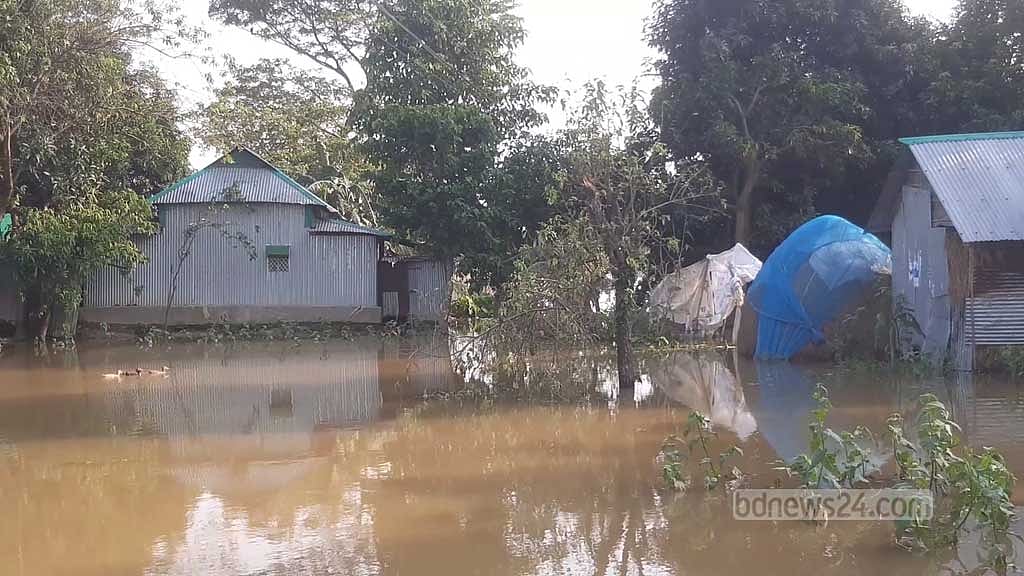
Sarwar Jahan, executive engineer of the Netrokona Water Development Board said that as of 9am on Sunday, the water of the Ubdhakhali River is flowing 29 cm above the danger limit at Kalmakanda Point.
But the Dhanu River, which winds through the Haor region, is flowing 20cm below the water line at Khaliajuri Point.
Netrokona District Commissioner Shahed Parvez said, “The water levels of rivers in the district have started to fall and the necessary aid distribution is ongoing.”
When asked how many people in the district are currently trapped by waterlogging, he said, "We cannot give a precise count. Netrokona is largely a Haor region and many people's houses are surrounded by water bodies. As such, we can’t exactly call them trapped by water. However, many saw water entering their homes and yards.”
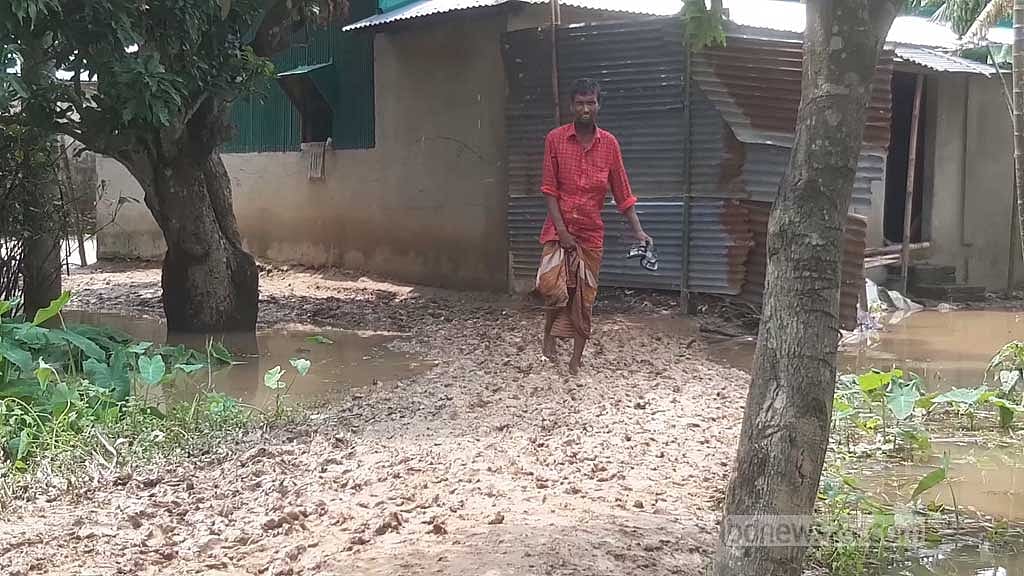
However, Parvez added that they did know that 160 people in the district went to shelters.
“As of 12am on Sunday, our reports say some 100 people from 25-30 families are currently in the shelters.”
Md Ruhul Amin, the district’s relief and relocation officer, said that 10 metric tonnes of GR rice had been distributed to flood victims. The government has also allocated Tk 450,000 in cash and 200 packets of dry food. But, as the waters are starting to recede, this allocation will not expand any further.