The ruling Awami League will have to pay a ‘political price’ if it cannot execute the project, what with the parliament election barely a year away.
The Padma bridge project was one of its key electoral commitments. No wonder, the Hasina government is desperate to start work on the project with whitener resources it can manage.
While Finance Minister AMA Muhith on Saturday said that the government wanted to start the construction work within two months, economists and engineers alike doubt whether that will be possible.
Two years of uncertainty over World Bank funding came to an end on Thursday when the Bangladesh government formally withdrew its request to the World Bank for financing the country’s biggest-ever infrastructure development project.
The World Bank in a media statement on Friday confirmed that it had received a letter from the government regarding the withdrawal of the funding request.
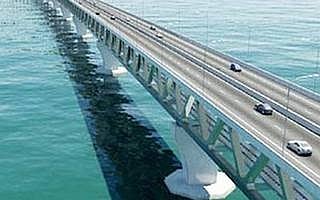
Out of the $2.9 billion required to build the 6.15-kilometre bridge along with railway track at current prices, the World Bank had committed $1.2 billion.

The Asian Development Bank which had committed $ 600 million backed out soon after.
The government says it will mobilize its own funds and look out for alternative sources of funding. Hints have been dropped about possible commitments from India, China and Malaysia.
While it is entirely possible that either of the two Asian giants, India or China, can mobilize the kind of funds that would be needed to fill in the void left by the World Bank and ADB’s departure, there is no information that either of them have made any definite commitments. Nor is there any information of a commitment from Malaysia.
At best, negotiations may be at a preliminary stage.
It is unlikely that both India and China will agree to fund the project together, which would be ideal if that was possible.
Bangladesh also risks incurring the wrath of one if the other to fund the project, an inevitable fallout of the Sino-Indian competition for influence in Asia.
Negotiating the financial and technical details of such a huge project takes time and unless backroom parleys are at an advanced stage with any one or two of the possible funding agencies, it is unlikely that alternative sources of funding can be finalized within the next six months.
By then, the monsoon sets in, making the engineering part of the work difficult to execute.
Two former Bangladesh Bank governors, Mohammed Farashuddin and Salehuddin Ahmed, have said that it would be a huge challenge for the government to begin the construction work by doing up the project all over again,
Research Director of Bangladesh Institute of Development Studies (BIDS) Dr. Zaid Bakht expressed similar concerns and doubted whether the construction work would begin within the tenure of the present government.
Former Advisor to the caretaker government Akbar Ali Khan says that he is waiting to see what plans the government has to get the project going against all odds.
They all agree on one point – an alternative to the World Bank will not be easy to find and if found, not easy to deal with.
Farashuddin, who was the central bank governor during the last Awami League government, told bdnews24.com on Saturday that the government would need to start the construction work right away.
“It should not wait for the World Bank decision for renewing its financing,” he said.
He said that building the bridge was one of the most important electoral pledges of the government. “It will cost the government politically to a great extent in the next parliamentary election if it fails to begin the construction work of the bridge. That’s why the government wants to begin the work.
But all the experts feel there is very little time that the government has to get such a huge project off the ground.
“The government does not have much time in hand. Now it’s a big question whether it can make new design, invite tenders and complete other related proceedings to begin the construction work within the timeframe,” said Farashuddin.
After the government withdrew its request to the World Bank for loan, it has been talking of building the bridge with its own funds. Prime Minister Sheikh Hasina has said that the government had proposals from China, Malaysia and India for the project.
Farashuddin said, “Malaysia’s proposal isn’t acceptable since they want to operate the bridge for 30 years. That means they want to do business.”
“Terms of the Indian government’s $1 billion loan offer are also questionable. Their loan proposal should be reviewed in the global perspective.”
Defending the Chinese loan proposal, the former central bank governor said its interest rate was two percent and it was payable within 20 years with a five-year grace period. “But it should be looked into whether this offer covers the project cost.”
About own funding, he said the consulting firm would not feel confident in that case. “It’s indeed possible to start the construction work of the Padma bridge with a portion of our present foreign currency reserves, but there has been an apprehension whether globally well-known contractors will participate in the tender.”
Farashuddin added, “I would again say that it would be better if the bridge is built with the funds of the World Bank and other development partners. Since that option is closed, now we’ll have to proceed with alternative options. And now the main task is to determine the best out of the alternative options soon.”
BIDS Research Director Dr Zaid Bakht echoed Farashuddin on securing confidence of the contactors.
He told bdnews24.com that the contactors would easily get their bills cleared if the World Bank were involved in any project, so the contactors felt comfortable to work in such projects.
“If the government builds the bridge with its own funds, big contactors may not take part in the bidding process out of apprehension that their payments would get stuck.”
On the present situation of the project, the BIDS official said, “Now, a new design has to be finalised afresh. Whether there will be railway tracks in the project, who will make the design, who will finance, the sources of funds –– everything has now landed in uncertainty.”
About Finance Minister AMA Muhith’s remark that construction of the bridge would start in two months time even if foreign donors were not available, Zaid Bakht said, “We’ve to keep in mind that years pass one after another but we fail to complete construction work of a flyover. Then how we can implement such a mega project like the Padma bridge?”
Former Cabinet Division Secretary Akbar Ali Khan told bdnews24.com that it would not be proper to comment until the government makes a specific announcement on how it would implement the project.
“I’ve been saying repeatedly that it would be better if the project is implemented with the World Bank financing. The government itself also realised the issue. That’s why they had requested the World Bank to reconsider its decision after it announced not to provide fund to the project.”
Finance Minister AMA Muhith had on Tuesday said starting the Padma bridge construction work would not be possible within the tenure of this government if the lending agency World Bank were not to come forward.
“But now the government has withdrawn its request to the World Bank, and the ADB and the JICA have also declined to stay in the project. It’s expected that in this circumstance, the government will want to begin constructing the bridge soon to fulfil its electoral pledges,” he said.
Responding to queries from reporters at a discussion in the city, Salehuddin Ahmed, who served as the central bank Governor during the last BNP government, said pressure would be created on the overall economy of the country if the bridge was constructed with own funds, and the alternatives being considered were costlier.
Ahmed also said that it would be difficult to complete the project with any well-known consulting firm and contactor due to absence of the World Bank in the project.