


Published : 15 Dec 2016, 05:25 PM
Updated : 08 Aug 2022, 03:58 PM


Those include the body of Tamim Chowdhury, who police said was a top leader of the newly revived Jama’atul Islam Mujahideen or JBM.
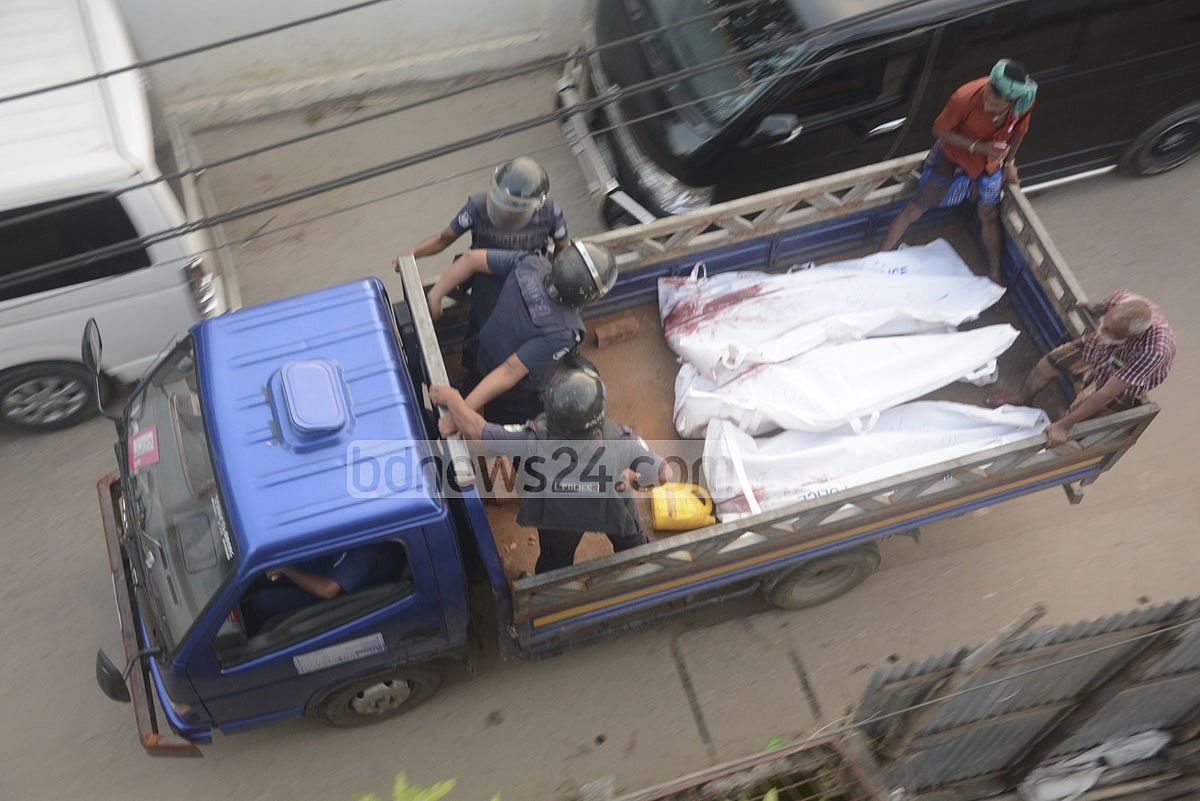
The bodies kept at the morgue in Dhaka Medical College Hospital were handed over to Anjuman Mofidul Islam, a welfare organisation that provides burial services.
“The bodies of three militants killed in the police encounter at Narayanganj have been handed over,” forensics department chief Soheil Mahmud told bdnews24.com.
The dead bodies of two other militants killed during police drives at Azimpur and Mirpur’s Rupnagar were still at the morgue, he said.
Ruhul Amin, an official for Anjuman, said they received the three bodies around 2:30pm. “They’ll be buried at the Jurain Graveyard.”
The five gunmen and another suspected attacker from the deadly siege of Dhaka’s Holey Artisan Bakery were buried ‘unclaimed’ in the same graveyard.
Another group of suspected militants who were killed during an alleged gun battle with police in a Kalyanpur flat are also buried there.
On Aug 27, a police raid on a ‘hideout’ at Narayanganj’s Paikparha culminated with the death of the three militants.
It was said that Tamim, the alleged cafe attack mastermind, was killed along with Fazle Rabbi, a college student from Jessore. The identity of the other person with them could not be confirmed.
Their autopsies showed that they had been shot in their heads. There were also splinter wounds on their hands.
On Nov 8, the police said they confirmed Tamim’s identity by matching his DNA to his father and sister.
A Canadian passport holder, he was among 10 individuals on the first list of ‘missing’ persons released by the authorities in the wake of the cafe attack.
Tamim is grandson of the late Abdul Mojid Chowdhury, of Beanibazar in Sylhet, who is said to have been a member of the Peace Committee, an outfit that collaborated with the Pakistani military forces during the 1971 Liberation War.
His father worked on ships. The family moved to Canada after the Liberation War.
Also Read:
How JMB evolved to ‘Neo JMB’












