Dhaka, Sept 14 (bdnews24.com) — Dhaka gridlock, delayed highway deals, power crisis, garment unrest, potato surplus were the key issues corporate chiefs raised while top government and business leaders Sunday sought to celebrate public-private partnership in policy planning and regulatory reforms.
Both the Regulatory Reforms Commission and Bangladesh Better Business Forum were launched last year with civil servants and public sector representatives joining hands to create a better business climate.
Chief adviser Fakhruddin Ahmed, who heads the 41-strong BBBF, took some pride in the progress achieved by the forum since its launch in November last year.
"The caretaker government has now approved 226 separate recommendations to support investment that are now implemented or in process of implementation," the chief adviser told the "Dialogue on Public-Private Partnership for Economic Development" at the capital's Radisson Hotel.
"This is one indication of our steadfast and sincere commitment to transform this partnership from an idea into reality."
Many businessmen were far from impressed, however.
Abdur Rouf Chowhdury said he wanted better public-private collaboration in budget formulation since "we contribute 90 per cent".
BKMEA president Fazlul Huq referred to the power and gas crises. "Are we going to be able to set up new industries in the next 3-6 months?"
The government's potato campaign came in for some stick.
Said Mohammad Jashim of Cold Storage Owners' Association: "Four lakh tonnes of potato will have to be dumped. Would you please consider including potato in your relief or VGF programme?"
Four potato processing companies – each with investment of Tk 100 crore – were set up but failed to go into operation because of lack of support from banks, Jashim said.
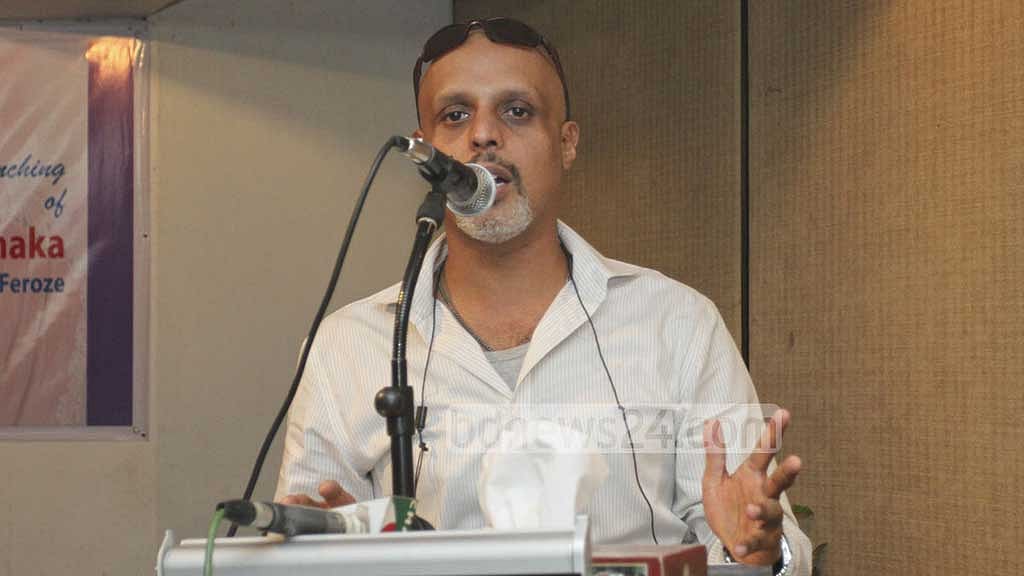
Aftabul Islam, a former DCCI president, spoke passionately about the traffic congestion in Dhaka. "A baby was born in a car yesterday because a two-hour gridlock."
Islam and others complained of government failure to move quicker with projects such as the Dhaka-Chittagong highway.
ASM Mainuddin Monem, of Abdul Monem Ltd, pointed to delays in decision making. "We do big infrastructure projects. We want to be partners in progress. But decisions have to come faster."
Shakil Ahmed tried to draw the CA's attention to the unrest in the garment industry.
"You should take the labourers on board. They are part of your investment and should be treated as partners," the chief adviser said of the garment crisis.
Fakhruddin and BBBF members, however, listed the achievements so far, highlighting specialized SME banking services and the National Skills Development Council (NSDC) among many others.
The NSDC was targeted to create 15,000 IT professionals in five years, said Samir Asaf, a BBBF member who sits on the forum working group on skills development.
Five working groups – all co-chaired by non-civil servants – deal with business entry and operations, business finance, infrastructure, macroeconomic policy and skills development. Civil servants however chair the groups.
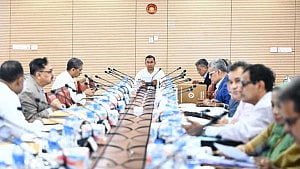
The chief adviser was joined by finance adviser AB Mirza Azizul Islam and army chief General Moeen U Ahmed on the dais in a ceremony with seven speeches or presentations.
It ended with a poorly orchestrated question-answer session moderated by FBBCI president, Annisul Huq.
Huq, an ex-officio BBBF member, was the first to speak at the "dialogue" reading out a well-written text in English.
The FBBCI president spoke of his dream to see an elected prime minister and the leader of the opposition come together and listen to business leaders.
Adviser Mirza Aziz, BBBF's executive chair, was not at all impressed when some businessmen demanded subsidies and government support to stay competitive.
"Anyone who exports anything wants government subsidy. That's not how you create competitiveness (in international market)," the finance adviser said.
He alleged that the private banks were colluding with each other to keep interest rates high.
But the government's role as the facilitator was acknowledged by the head of the interim government.
"In a country like Bangladesh, where our private sector is still in a developmental state, the public sector must ensure that markets are not distorted in order to allow the private sector to flourish," the chief adviser said in his prepared speech.
"A better investment climate will make for more and better investments that in turn to greater employment, better jobs and better wages," he said.
"We currently have 99 SME Service Centres approved by the Bangladesh Bank in process of being opened by commercial banks," he said.
"The commercial banks are working with the central bank and to reduce interest costs and charges for Small and Medium Enterprises," Fakhruddin said.
He responded positively when a seed growers' representative sought same support as the state-run BADC. "Send your proposal in writing through BBBF."
On a suggestion to include more women in BBBF, the chief adviser said he did not see a problem and would consider.
The lone woman member of BBBF, Laila Kabir, who lauded its supportive role, was sat on the dais along with two other business representatives, FBCCI's Huq and ICC,B president Mahbubur Rahman.
Gen Moeen referred to endemic corruption that he said had in the past damaged the country's image abroad.
The army chief said he expected the next government to build on "our work".
Others who made speeches or presentations were DCCI president Hossain Khalid and the ICC,B president.
bdnews24.com/mrf/1913hours