Published :
09 Jun 2015, 06:44 PM
Updated :
19 Oct 2022, 06:48 PM
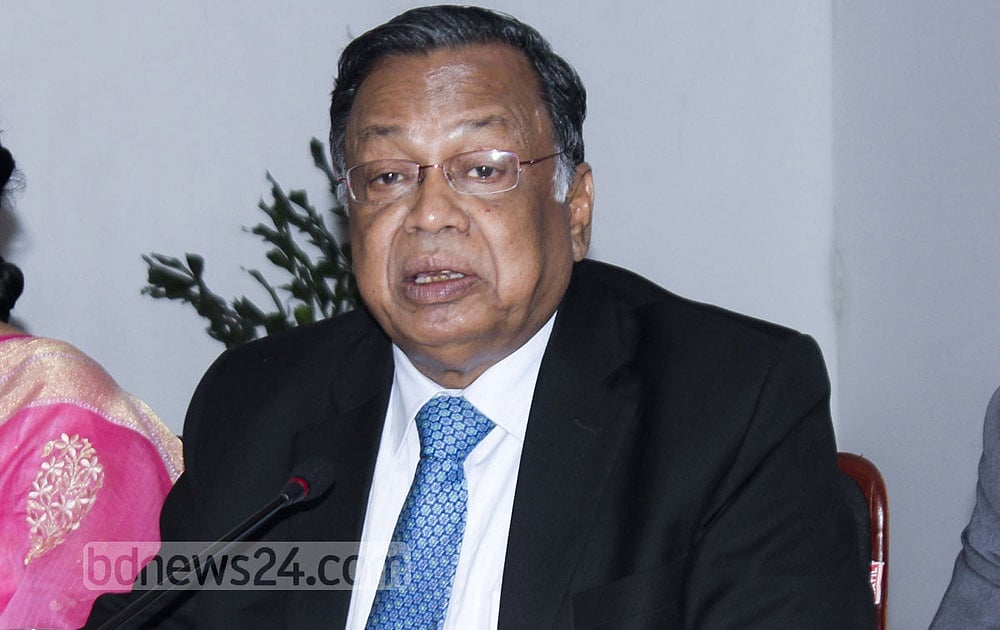
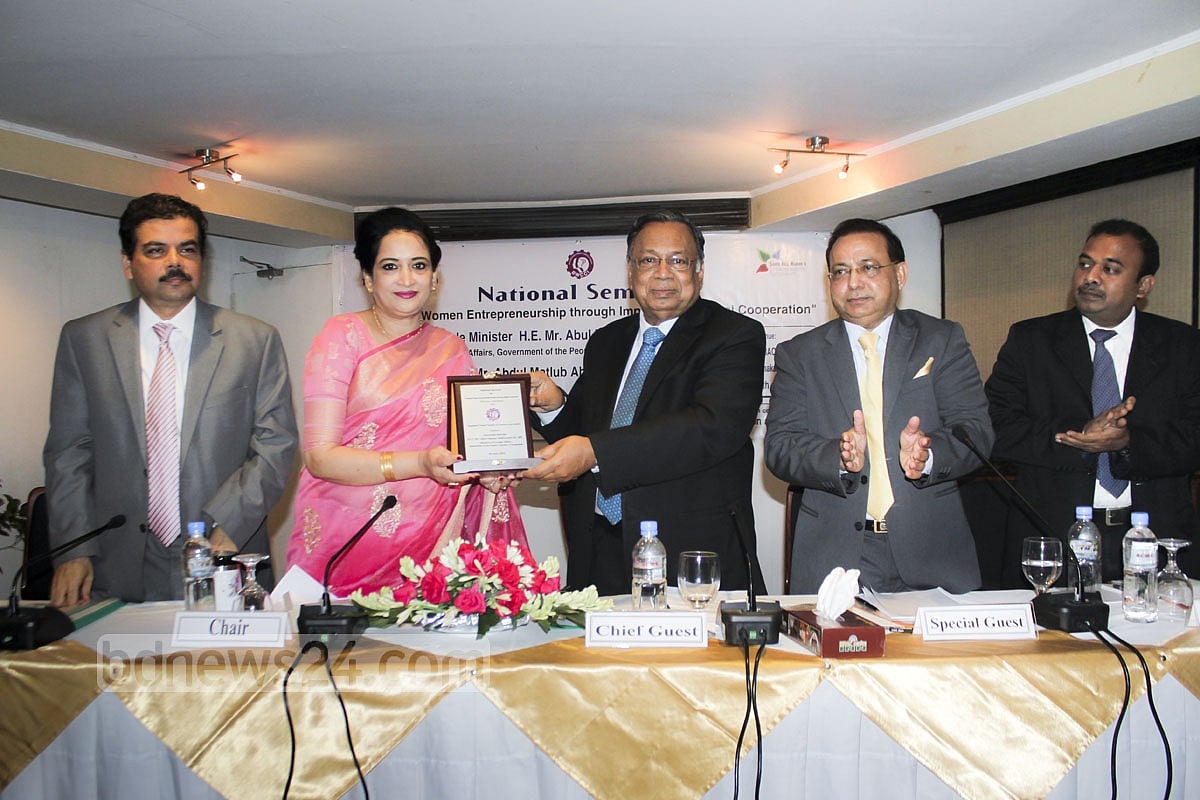
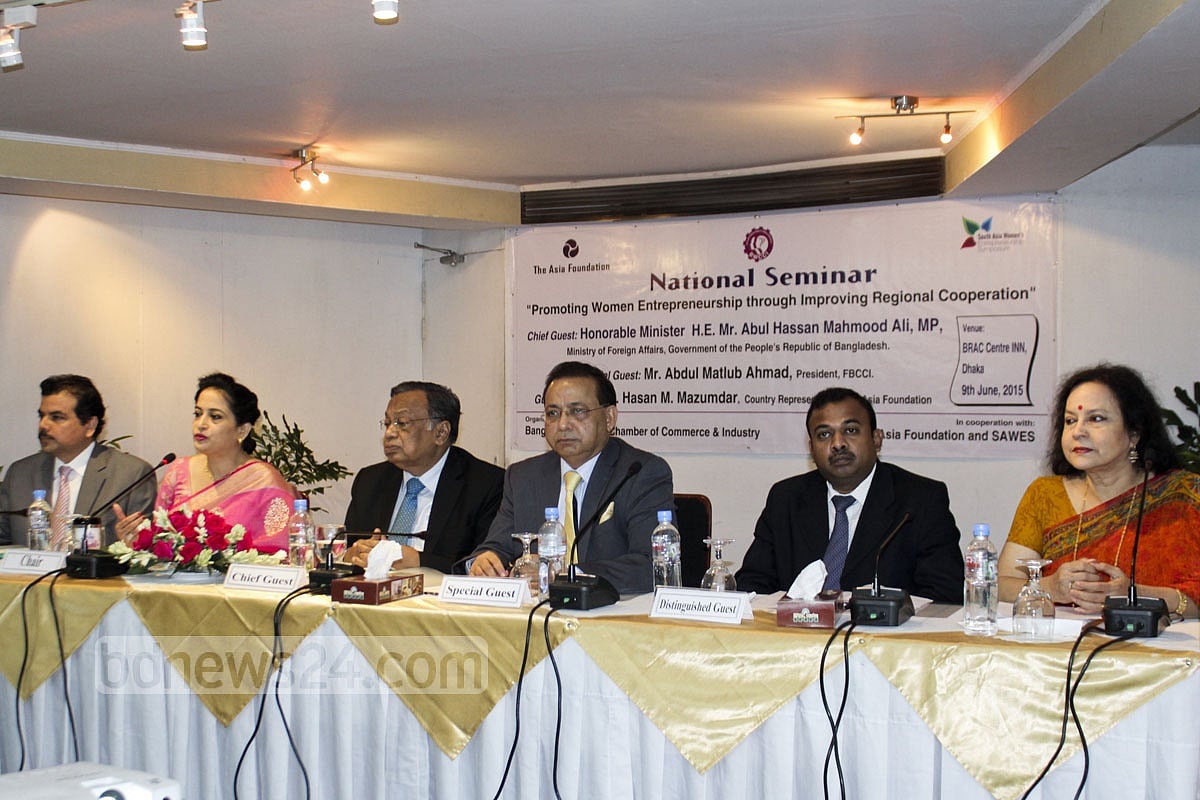
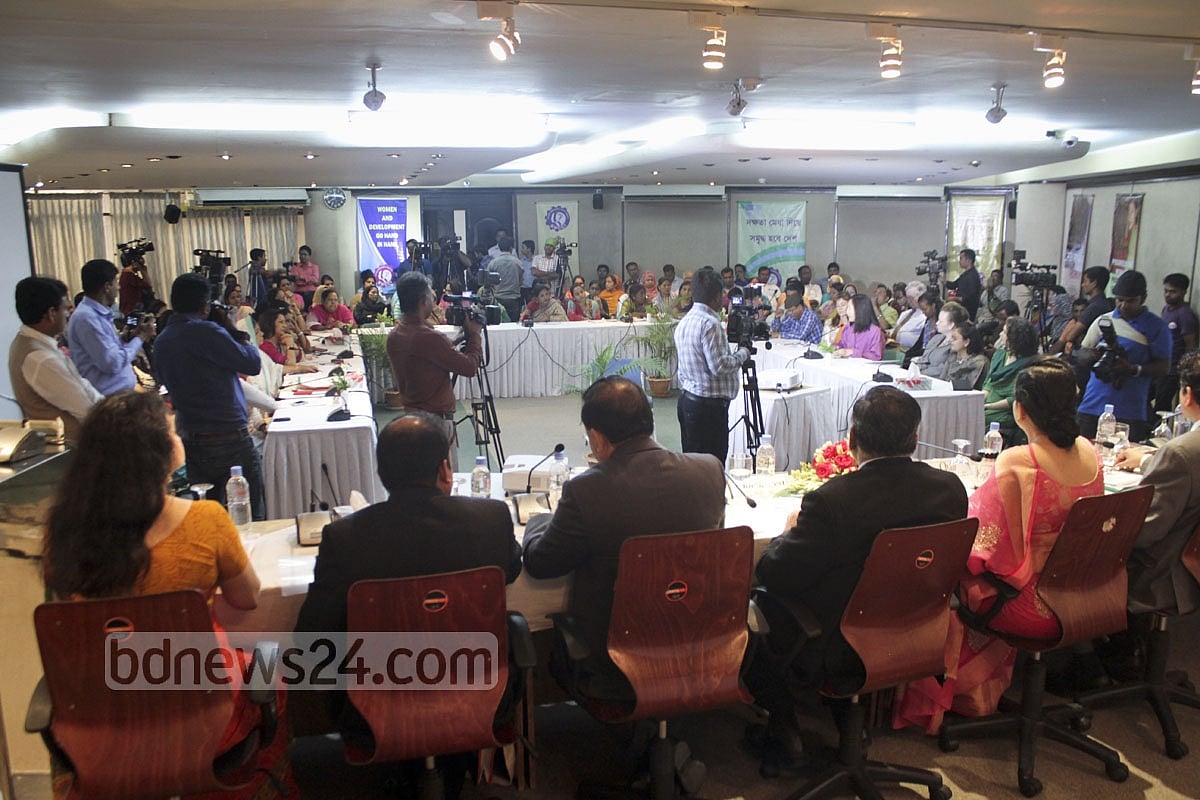
He was speaking at a seminar on Tuesday, organised by the Bangladesh Women Chamber of Commerce and Industry (BWCCI), a rapidly growing business association that works closely with their peers in India and Myanmar.
Established in 2001, the Chamber now has more than 4,000 members and is connected to over 10,000 affiliates.
Its president, Selima Ahmad, recipient of the Oslo Business for Peace Award, said they had created a platform to share and exchange views with their peers in India and Myanmar.
In Myanmar, they have taught women entrepreneurs about export and import practices, a move that drew the foreign minister’s attention.
He said the BWCCI had shown the “foresight” to build “robust and functional partnerships” with their counterparts in the neighbouring countries.
“I am particularly happy to hear about the workshop BWCCI had organised in Yangon,” he added.
Bangladesh and Myanmar’s relations are partly strained at present because of the Rohingya refugee problem.
However, the women leaders bemoaned the fact that despite their efforts to increase exports, they faced massive obstacles at the border, particularly harassment by Bangladeshi customs officials.
They said they were treated in a manner a “luggage party” is treated – a term used for those who smuggle goods across the border.
Some of them complained to the minister that they got the treatment while carrying back their own products after displaying them at a fair in India.
The women entrepreneurs identified poor infrastructure, bribes, and corrupt syndicate as some of the major impediments.
These problems are common to both men and women business persons, “but you have to consider the sensitivity of women entrepreneurs,” said the Chamber President Ahmad.
There was no separate toilets on the other side of the border, a complaint that Indian High Commission’s First Secretary Bijay Selvaraj, who was present at the seminar. took note of, and said he would inform New Delhi.
“Hopefully it’ll be settled soon,” he said.
The foreign minister assured the women entrepreneurs of taking care of their problems, if they made specific points.
He stressed “recalibrating the mindset and work culture” of Bangladesh officials at the border points, and the training of enterprising women who go beyond borders to export and import.
Ali urged them to explore ways to promote women’s participation in the border haats that operated along the Bangladesh-India border.
He said the government was focusing on both physical connectivity and people’s connectivity in the region.
“One of the most dynamic agents and beneficiaries of such connectivity can be our business people,” he said.
“It is encouraging to see that the BWCCI is working as a catalyst to make that happen.”
President of the apex business body FBCCI Abdul Matlub Ahmad said regional connectivity was “slowly moving” and the concept had got a boost after Indian Prime Minister Narendra Modi’s visit.