


Published : 18 Nov 2021, 06:05 PM
Updated : 08 Apr 2022, 01:21 PM


Supreme Court Advocate Tapas Kanti Baul sent the notice on Thursday on behalf of Dhaka residents Saleem Samad, Victor Roy, Jagannath University law teacher Dr SM Masum Billah and lawyer George Chowdhury, a prosecutor at the International Criminal Tribunal.
In the notice, the recipients have been asked to regulate the activities of Facebook in Bangladesh. It has been asked to take the necessary steps in this regard within three days of receiving the notice "without negligence".
Apart from Mark Zuckerberg, the notice was also sent by email to the chairman of the Bangladesh Telecommunications Regulatory Commission (BTRC), the secretary of the Ministry of Posts and Telecommunications, the senior secretary of the Public Security Department of the Ministry of Home Affairs and the director general of the Digital Security Agency.
He told bdnews24.com that the notice had been sent to them because they were "the authorities most responsible''. Legal action will be taken if they fail to respond within the stipulated time.
During Durga Puja, on Oct 13, a video and photo of an alleged desecration of a Quran at a Durga Puja mandap in Cumilla were widely circulated on Facebook.
The notice said that such 'misleading, inaccurate, false information', writings, pictures, audios, videos often go 'viral' on Facebook.
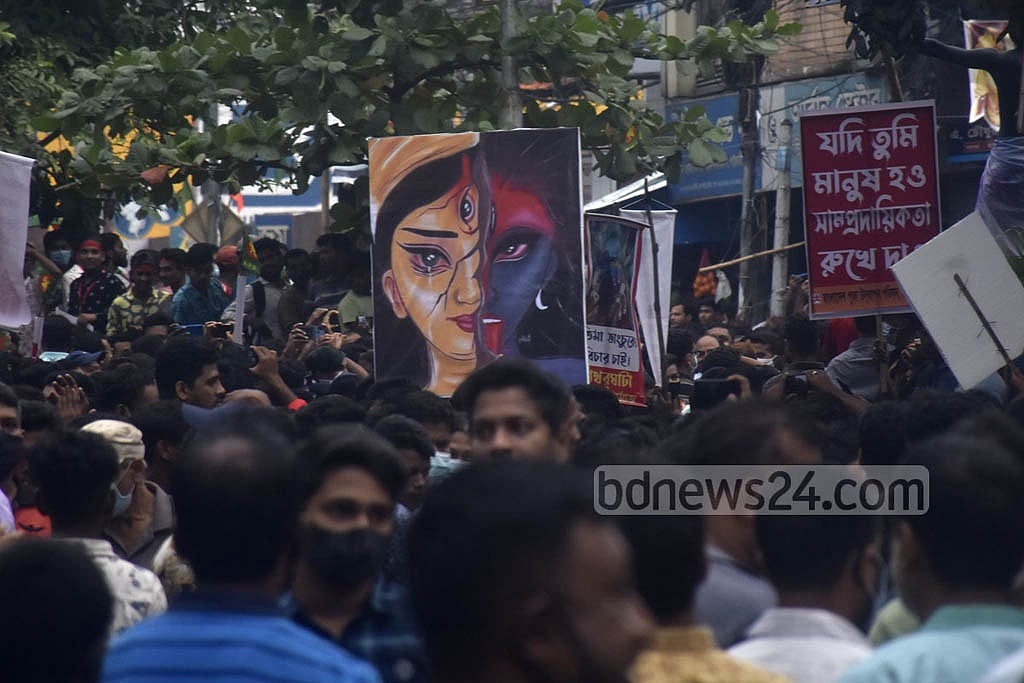
According to the Hindu-Buddhist-Christian Unity Council, communal attacks on houses and places of worship of Hindus took place in 27 districts across the country from Oct 14 to Nov 1. At least 9 people were killed in these incidents.
The notice also highlights the past incidents of communal attacks in various parts of the country including Ramu in Cox's Bazar, Nasirnagar in Brahmanbaria, Shalla in Sunamganj, Bhola Borhan Uddin, Satkhira, Patgaon in Lalmonirhat.
It said the recipients of the notice had "completely failed" to prevent such communal attacks, which violated the fundamental rights of citizens.
However, it is their statutory responsibility under the Digital Security Act to stop the promotion of such misleading, wrong, fake, false news, videos, audio and pictures, it added.













