


Published : 04 Jun 2014, 01:49 PM
Updated : 08 Aug 2022, 06:50 PM


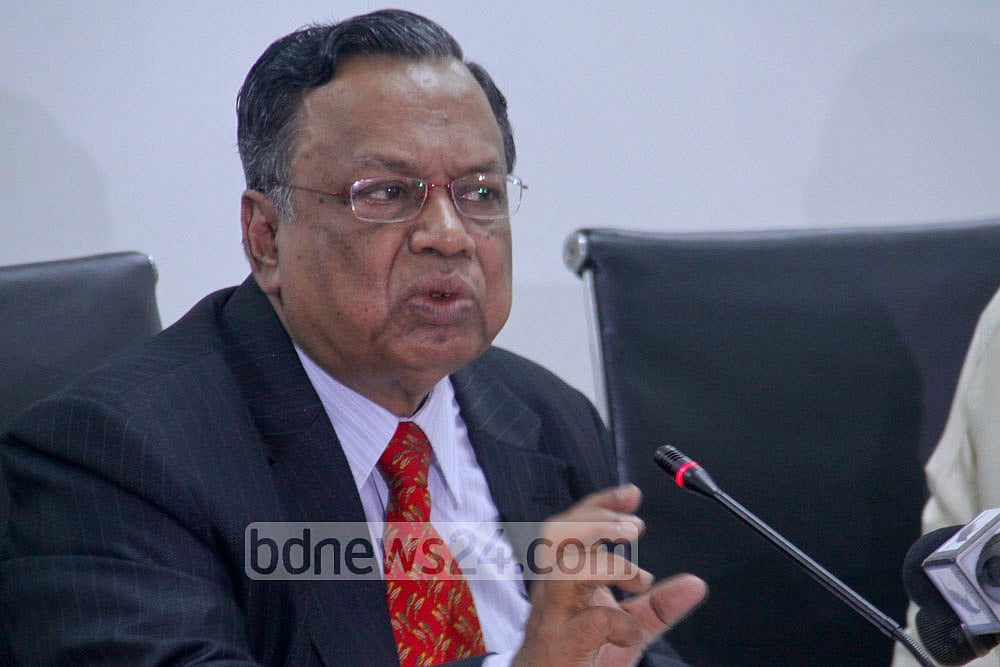
Foreign Minister Abul Hassan Mahmood Ali inaugurated the seminar in Dhaka and said Bangladesh as a nation was “indeed taking a bold step towards nuclear power generation”.
“This bold decision must be matched with absolutely fool-proof capacity to deliver on its mandate,” he said.
The two-day seminar is being organised just after Prime Minister Sheikh Hasina’s Japan visit where she sought Tokyo’s support for setting up a nuclear power in Bangladesh.
The Premier had earlier announced her intentions to build another nuclear power plant in southern part of Bangladesh as part of her government's master plan for power generation.
The Master plan aims to generate at least 4000 MW power from nuclear power plants.
Bangladesh expects 2,000 MW of electricity in the national grid starting from 2020 – 21 from the two nuclear plants currently being commissioned at Rooppur with Russia’s support.
“It is primarily to generate 4,000 MW power from the nuclear power plants that the prime minister has invited Japan to explore the possibility of cooperating with us, so that we can have another nuclear power plant project in future,” Foreign Secretary Md Shahidul Haque told the seminar.
In the joint declaration during Hasina’s Japan visit, the two prime ministers reaffirmed the importance of strengthening energy cooperation, including in the area of peaceful uses of nuclear energy.
Hasina expressed her hope that Japan would examine “the possibility of cooperating with Bangladesh for a nuclear power plant project in future”.
She also sought Japan’s cooperation for capacity building in nuclear safety and security.
According to the joint declaration, they also decided to launch “a new dialogue” between experts on peaceful and safe uses of nuclear energy in Bangladesh in which Japan would share the experience and lessons learned from the Fukushima disaster.
Bangladesh Atomic Energy Commission (BAEC), the Integrated Support Center for Nuclear Nonproliferation and Nuclear Safety (ISCN) of the Japan Atomic Energy Agency (JAEA) co-organised the seminar.
The foreign minister urged 41 participants joining the seminar to discuss ways to meet the challenges of safety concerns.
“This is something we owe to our future generations,” he said.
He made it clear that Bangladesh’s pursuit of nuclear energy generation would be “solidly anchored in our principled position on nuclear disarmament and non-proliferation”.
“As a State Party to the Nuclear Non-Proliferation Treaty (NPT), we look forward to effectively participating in the 2015 NPT Review Conference, and sharing the progress we have made till date with various aspects of nuclear non-proliferation at the national level,” he said.
The foreign minister said Prime Minister sought Japanese support for its “long, proven expertise in implementing nuclear safeguards and ensuring nuclear safety and security”.
File Photo













