


Published : 10 Jun 2015, 07:18 PM
Updated : 23 Apr 2022, 12:48 PM


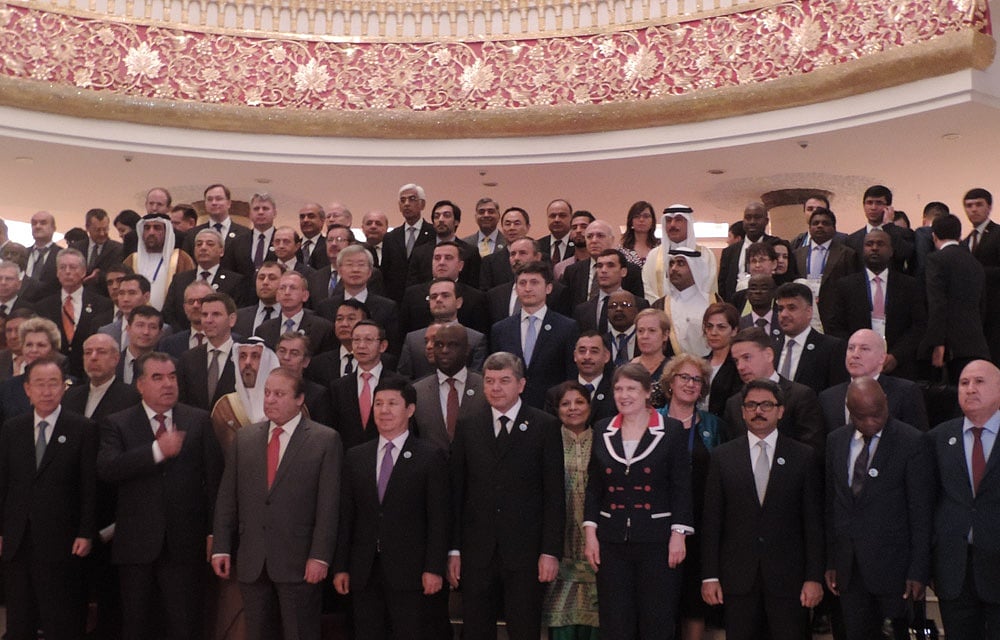
State Minister for Foreign Affairs Md Shahriar Alam made the appeal at the high-level international conference on the implementation of the ‘International Decade for Action ‘Water for Life’, 2005-2015’ in Dushanbe, Tajikistan.
He is representing the prime minister.
“We shall have to move beyond the existing limits of Intellectual Property Rights (IPR). This is critical for our collaboration in development and transfer of technology”, Alam was quoted as saying by the foreign ministry on Wednesday.
Trans-boundary water management is a crucial issue for Bangladesh as all rivers flow into the country from India.
Alam said for countries like Bangladesh, “access to critical technology most often limits us in arranging crucial life-saving options for people at the bottom”.
As mandated by a UN resolution initiated by Tajikistan in 2003, the period of 2005-2015 was declared as International Decade for Action ‘Water for Life’.
A large number of high-level delegations from over 100 countries and international organisations including heads of states, heads of governments, ministers, ambassadors, senior officials, and representatives of international agencies, and non-government organisations attended the conference.
President of Tajikistan Emomali Rahmon inaugurated the conference.
The opening session on Tuesday was addressed by UN Secretary General Ban Ki-moon, Prime Minister of Pakistan Nawaz Sharif, Chief Executive Officer of Afghanistan Abdullah Abdullah, Prime Minister of Kyrgiz Temir Sariev, Prime Minister of Gabon Daniel Ona Ondo and Administrator of the UNDP Helen Clark, among others.
He said that water security was “increasingly challenged in the face of booming population, unplanned and rapid urbanization, pollution, over-extraction of groundwater, climate change and water-related disasters”.













