


Published : 17 Sep 2016, 02:36 PM
Updated : 19 Oct 2022, 05:28 PM


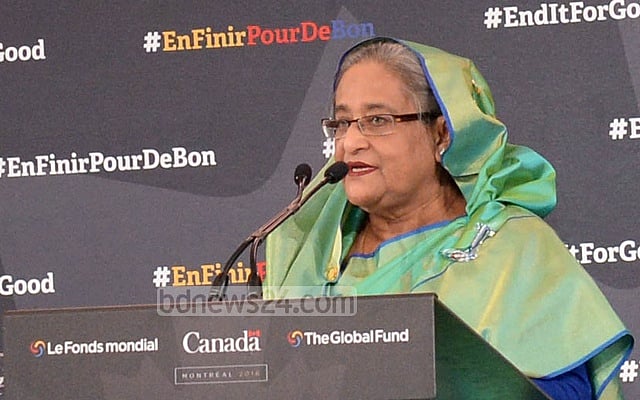
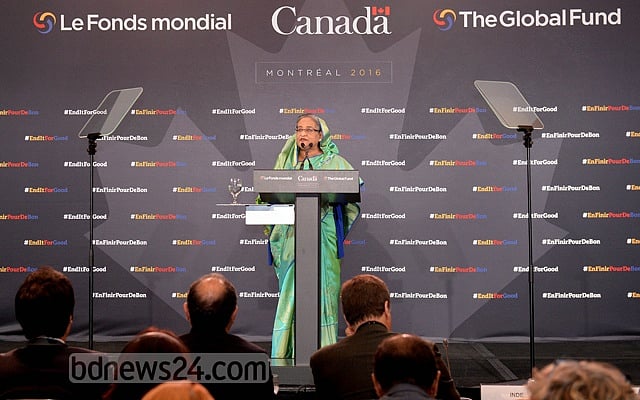
"I firmly believe that AIDS, tuberculosis and malaria are preventable and treatable. It needs commitment, determination and solidarity ... let's make a pledge to work together towards that end," she told the opening session of the Fifth Replenishment Conference of the Global Fund at Hyatt Regency hotel in Montreal on Friday.
She also sought the Global Fund support for her government's efforts to ensure health security for all in the country, Press Secretary to the Prime Minister Ihsanul Karim said.
"My government attaches high priority to health security by investing in health infrastructure, products and services ... we expect Global Fund to support us in our efforts," she said.
The Global Fund is the world's main funding body for activities related to the prevention and treatment of AIDS, tuberculosis and malaria. It supports programmes all over the world.
Canadian Prime Minister Justin Trudeau, Senegalese President Macky Sall, Togo President Faure Gnassingb, Global Fund Executive Director Mark R Dybul and Secretary-General of the International Organisation of La Francophonie Michaelle Jean also spoke at the session.
Canadian Minister of International Development and La Francophonie Marie-Claude Bibeau moderated it.
"We have detected about 1.9 million tuberculosis cases since 2004, out of which more than 94 percent were successfully treated ... we have adopted several institutional measures in attaining this success," she said.
She raised three issues while talking about reflection on her government's commitments in empowering and engaging girls and women, particularly in the health sector.
The prime minister said her government gave much importance to women's education.
"We have made education free for girls up to the 12th class and introduced various types of stipends for them ... this has not only resulted in preventing dropouts , but also reduced under-age marriage, maternal and child mortality," she said.
Secondly, she said, violence is seriously impacting physical and mental health of women.
"We have been maintaining a 'zero tolerance' toward all sorts of violence and discrimination against women," she said.
Thirdly, she said, her government has set up more than 16,000 community clinics and union health centres to deliver quality services to poor and marginalised sections of the people.
"Most of the staff working in these clinics are women," she said, adding 30 types of medicine were being provided free of cost from these centres.
Hasina said Bangladesh recognises the significant contributions of international partners, including the Global Fund, in strengthening the country's health sector.
She said Global Fund had supported the implementation of a number of projects in Bangladesh that eventually enhanced the quality of lives affected by malaria, TB and HIV.
Canada is hosting the Fifth Replenishment Conference to raise funds and support the Global Fund in ending these devastating epidemics by 2030.
The conference will seek to mobilise $13 billion for the three-year period 2017-2019 for different health saving programmes.
The Replenishment Conference is held once in every three years. US President Barack Obama hosted the previous one in Washington in December 2013.













