Published :
05 Aug 2013, 10:15 AM
Updated :
09 Aug 2022, 10:59 AM
The Indian Mujahideen, which is responsible for some of the bloodiest bombings in Indian temples and public places over the last decade or more, has now tied up with smaller Islamic radicals groups in northeast India and Bangladesh, Intelligence Bureau (IB) officials said.
"They have played into growing Muslim angst over last year's riots in Assam's Bodo areas and against Myanmar's Rohingya Muslims in Rakhine state," said an IB joint director but on condition of anonymity for professional reasons.
The IM, the acronym by which the terror outfit is better known, first positioned itself in Assam's western and central regions which were hit by riots in which Muslims of East Bengali origin were targeted extensively.

"The IM created a relief front with considerable finance that operated through a wide network of mosques in Assam. They worked their way into the vacuum created by the riots and the state government's failure to take care of the beleaguered minorities," the IB official said, sitting on details of this network which he was unwilling to share, so that "our penetration into these networks are not revealed ".
The IB official said the relief front also picked on radicalised Muslim youths from these areas and IM modules started to train them in bombings, weapons use and sabotage-communication techniques.
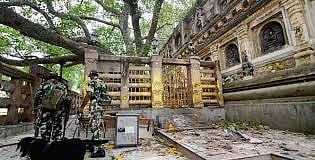
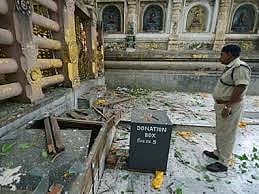
One such module from Assam, created out of the remnants of the former Muslim United Liberation Tigers of Assam (MULTA), is said to be responsible for the Bodh Gaya bombings.
Bodh Gaya was targeted because it is visited by tens of thousands of Buddhist from Myanmar, where Rohingya Muslims faced considerable violence and displacement.
The Lotus clocks which were used for the more than a dozen time-bombs that exploded in Bodh Gaya on Jul 7 were all bought in Assam a year ago, when the IM was expanding its network into the state in the aftermath of the violence in Bodo areas.
IB investigators have traced back the purchase of the Lotus clocks and now have a fair idea of the explosives devices created around it to go off on pre-set timings.
Not only did the IM raised its modules in Assam from remnants of older and somewhat defunct Muslim radical groups like MULTA, it also penetrated neighbouring Bangladesh to tap into the radical groups that have been in disarray following heavy crackdown by the Sheikh Hasina government.
"The IM has moved into Sylhet and Chittagong regions in a big way, tapping into radicalised Muslim youths from Jamaat-Shibir combine, HUJI and Rohingya armed groups which were suffering a huge crackdown by Bangladesh security agencies," a senior official of India's external intelligence said.
He said the Rohingya sufferings in Myanmar and the war crimes trials in Bangladesh, in which Jamaat leaders were handed out death sentences, were whipped up to tap into radicalised youth for developing terror modules.
Reports have been received of a tie-up between Laskhar e Tayyaba (LET) and Indian Mujahideen to develop the terror modules in Bangladesh.
This has been revealed by arrested IM operatives Syed Maqbool and Imran Khan who are being heavily interrogated by Indian intelligence.
Indian signals-cyber surveillance that ruotinely picks on 'extremist chatter' also points to the tie-up.
"We are checking on reports that dozens of young Muslims have been recruited by these two outfits with help from Bangladesh's overground Islamist parties and are being trained in suicide bombings and controlled explosions in secret bases used by Rohingya rebels on Bangladesh-Myanmar border," the external intelligence official said.
He said Bangladesh and Myanmar intelligence have been fed back the leads which they are also pursuing on their own.
At least one such base has been located in Chittagong Hill Tracts - Arakans border.
All this points to a growing trans-national network of radicalised terror modules out to avenge Muslim woes in Assam and Arakans or punishment of Islamists in Bangladesh operating on a sub-continental scale – a new challenge for security agencies in India, Bangladesh and Myanmar.
The current investigations also focus on the role of Pakistan's Inter-Services Intelligence (ISI) which built up both the LET and the IM and the possible linkages of the terror modules in the eastern slice of South Asia with those in Afghanistan-Pakistan (AFPAK) region.
The LET which was responsible for the 26/11 Mumbai attacks now operates out of Pakistan under a new name, Jamaat-ud-Dawa , which is projected as the charity group, the kind of cover IM used to expand into Assam last year.