


Published : 08 Mar 2014, 12:46 AM
Updated : 08 Aug 2022, 06:33 PM


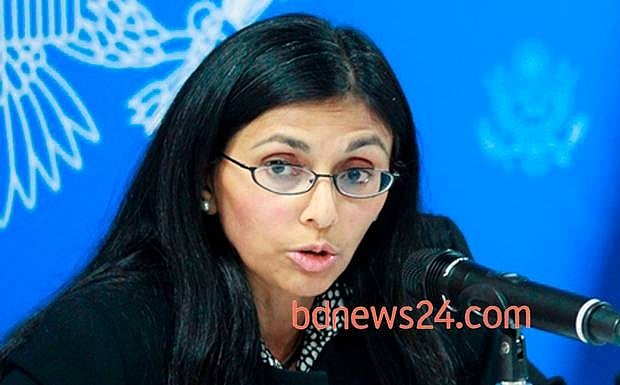
Nisha Desai Biswal made this observation while saying the US supported India’s greater economic connectivity with regional countries “to boost regional stability and prosperity”.
File Photo
The US Assistant Secretary of State for South and Central Asia said an Asia that boasts of democratic governance, “transparency and free market economics will offer 4.3 billion people the best opportunity to pursue happiness and realize their aspirations”.
In order to make this happen, she said in a lecture in New Delhi on Thursday, countries in the region would have to work across boundaries.
“The United States is very interested in supporting that vision and in supporting India’s economic connections both west into Pakistan, Afghanistan, and Central Asia; and in the east with Bangladesh, Myanmar, and Southeast Asia,” she said.
Biswal, the Indian-American Assistant Secretary of State, is on her first visit to India in her current capacity.
This is the first top-level US visit after the recent India-US spat over the treatment meted out to Indian diplomat Devyani Khobragade in New York.
She held talks with senior officials and both sides reaffirmed the priority attached to their bilateral strategic partnership.
According to the State Department, she spoke in the lecture about opportunities of trade and economic relationship between the two countries and the Asia region, which represents more than half of the world’s population.
The assistant secretary of state said the US “fundamentally believe that greater economic connectivity will boost regional stability and prosperity”.
“It will create new markets and new opportunities, and, most of all, it will create new incentives for peace.
“That’s good for the Indian economy and for the Indian people. And let me be candid, it’s also good for the American economy and for the American people,” she said.
Biswal said the Indo-Pacific Economic Corridor or IPEC is a unique geography, a place where the United States and India’s security, political and economic imperatives converge.
It supports both the American rebalance towards Asia, and India’s “Look East” policy.
“In fact I would say that the policy has moved beyond Look East to Be East, and that is a welcome development,” she said.
The senior diplomat said the US is seeing the benefits of a political transition play out with foreign investment more than quadrupling since President Thein Sein’s political reforms initiated in 2011.
“Bangladesh stands to develop tremendous commercial ties with the rest of Asia through its very strategic location and wealth of natural resources.
“But it is India’s efforts today to create durable land, sea and air links into Southeast Asia that will shape the movement of goods and services tomorrow,” the diplomat added.













