


Published : 08 Apr 2022, 01:02 PM
Updated : 21 Oct 2022, 03:40 PM


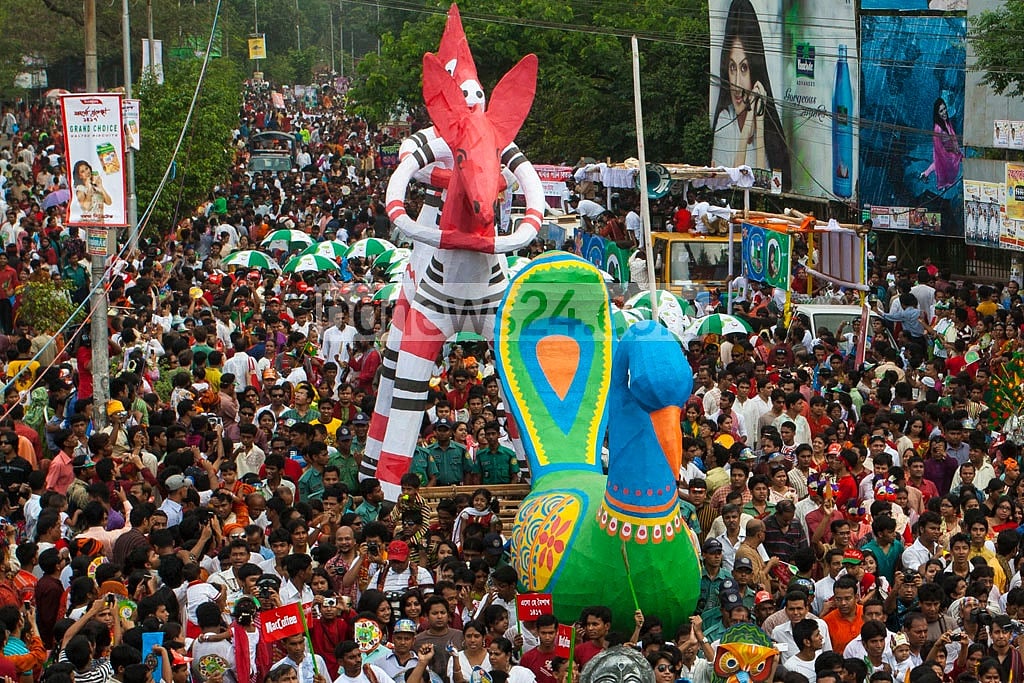
But this time, the country is set to emerge from the shadows of the pandemic and mark the day with customary gusto as the Ministry of Cultural Affairs has announced full-scale celebrations to ring in the Bangla New Year 1429.
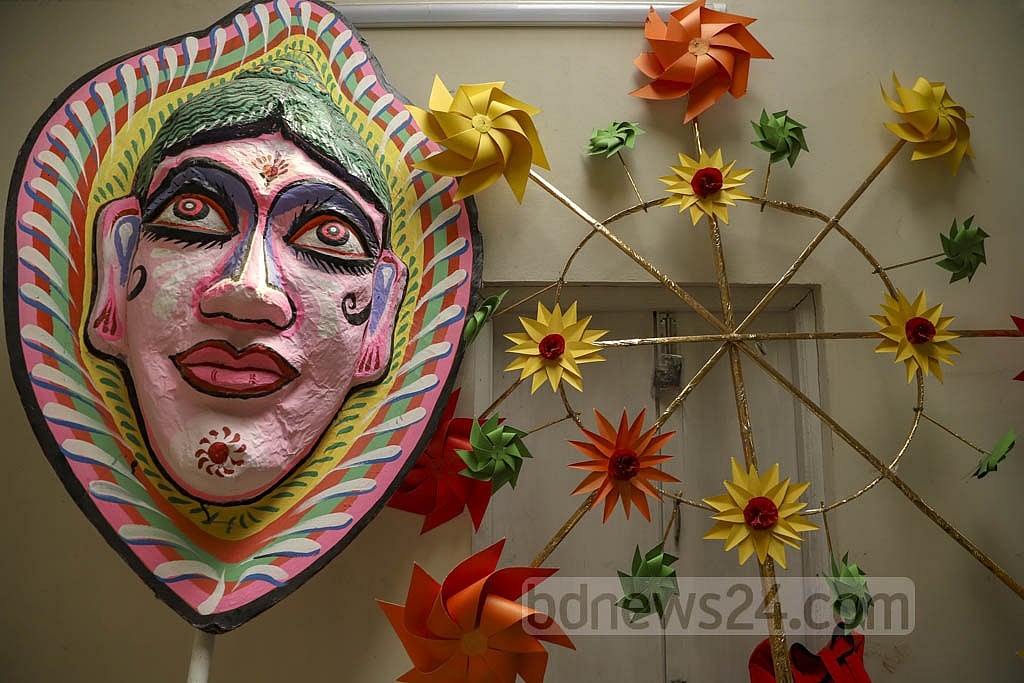
Chhayanaut is set to hold its flagship curtain-raising event at dawn while preparations are in full swing at Dhaka University's Institute of Fine Arts for the fully-fledged return of the colourful Mongol Shobhajatra, a thematic parade that ushers in the new year.
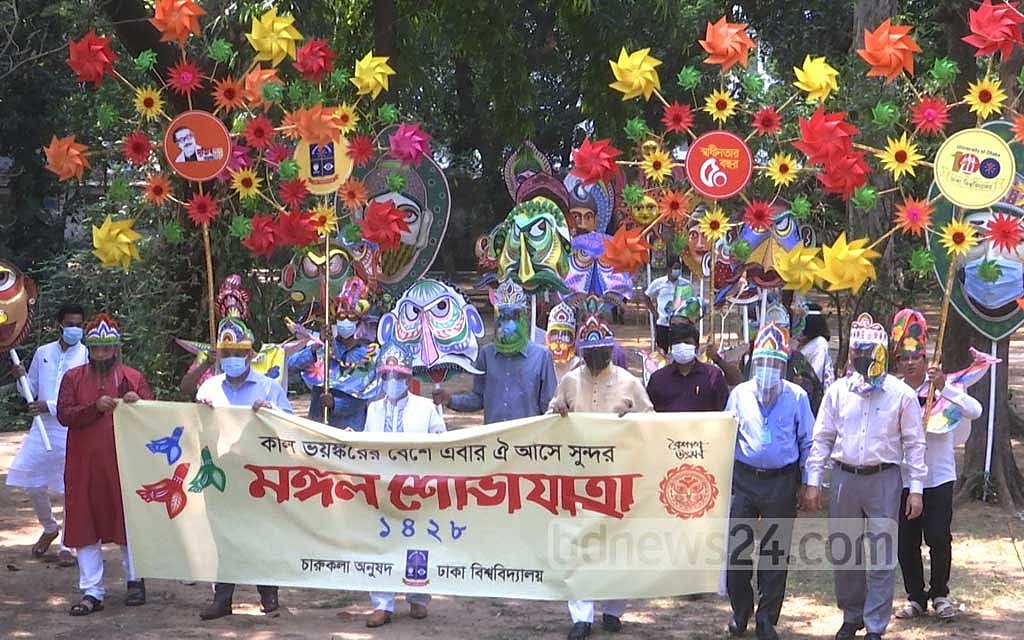
The traditional procession was cancelled in 2020 and was scaled down last year. But as the COVID-19 pandemic continues to ebb away in Bangladesh, the authorities are planning to expand the Mongol Shobhajatra, declared a UNESCO cultural heritage in 2016, to the district and upazila levels.
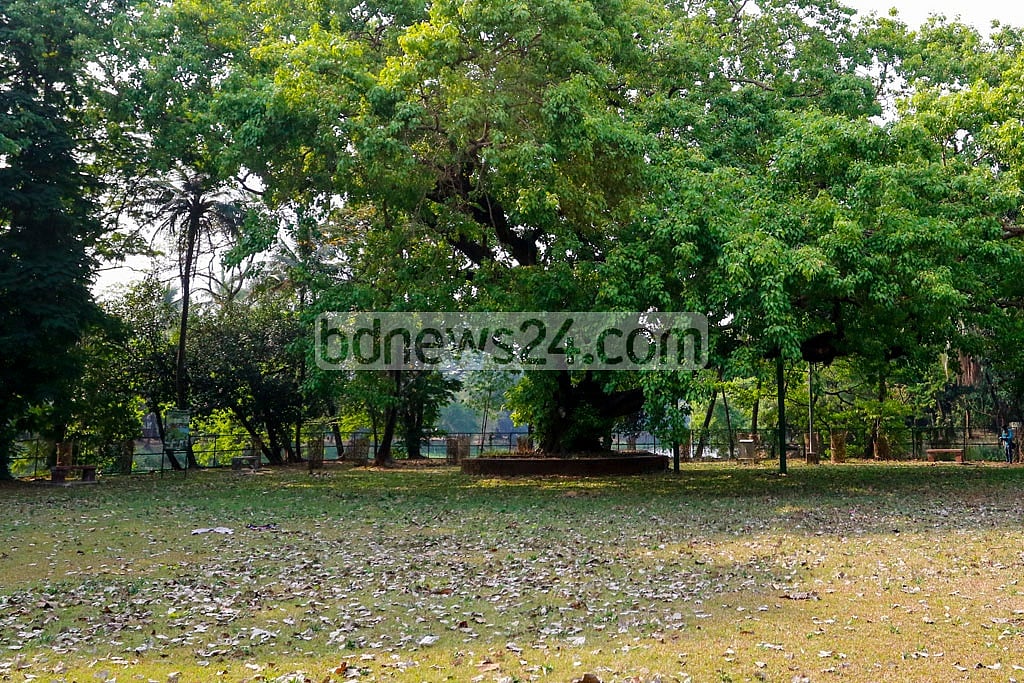
A quiet Ramna Batamul lay barren on the morning of the Bengali New Year amid the coronavirus lockdown. It is a contrasting sight to the buzzing gathering of preceding years.
Local administrations are also organising a quiz competition, focusing on the new year and Bangabandhu Sheikh Mujibur Rahman along with cultural programmes and folk fairs bedecked with colourful decorations, according to the Ministry of Cultural Affairs.
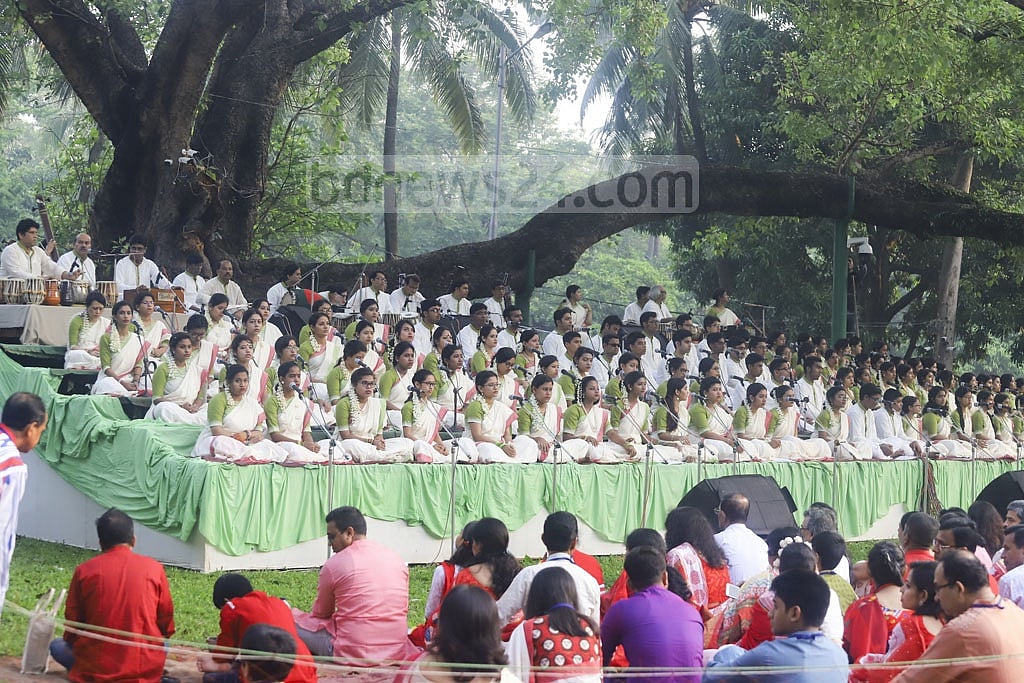
Laisa Ahmad Lisa, general secretary of Chhayanaut, said the organisation will be celebrating Pahela Boishakh with an array of cultural programmes at the Ramna Batamul starting at 6 am with the motto of “Nobo Anonde Jago” (Awaken to renewed joy).
The first sunrise of Baishakh is greeted with a chorus of songs and poetry recitations at Chhayanaut's Pahela Baishakh celebrations in Ramna Batamul. Photo: Asif Mahmud Ove
During a visit to the campus on Wednesday, the bdnews24.com reporter found a group of students engaged in ceramic artwork, drawing fishes, flowers and other motifs in front of the Zainul Gallery while another group was beautifying festival masks based on different themes, including animals such as lions and tigers.
This year's procession will feature five motifs, represented by a large-scale replica of a horse alongside other handcrafted clay figurines and traditional artefacts, all of which are being crafted by artisans under the guidance of students.
Nisar Hossain, the dean of the fine arts institute, said the organisers are unwilling to put a limit on the number of participants in this year's procession. Anyone can take part in the parade as long as they follow the health guidelines.
Dhaka University holds a symbolic 'Mangal Shobhajatra' to celebrate Pahela Baishakh or the first day of Bengali New Year on a limited scale considering the current COVID-19 situation and a seven-day lockdown enforced in Bangladesh with stricter rules.
The cultural affairs ministry said the authorities are emphasising public security at the procession and Ramna Batamul to ensure the participation of ordinary people in the festivities.
A number of government organisations will hold programmes to celebrate the Bengali New Year, including the Bangla Academy, Kabi Nazrul Institute, Bangladesh Shilpakala Academy, Bangladesh National Museum and many more. The Bangladesh missions in foreign countries will also host events to commemorate the day.
However, Dhaka University's Department of Music has decided against organising any event to celebrate the new year due to the ongoing exams at the department, according to Prof Dr Shahnaz Nasrin Ila.
At the same time, the Sammilito Sangskritik Jote has also postponed its celebratory programme at the Rabindra Sarobar.
The organisation will hold a remembrance programme for its late general secretary Hasan Arif in May, said its President Golam Kuddus. It will abstain from any festivity until then.













