


Published : 29 Mar 2018, 02:13 AM
Updated : 19 Oct 2022, 02:09 PM


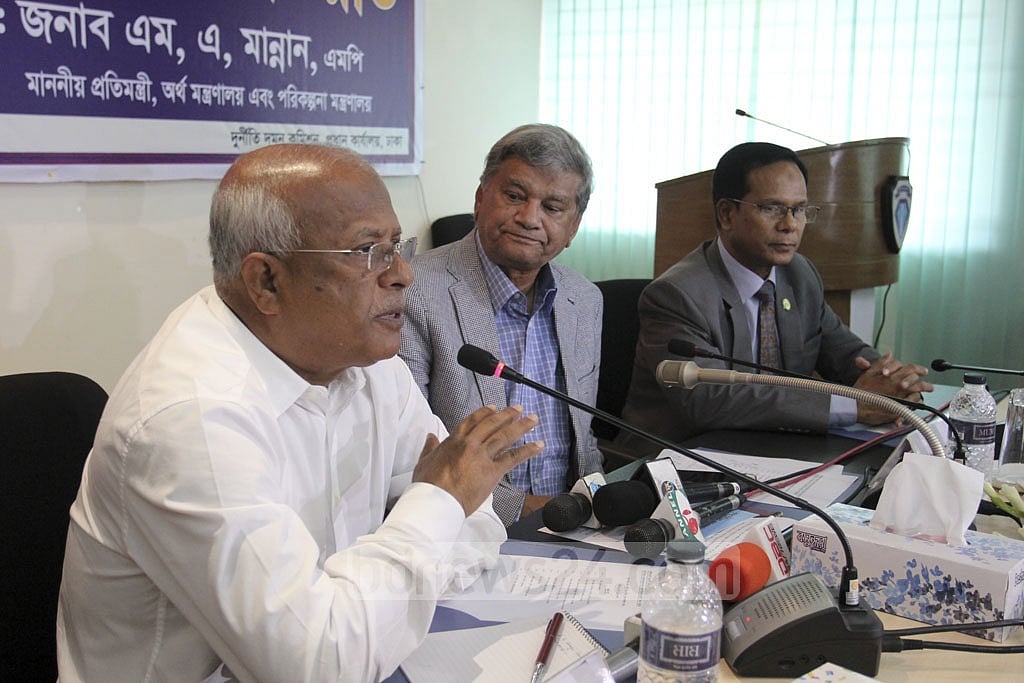
He says besides the ACC, the National Board of Revenue or NBR, police’s Criminal Investigation Department or CID and Bangladesh Bank have the authority to investigate money laundering.
But, they cannot take any action or start cases against people allegedly involved in money laundering because the government has not yet finalised the required rules following the Money Laundering Prevention Act passed in 2012, according to the ACC chief.
The Act was amended in 2015 to relieve the ACC from some responsibilities and to bolster the fight against money laundering
The law says the ACC will investigate money laundering related to bribery or other types of corruption while the other agencies like CID and NBR will investigate money laundering taking place along with other sorts of crimes than corruption. It also kept the option for the joint investigation.
“The law was amended in such a way that the ACC has the authority to look after money laundering only by public servants. Then who will look after money laundering by the others? Bangladesh Bank? They are not the empowered authority for this,” he said.
“The law says the empowered authority will check the issues and the procedure is laid out in the rules. We’ve made the rules, but those are tangled in red tape,” the ACC chairman said.
He said this limitation has ‘weakened’ the ACC, NBR, CID and Bangladesh Bank.
“We have been trying to have the rules passed for a long time, since 2015, but we have not succeeded. It’s very much frustrating. None of us can start any case because of this.
“Then sir, how will you stop money laundering?” he said, addressing State Minister for Finance and Planning MA Mannan, who was among the guests.
The ACC chief, however, resolved to stop money laundering with whatever means the commission has at its disposal.
“Though money laundering is not our subject, we will make it ours somehow,” he said.
There is no official data on how much money is laundered from Bangladesh every year.
Washington-based research organisation Global Financial Integrity said in a report last year $65 billion from Bangladesh was laundered to the US in a decade from 2004.
Mahmood said the ACC found most of the money-laundering incidents that were coming to the fore were trade-related.
He alleged ‘only a few’ businesses and public servants were responsible for money laundering.
In trade, over-invoicing and under-invoicing during export and import are ways to launder money abroad.
In over-invoicing, the price is shown lower than paid, meaning the importer is depositing their money not shown on the invoice to somewhere abroad.
Under-invoicing is the opposite. In such cases, an exporter shows the lower price on the invoice than the actual amount and keeps the rest of the money abroad.
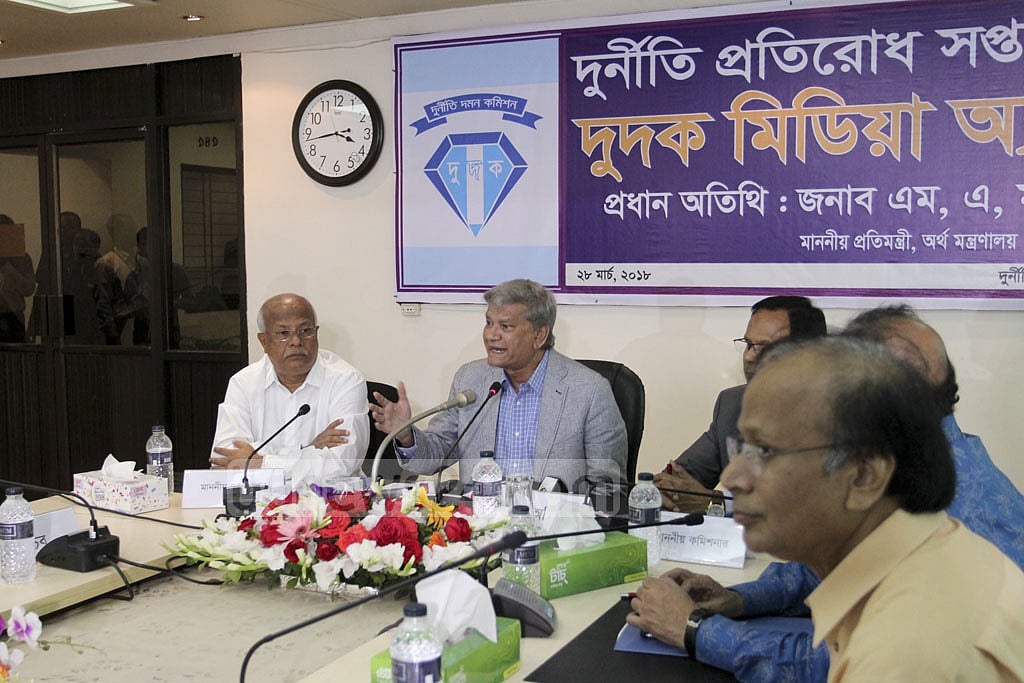
The commission organised the programme to distribute media awards among newspaper and TV journalists for reports on corruption, marking Corruption Prevention Week.
The winners of the awards are Abu Saleh Rony of the daily Samakal, Nesarul Haque Khokon of Jugantor, Bibhash Baroi of Janakantha, Mahbub Kabir Chapal of ATN Bangla, Badruddoza Babu of Maasranga TV and ASM Johirul Islam of NTV.













