Published : 25 Oct 2024, 07:39 AM
Updated : 21 Aug 2026, 12:00 PM


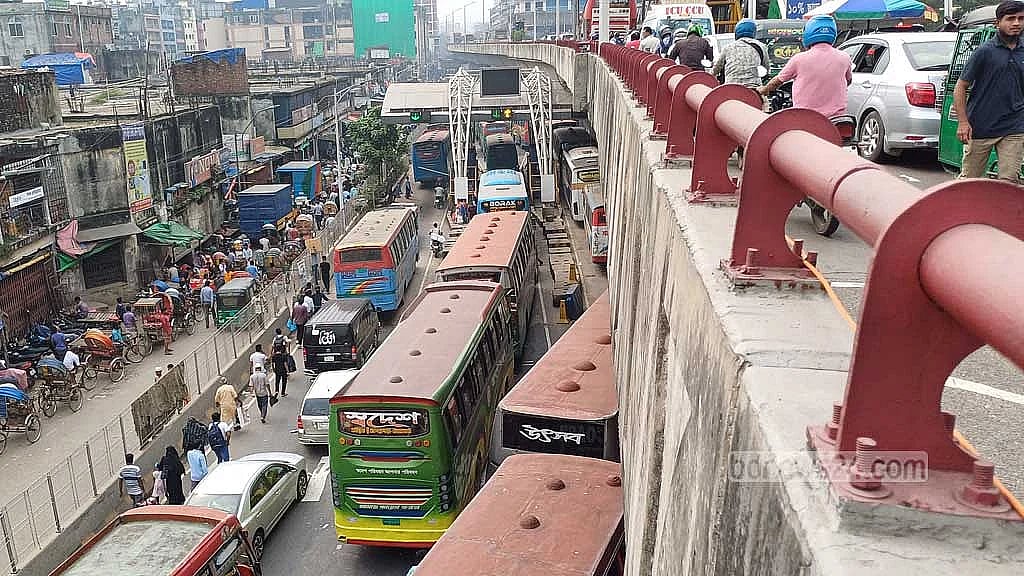
What was once hailed as a solution to streamline traffic flow into Dhaka through the Jatrabari area, the Mayor Hanif Flyover has now devolved into a daily nightmare, choking the city with hours-long traffic snarls.
What used to be a sporadic inconvenience has transformed into an unrelenting ordeal, where vehicles crawl and often come to a standstill for hours on end.
The congestion on this once-promising flyover spills far beyond its intended reach, clogging the Dhaka-Chattogram highway all the way to Signboard and Postogola, even creeping into the Dhaka-Mawa road.
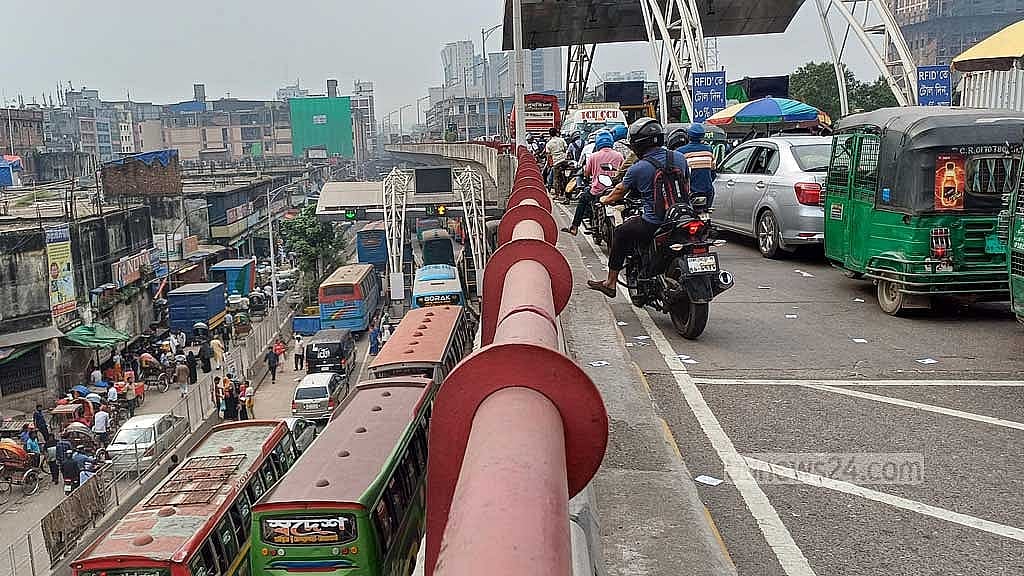
The relentless gridlock inflicts severe hardship on commuters and drivers alike, turning journeys into testaments of patience and frustration.
A closer look at the area, alongside insights from traffic police, frustrated commuters, and exhausted drivers, reveals a complex web of factors fuelling this traffic chaos.
INCREASED VEHICLES AND LAX TRAFFIC REGULATION
After the opening of the Padma Bridge, a surge in vehicles headed towards southern Bangladesh has flooded the capital.
Along with this, following the government change on Aug 5, unregistered buses have been entering Dhaka with little resistance from the Traffic Divison.
Many of these unregulated buses are heading towards Gulistan and Fulbaria, causing further pressure on the roads.
The lax enforcement of traffic regulations has led to the occupation of streets and footpaths, along with the chaotic movement of battery-run rickshaws, motorcycles from ride-sharing services, and auto-rickshaws, exacerbating the traffic crisis.
LANE CONFUSION AND BOTTLENECKS
Vehicles using both lanes of the flyover from Shonir Akhra and Dholaipar are forced to merge into one lane before reaching the Gulistan Toll Plaza, resulting in a significant slowdown.
Many vehicles also attempt to switch lanes or overtake at this point, further escalating the congestion.
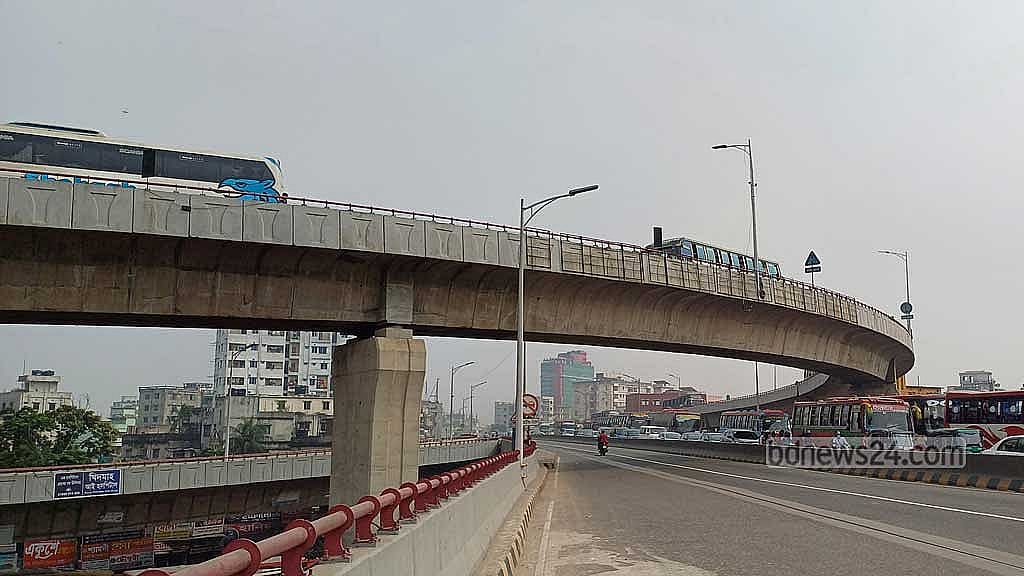
After the toll plaza, traffic is also funnelled into a single lane until Chankhar Pool, intensifying the gridlock.
Meanwhile, two ramps from the flyover exit into Golapbagh and Sayedabad.
Golapbagh is often a traffic hotspot due to congestion at the intersection, adding further delays for vehicles attempting to exit there.
ILLEGAL BUSES ADD TO THE CONGESTION
Even though none of the buses from transport companies such as Dola, Imad, Tungipara Express, Star Express, Welcome Express, Hanif Paribahan, Falguni, Golden Line, and Palki have route permits from Gulistan or Fulbaria, hundreds of buses continue to operate daily from these areas.
According to conversations with bus drivers, at least 295 buses from just five companies, including 120 from Karim Motors and 70 from Imad Paribahan, are plying the roads daily. In total, an estimated 400 buses enter Gulistan every day, despite not having the required permits.
The Bangladesh Road Transport Authority, or BRTA, and the Traffic Division of Dhaka Metropolitan Police confirmed that these buses are not authorised to operate from Gulistan, as their route permits only allow them to run from Sayedabad.
Traffic police say that after the government changed on Aug 5, more buses began entering the Gulistan area, worsening the congestion.
Buses enter from the Gulistan flyover, turn right at the Sergeant Ahad Police Box, and make their way towards Golap Shah Mazar or Bangabazar.
The buses are parked near Sufia Kamal Hall and other surrounding roads, causing more traffic blockages.
PEDESTRIANS, RICKSHAWS, AND MOTORBIKES OVERCROWD THE ROADS
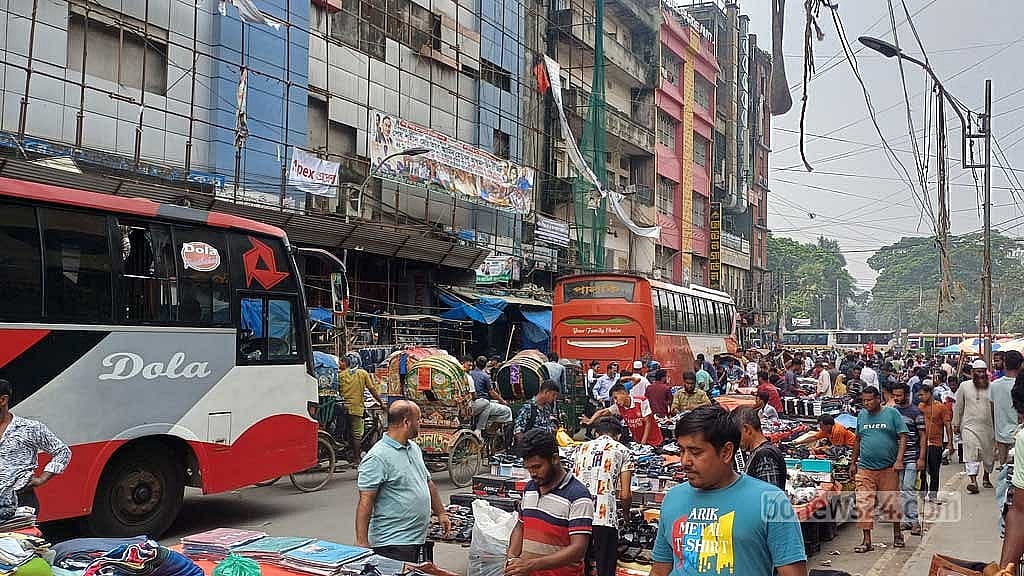
The area from Sergeant Ahad Police Box to Zero Point has been overtaken by shops and vendors, with footpaths and a large portion of the road occupied by illegal stalls.
Four-lane roads have become one-lane passages due to encroachments by vendors, rickshaws, and motorcycles, further worsening the situation.
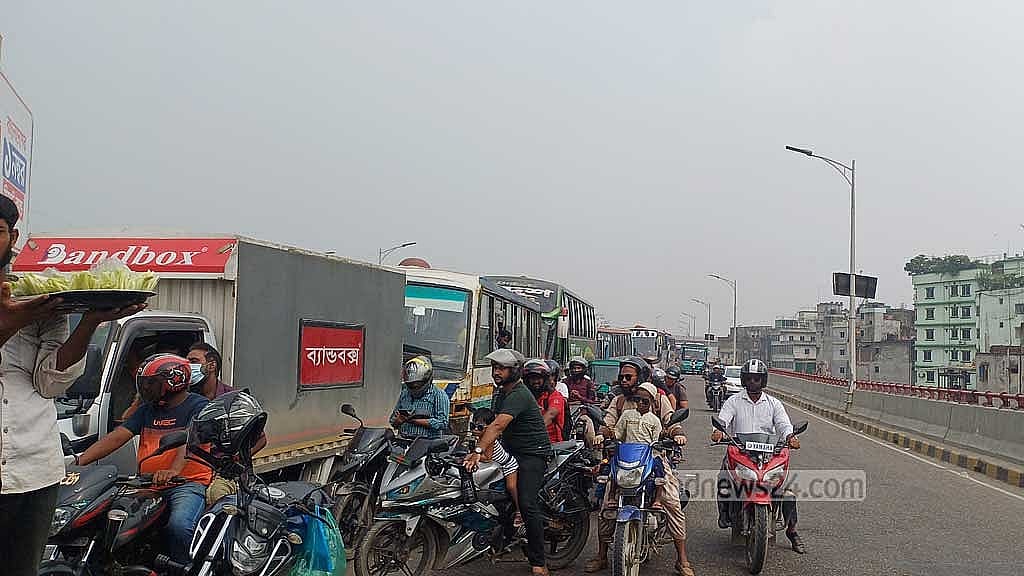
Despite efforts by traffic police, vehicles coming off the flyover are often stuck as they attempt to turn right at the congested roads near Bangabandhu Square, forcing them to a halt as the roads ahead are blocked by parked vehicles and stalls.
Traffic Sergeant Waliur Rahman told bdnews24.com: "Even though we give signals for vehicles to move, they can’t proceed because the roads are blocked by illegal vendors and parked vehicles. If we could keep two lanes open, the tailback wouldn't be this long. We're doing our best to control the situation, but it’s overwhelming."
Vendors along the road claim that the streets are empty most of the time, giving them reason to set up shop.
Mohammad Azim, a juice seller at the Gulistan Cinema Hall area, said: "We set up our stalls here as there’s enough empty space, and police don’t mind it. Besides, hawkers have been here for years."
However, the encroachments, along with parked motorbikes and rickshaws, continue to obstruct the flow of traffic, leaving a nightmare scenario for commuters every day.
PASSENGERS FACE UNENDING SUFFERING
On Thursday morning, the flyover lane from Chankhar Pool to Shonir Akhra was clear, allowing a 10-minute journey.
However, there was heavy traffic on the lanes heading to Sayedabad, Gulistan, and Chankhar Pool, with gridlock extending up to Jatrabari.
At 1:27pm, it took 43 minutes to travel from the Kajla end to Chankhar Pool by motorcycle, while other vehicles were stuck for a long time.
Tarek Hasan, a Shonir Akhra resident, said: "It feels like we're living in hell. Traffic is always at a standstill in the morning, and in the evening, it’s difficult to find a ride home. Millions in Dhaka's eastern areas suffer tremendously."
Monjurul Hasan Rajib, a Jurain resident, said vehicles from around 40 districts use this flyover, and since the Padma Bridge opened, it has become notorious for traffic jams.
"The flyover commute is now a nightmare, often taking three hours for what should be a 15-minute drive. There are no alternative roads, so ambulances, students, and office-goers face terrible hardships daily," he said.
Abdul Haque, a vendor selling bottled water near Jatrabari Ideal School, said traffic jams have worsened since the Padma Bridge's inauguration, with the last two months seeing severe congestion.
"Traffic starts building up from Gulistan in the morning and intensifies through the day, continuing until night," he added.
Dhaka Road Transport Owners Association's Saiful Alam said unauthorised buses have caused chaos in Gulistan and nearby streets, often operating under political protection without route permits. He saidt they are working with traffic police to remove these buses.
“We’ve told the traffic department we’ll cooperate. These buses must depart from their designated stations. Operators have been avoiding Sayedabad Terminal, but this will no longer be allowed,” he said, adding that after Traffic Police Week, action will be taken.
DMP Deputy Commissioner (traffic, Wari zone) Md Anwar Saeed told bdnews24.com that they regularly file cases and evict hawkers.
"Every day, we file cases against buses at the flyover, with at least 30 cases today. But stopping them entirely is challenging as they return with various excuses. A higher-level decision is needed for a permanent solution."
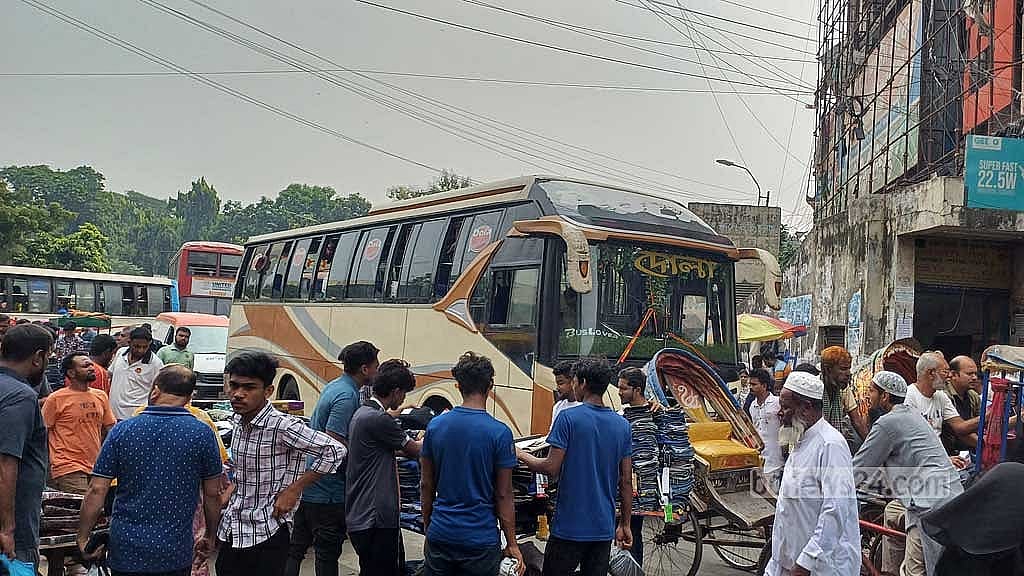
"We also remove hawkers multiple times a day, but they return. We've recently made the Nimtoli flyover exit one-way, which has somewhat eased congestion," he added.
bdnews24.com could not reach Dhaka South City Corporation Chief Executive Officer Mizanur Rahman for comment on the efforts to clear the sidewalks.
[Writing in English by Arshi Fatiha Quazi]