Published : 20 Oct 2026, 01:50 PM
Updated : 20 Oct 2026, 01:50 PM


Almost one in two girls in Bangladesh is married before turning 18, UNICEF has said.
The United Nations agency said on Tuesday that this puts girls’ education, health and futures at risk.
After a three-day visit, UNICEF Executive Director Catherine Russell called for urgent investment in Bangladesh’s children and outlined three steps.
She met families in Korail, Dhaka’s largest slum, and Rohingya refugees and members of the host community in Cox’s Bazar.
The steps are ending child marriage and keeping girls in school so they can continue their studies; delivering the government’s pledge to invest 5 percent of gross domestic product (GDP) in education and health; and ensuring quality education for Rohingya refugee and host community children.
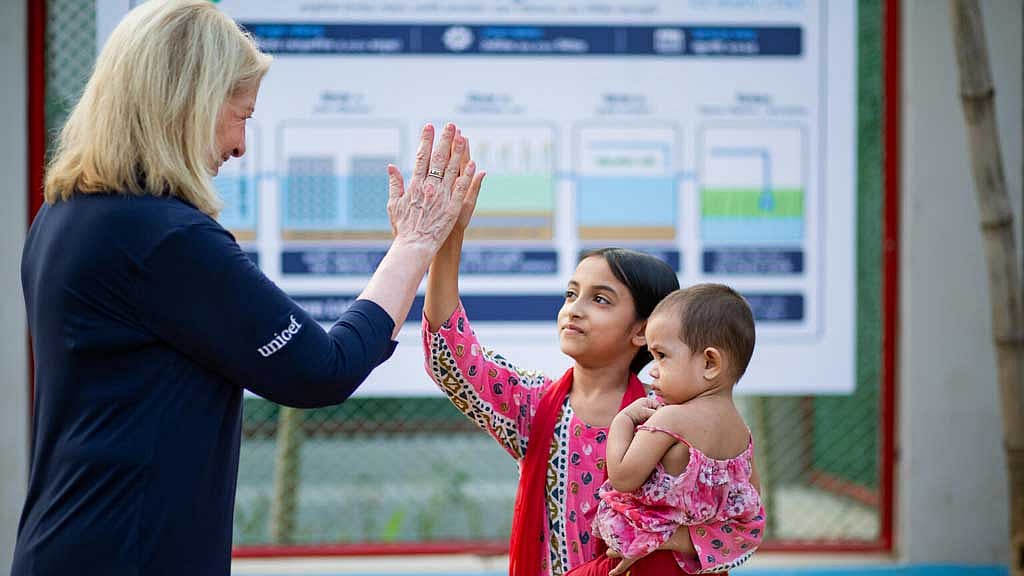
“I met a 14-year-old girl named Bushra, who told me how community leaders at a UNICEF-supported child protection hub had worked with Bushra’s father to save her from early marriage,” said Russell.
“Keeping girls in school and providing them with the health, education and protection services they need will deliver on a brighter future for them, their communities and Bangladesh.”
According to the Bangladesh Multiple Indicator Cluster Survey (MICS) 2025, almost half (47.2 percent) of women aged 20 to 24 were married before turning 18.
Child marriage ends girls’ schooling, raises the risk of early pregnancy and limits their chances in life.
Russell met State Minister for Foreign Affairs Shama Obaed Islam, praising the government’s pledge to raise the budget for education and health and pressing for its implementation.
“Budgets reveal priorities,” Russell said. “Investing in children’s quality education, health, nutrition and protection is investing in Bangladesh’s future.”
Praising Bangladesh for hosting Rohingya refugees, Russell said the children had already lost much because of “violence, displacement and uncertainty”, and must not be deprived of education as well.
“The world must invest in them, and in the communities that welcomed them,” she said.