Published : 28 Aug 2026, 06:42 PM
Updated : 08 Sep 2026, 09:36 AM


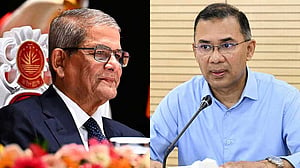
India has made repeated overtures to bring Prime Minister Tarique Rahman to New Delhi, seeing direct engagement with Bangladesh’s new leader as an opportunity to reset a relationship that deteriorated sharply after Sheikh Hasina’s fall in 2024.
But despite a formal invitation, weeks of diplomatic contacts and even apparent preparations for a ceremonial welcome, Tarique has yet to confirm a visit.
In a report published on Friday, the BBC said India’s eagerness reflects Bangladesh’s strategic importance and Delhi’s recognition that the exceptionally close relationship it enjoyed with Dhaka under Hasina can no longer be taken for granted.
At the same time, Hasina’s continued presence in India — and Bangladesh’s demand for her extradition — has emerged as the biggest obstacle to a reset.
So why is Delhi so keen to host Tarique, why is Dhaka holding back, and how did the proposed visit reach this point?
Why Does India Want Tarique in Delhi?
The BBC’s analysis is that Delhi sees Tarique’s government as an opportunity to establish a new working relationship with post-Hasina Bangladesh.
Ties remained deeply strained under the interim government led by Muhammad Yunus after Hasina was ousted in the July-August 2024 mass uprising and fled to India.
Tarique’s BNP subsequently won a landslide parliamentary election in February 2026, opening a new political chapter.
India moved quickly after the new government took office.
Prime Minister Narendra Modi sent Tarique a personal invitation to visit India, delivered by Lok Sabha Speaker Om Birla when he attended the swearing-in ceremony in Dhaka.
The BBC notes that India has since displayed an unusual degree of public enthusiasm about bringing Tarique to Delhi.
Indian High Commissioner Dinesh Trivedi has repeatedly advocated direct talks between the two prime ministers and said Tarique would receive the “highest honour” when he visits.
Former Indian foreign secretary Shyam Saran told the BBC there was probably some frustration in Delhi because, short of handing Hasina over, India believed it had gone considerable distance in reaching out to the new government.
Why Does Bangladesh Matter So Much to India?
Geography alone makes the relationship difficult for either country to ignore.
Bangladesh and India share a 4,096km border, while annual bilateral trade exceeds $12 billion, according to the BBC. Bangladesh is also central to India’s attempts to improve connectivity with its north-eastern states.
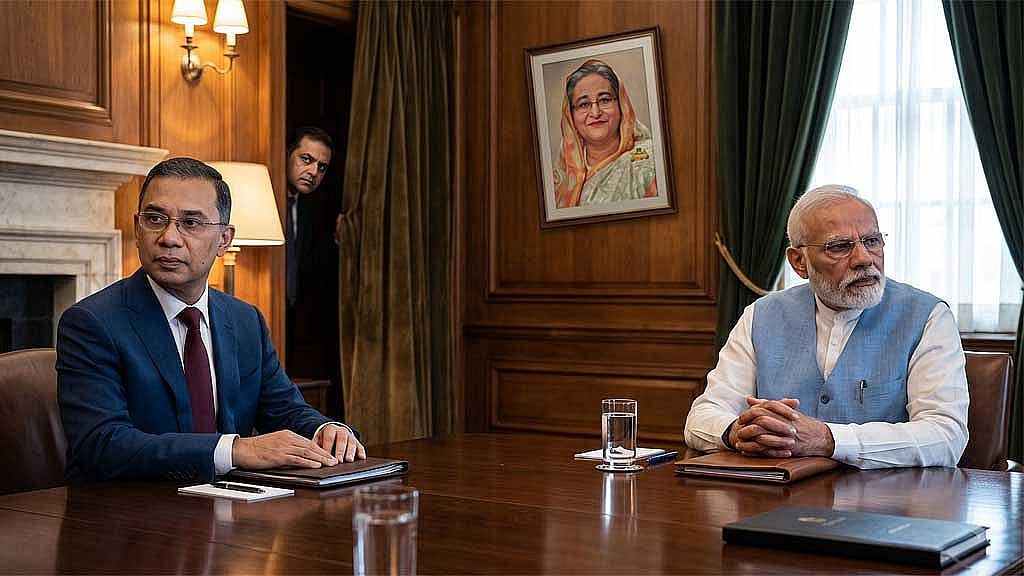
During Hasina’s 15 years in power, the two governments expanded road, rail and port connectivity, while security cooperation deepened.
Hasina’s government also acted against insurgent groups that India alleged had operated from Bangladeshi territory.
But that close relationship became politically contentious inside Bangladesh, where critics increasingly accused Delhi of prioritising Hasina’s government over broader relations with the country.
For India, establishing a direct relationship with Tarique is therefore also about ensuring that bilateral ties survive the political transition in Dhaka rather than remaining associated with one particular government.
Why Hasn’t Tarique Accepted the Invitation?
The central problem is Sheikh Hasina.
Bangladesh has formally sought her extradition from India after the International Crimes Tribunal sentenced her to death in absentia over the deadly crackdown on the 2024 uprising.
Hasina denies the allegations and calls the proceedings politically motivated.
India says it is examining Bangladesh’s extradition request under established procedures.
The issue became even more sensitive on Aug 5, when Hasina addressed journalists virtually at an event organised by the Foreign Correspondents’ Club of South Asia in New Delhi.
Dhaka reacted angrily, arguing that allowing Hasina to make political statements from Indian soil undermined attempts to repair relations.
India said its government had no role in organising the event and did not endorse what Hasina said.
Dhaka University's Prof Lailufar Yasmin told the BBC that Tarique had appeared to be seriously considering an India visit before Hasina’s appearance, but the event triggered a significant backlash in Bangladesh and raised questions about Delhi’s sincerity over a reset.
What Conditions Has Dhaka Set?
Bangladesh subsequently made its position considerably clearer.
On Aug 16, the foreign ministry said a “propitious environment” needed to be created before Tarique’s bilateral visit could proceed.
Dhaka asked India to expedite the extradition of Hasina and other fugitives and to hand over the accused killers of Inqilab Moncho spokesman Sharif Osman Hadi.
Those demands had already been raised when Trivedi met Tarique in Dhaka on Aug 10.
After that meeting, Bangladesh said it expected India to accelerate the Hasina extradition process and return the Hadi murder suspects.
Trivedi travelled to New Delhi immediately afterwards and met Modi, briefing him following his discussions in Dhaka.
How Serious Did Preparations for the Visit Become?
Quite serious, judging by developments in mid-August.
On Aug 14, diplomatic and political sources in Dhaka and Delhi told bdnews24.com that preparations were under way for Tarique to make his first bilateral visit to India, potentially on Aug 22-23.
Energy, trade, connectivity and border management were expected to feature prominently.
Neither government formally confirmed those dates.
But on Aug 21, India’s presidential palace inadvertently appeared to reveal just how far preparations had progressed.
Rashtrapati Bhavan, India's presidential palace, announced that its regular Change of Guard ceremony would be cancelled because a full rehearsal was being held for the ceremonial welcome of the “Prime Minister of Bangladesh”.
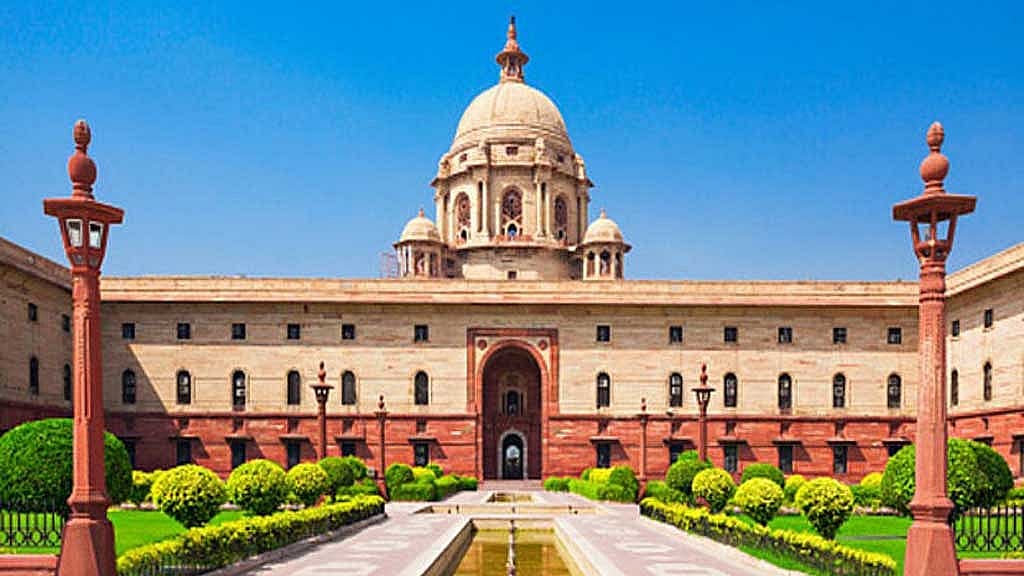
The notice did not name Tarique and was subsequently removed without explanation.
Later that day, Tarique’s Press Secretary AAM Saleh said no decision had been taken and that Dhaka was awaiting India’s response concerning Hasina and other fugitives.
Aren’t There Two Invitations?
Yes.
The first is Modi’s standing invitation for an official bilateral visit, extended shortly after Tarique became prime minister in February.
The second is an invitation for Tarique to attend the BRICS outreach session in New Delhi on Sept 12-13.
India has clarified that the BRICS invitation was issued because Bangladesh currently chairs BIMSTEC and is separate from the bilateral invitation.
The distinction matters because attending a multilateral event in Delhi would carry a different political meaning from travelling specifically for bilateral talks with Modi.
Tarique has not confirmed attendance at either.
Why is India Particularly Keen Now?
The BBC says that Delhi is looking beyond the immediate Hasina dispute.
Since 2024, Bangladesh has been rebuilding ties with Pakistan, including through senior-level military exchanges and discussions on greater defence cooperation.
Bangladesh has also expanded engagement with China and is considering possible participation in the Makkah defence pact involving Saudi Arabia, Türkiye and Pakistan.
Those developments do not mean Bangladesh has shifted into an anti-India camp.
But from Delhi’s perspective, they underline that Dhaka now has more diplomatic and strategic options and that India cannot assume the level of access and influence it enjoyed under Hasina.
The BBC says the changing regional environment therefore gives India another reason to establish a strong direct relationship with Tarique before distance between the neighbours becomes entrenched.
What Does Tarique Have to Weigh?
There are competing pressures.
India remains Bangladesh’s largest neighbour and an important trade, energy and connectivity partner. Several unresolved bilateral issues, including border management, water sharing and the future of the Ganges Water Treaty, require cooperation between Dhaka and Delhi.
State Minister for Foreign Affairs Shama Obaed has said India should “seize the opportunity” presented by a possible Tarique visit to ease tensions and address outstanding problems.
At the same time, travelling to Delhi while Hasina remains in India and continues to speak publicly could carry a domestic political cost for Tarique.
His government has repeatedly presented its foreign policy in terms of “Bangladesh First”, emphasising sovereign equality, national dignity, non-interference and mutual benefit.
That makes the optics of the trip almost as important as its substance.
So Why Does Delhi Keep Trying?
Because the relationship is too important to leave in prolonged limbo.
The BBC’s analysis suggests India sees Tarique as the political figure with whom it now needs to build a durable working relationship in Bangladesh — one that is not dependent on Hasina or the political arrangement that existed before 2024.
Delhi has considerable interests at stake, from trade and connectivity to security and access to its north-east. Dhaka, meanwhile, needs a functional relationship with its largest neighbour while preserving the strategic independence Tarique’s government has promised at home.
But the unresolved Hasina question means a visit cannot easily be treated as routine diplomacy.
For India, getting Tarique to Delhi would be a visible sign that the post-2024 rupture is beginning to heal.
For Bangladesh, the question is whether that reset can take place on terms that Dhaka can defend both diplomatically and politically at home.