


Published : 02 Jun 2016, 12:41 AM
Updated : 19 Oct 2022, 05:17 PM


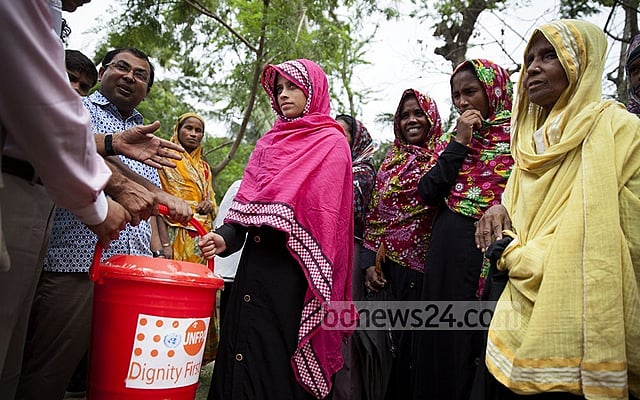
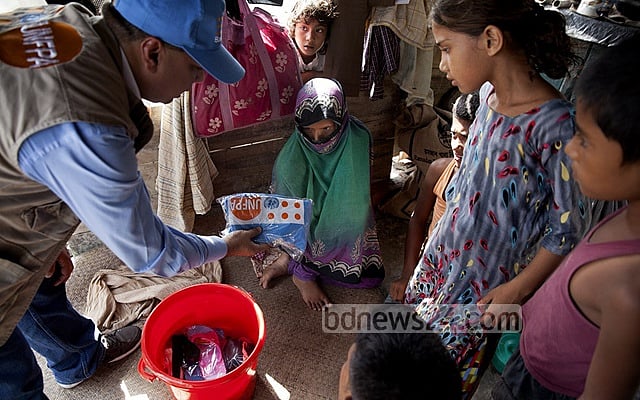
The UNFPA on Wednesday said they had started distribution of initially 2,000 such kits to the most vulnerable girls and women in the most affected areas.
The kits include clothes, as well as essential hygiene supplies such as toothbrush, toothpaste, shampoo, soap and sanitary pads. They also provided a flashlight and whistle in the kit to ensure additional safety to the girls and women against risks of violence.
“Dignity kits help women and girls maintain their dignity during humanitarian crises, which is essential to maintaining self-esteem and confidence, and important to cope with stressful situations,” the UN agency said.
The initiative began following a ‘Joint Needs Assessment’ with the leadership of the government after the recent cyclone that battered the southern and southeastern coastal regions.
The assessment revealed a ‘clearer’ picture of the destruction and the needs of the affected people, the UNFPA said.
These women are in need of special attention and care for safe and clean delivery, including the services of a professional birth attendant and access to 24-hour Emergency Obstetric and Neonatal Care in case of complications.
For girls and women who have lost many of their belongings such as clothes, accessing humanitarian relief and other critical services can be restricted. Some of them told the UNFPA field staff deployed in the cyclone-affected areas that they are too ashamed to go out in public.
UNFPA has calculated that a minimum of $ 1.2 million is needed to ensure that reproductive health needs of the most affected are met and that adequate measures are taken to prevent and address gender-based violence in the aftermath of this disaster.
The UN agency is also ready to hand over 7,800 “Safe Delivery Kits” to support government efforts in ensuring that women can deliver their babies in a clean and safe environment.
A Joint Response Plan, led by the Humanitarian Coordination Task Team (HCTT), also called donors to step up efforts to support the government in helping citizens in the cyclone affected areas.













