Published : 09 Sep 2024, 08:32 AM
Updated : 28 Aug 2026, 01:12 AM


Nobel champion Muhammad Yunus’s interim government has completed one month in office following the end of the Awami League's 15-year rule after a bloody movement.
Despite its initial promise to complete reforms and hold elections, it has made it clear that elections will not be held soon.
In its first month, the interim government has introduced several changes to the administration left by deposed prime minister Sheikh Hasina.
This includes the compulsory retirement of a significant number of officials, cancellation of contractual appointments, and promotion of those who were overlooked during the previous administration.
These changes have impacted many sectors, including educational institutions, financial bodies, police, courts, armed forces, hospitals, and public administration.
Abdul Alim, director of the non-governmental poll watchdog Election Working Group and a political observer, told bdnews24.com: "One month is no time. Still, the interim government is responding to demands from different quarters since the fall of Hasina. They are trying to correct the politicisation of the administration, educational institutions, police, and other sectors. I believe they are on the right track."
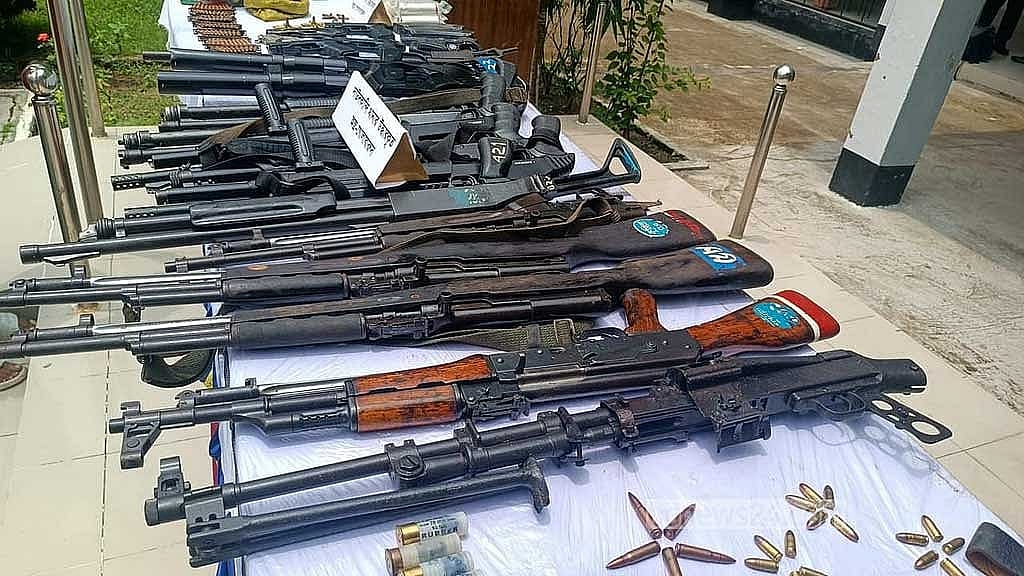
Despite efforts to restructure the police force, which was affected by excessive force used during the anti-government movement and subsequent attacks on police stations after the government was toppled, the police system remains unsettled.
While officers have returned to their posts, they are yet to be visibly active. The operation to recover lost weapons continues, but the burning of vehicles has reduced the police's operational capacity.
Alim added: "The government must first stabilise the country by fixing the administration and police, and focus on economic recovery. At the same time, political parties, civil society, and the media must remain united."
Prof Sabbir Ahmed of Dhaka University’s political science department said the challenges facing Bangladesh are typical when a government is replaced through an uprising.
He said: "The lack of government initially created a state of chaos in the country. The law-enforcing agencies also faced a sense of insecurity. From such a state, the country has now recovered to a relatively stable situation."
The Awami League, which came to power with massive public support through the national election on Dec 29, 2008, faced criticism over its handling of three subsequent elections, which were marked by controversy and allegations of harsh treatment of political opponents.
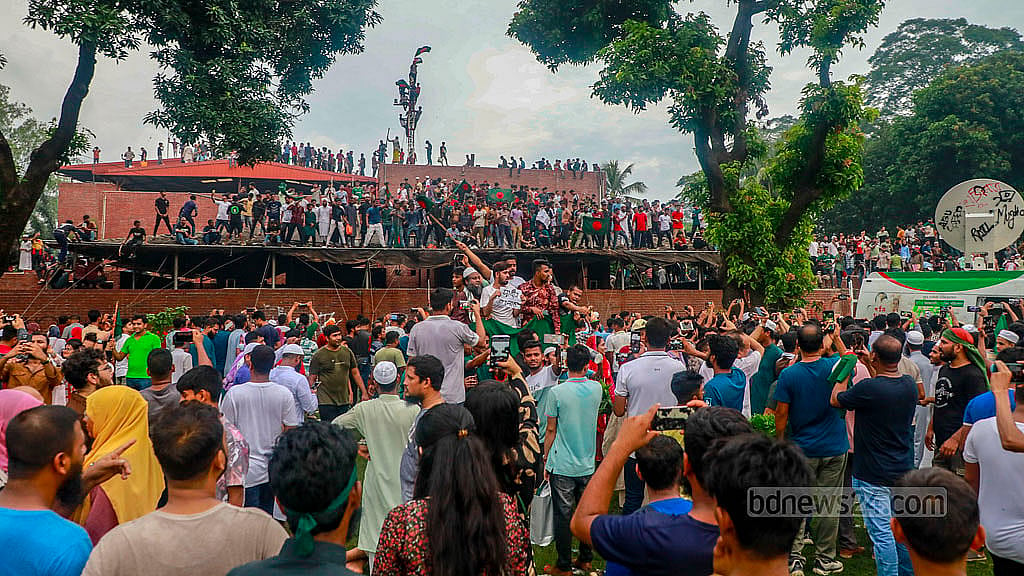
The anti-government movement by university students over quotas in government jobs in early July, which was met with excessive force, further escalated tensions. Hasina was ousted on Aug 5 and fled to India.
For three days, Bangladesh was without a government, during which state and private establishments, homes, and businesses were attacked and looted. The new government was sworn in on Aug 8 at 9pm.
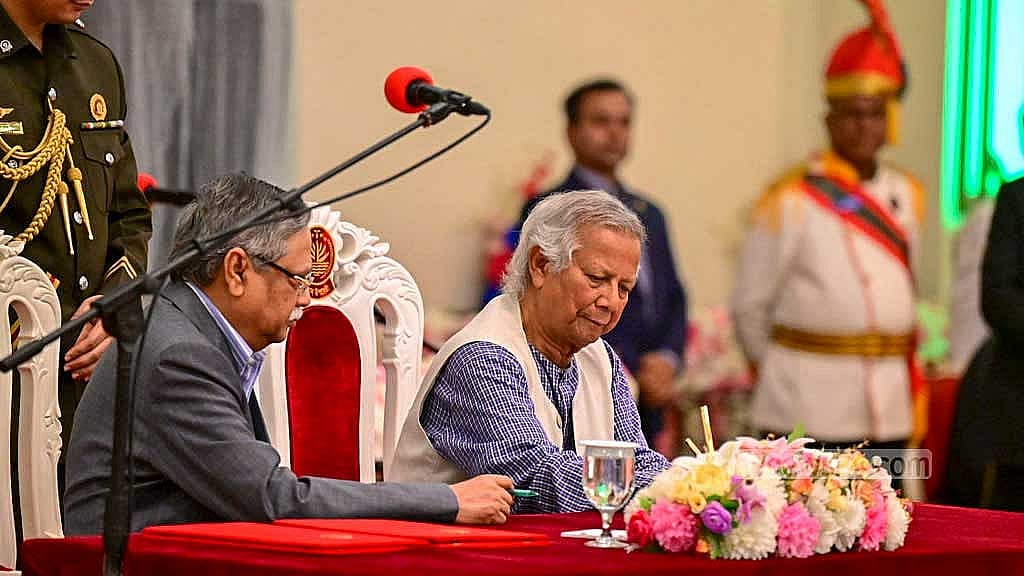
Yunus was appointed as the head of the government at the suggestion of the Anti-discrimination Student Movement, which led the anti-government protests.
Initially, 13 advisors were sworn in, followed by seven more in two phases, bringing the total to 21.
There is no clear indication of how long this government will remain in power.
However, in his address to the nation on Aug 25, the chief advisor said: "The people must decide when to let us go. We came at the call of the students; they are our initial employers. The general public has supported our appointment."
Prof Sabbir told bdnews24.com: "There are reports that the government’s term may not be limited to three months; it could be extended. This raises the issue of legal legitimacy, which will be a major challenge. We anticipate that they may seek an extension from the court, similar to the 2007-08 scenario. This should be done quickly to avoid any questions about their legitimacy."
The resignation of Speaker Shirin Sharmin Chaudhury on Sept 2 has raised concerns about a possible crisis.
Supreme Court lawyer ZI Khan Panna told bdnews24.com: "If, God forbid, the president dies or falls ill tomorrow, who will run the country?"
INITIAL CHALLENGES
In the wake of Sheikh Hasina's departure, Bangladesh faced three days of lawlessness with no government in place. During this period, police stations were empty, and traffic police were absent from the streets. The situation created an environment where looting became rampant in cities, including Dhaka. Student activists took to the streets to maintain order, forming neighbourhood watch groups to control the situation and manage traffic.
While the interim government focused on stabilising the administration, protests emerged at key locations like the Secretariat, the National Press Club, and the chief advisor’s residence, Jamuna. Student protests demanding the cancellation of the postponed HSC exams led to the blockade of the education secretary within the Secretariat, resulting in a written order fulfilling their demands.
Soon after, Ansar members began demanding the nationalisation of their jobs. On the night of 25 August, Ansar members attempted to enter the Secretariat, leading to clashes with the army and students, injuring at least 50 people and resulting in one death. Hundreds of Ansar members were arrested and faced trial following this incident.
In response, law-enforcing agencies imposed a ban on gatherings, rallies, and protests around the Secretariat and the state guest house, Jamuna.
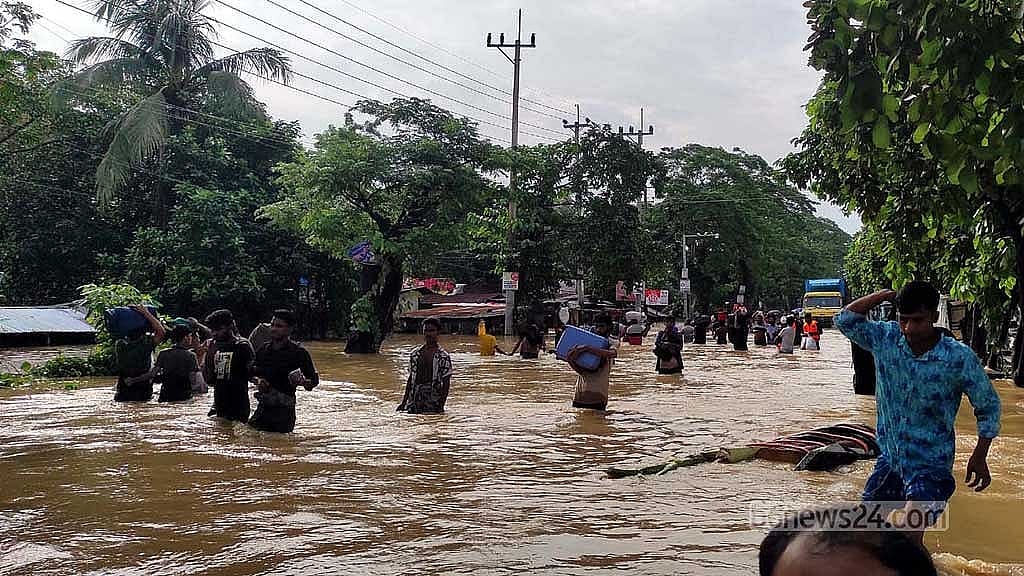
A major setback for the interim government came in the form of devastating floods in the northeast and eastern regions of the country. Over five million people were affected, according to government estimates. Even after two and a half weeks, water had not receded from many areas, causing extensive damage to homes and road infrastructure. The situation necessitated a comprehensive plan for relief and rehabilitation of the affected population.
The government has emphasised establishing a new framework with India for flood control. The chief advisor discussed this matter with the Indian High Commissioner in Dhaka, Pranay Verma, who spoke of high-level cooperation and meetings between the two countries during special situations.
Meanwhile, in areas like Savar, Ashulia, and Gazipur, some garment workers started new protests, demanding improved conditions, forcing many factories to close. However, joint operations by law-enforcing agencies have brought the situation under control, and production has resumed.
Professor Sabbir Ahmed, from the Department of Political Science, told bdnews24.com: “Keeping the production process running to sustain the country's economy will be a major challenge.”
He added: “The promise of positive change remains a challenge to implement. In some areas, recruitment is good, but not in others. If the current period does not differ significantly from the previous one, it could create a crisis of legitimacy for the government in the eyes of the public.”
PROMOTIONS, DISMISSALS, AND NEW APPOINTMENTS
The interim government has made efforts to diminish the influence of officials chosen by Hasina across the administration and various government departments. The first steps included cancelling contracts for secretaries, ambassadors, and department heads appointed on a contractual basis.
Among those removed are former inspector general of police Chowdhury Abdullah Al-Mamun, Chief Editor of Bangladesh Sangbad Sangstha Abul Kalam Azad, and Liaquat Ali Lucky, director general of the Bangladesh Shilpakala Academy.
In contrast, five officials who had been forced into retirement during the previous administration have been reinstated with the rank of senior secretary for two years. Several others were promoted to the positions of senior assistant secretary, deputy secretary, joint secretary, additional secretary, and secretary.
In the first phase, 115 individuals were promoted retroactively to deputy secretary.
Subsequently, a total of 201 officers, including some newly promoted individuals, were elevated to the rank of joint secretary.
Another 22 were promoted to joint secretary in the next round.
Within an 11-day span, some officials received three promotions, rising from senior assistant secretary to additional secretary.
After the political change, vice-chancellors, pro-vice-chancellors, and senior academic staff from public universities resigned.
New appointments for vice-chancellor positions are being made, though regular academic activities have yet to resume everywhere.
All commissioners of the controversial Election Commission also resigned.
However, no steps have been taken by the government yet to restructure the commission.
CHANGES IN THE JUDICIARY
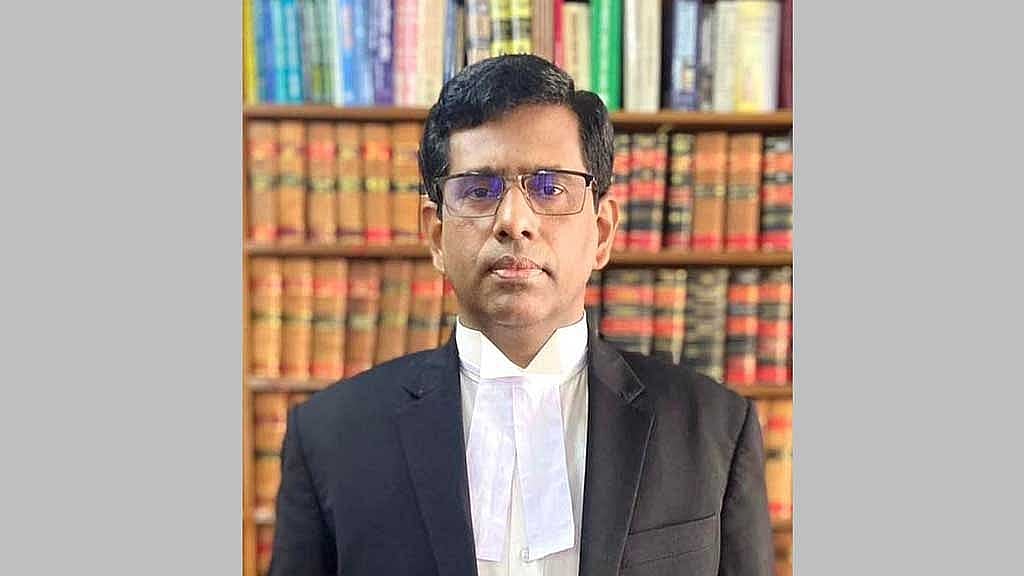
On Aug 10, Chief Justice Obaidul Hassan resigned from his position following protests by students at the Supreme Court.
Subsequently, five other justices from the Appellate Division also stepped down.
Syed Refaat Hossain was appointed as the new chief justice, and on Aug 12, four more justices — Zubayer Rahman Chowdhury, Syed Md Ziaul Karim, Md Rezaul Haque, and SM Emdadul Hoque — were appointed.
Attorney General AM Amin Uddin, who was appointed during Hasina's tenure, resigned on Aug 7, citing 'personal reasons.'
The next day, Supreme Court lawyer Md Asaduzzaman, who was previously the BNP's international affairs secretary, was appointed to the position.
The International Crimes Tribunal, or ICT, has been restructured entirely.
In the third week of August, 13 prosecutors, including Chief Prosecutor Syed Haider Ali, who was appointed during Hasina's tenure, resigned.
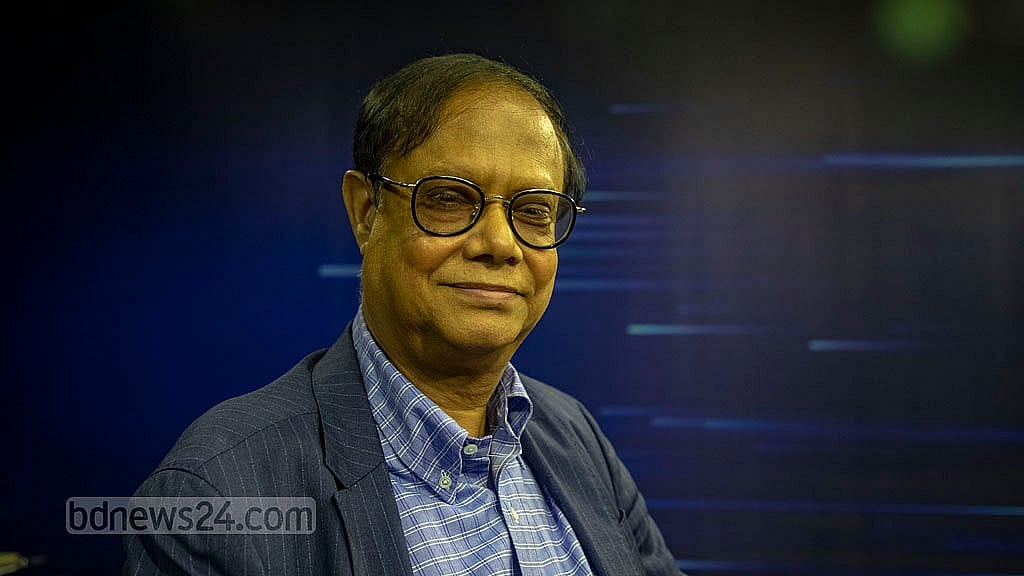
On Sept 8, Supreme Court lawyer Mohammad Tajul Islam, who previously defended at the tribunal leaders of Jamaat-e-Islami, the party that opposed Bangladesh's independence in 1971, was appointed as the new chief prosecutor.
Tajul also served as a joint convener of the Amar Bangladesh Party or AB Party, founded in 2020 by former Jamaat reformists. He has reportedly resigned from his role.
Law Advisor Asif Nazrul has announced plans to reorganise the tribunal. The government has initiated proceedings in the ICT, treating deaths in July and August clashes as 'genocide.'
Complaints have been filed against many former Awami League government officials, allied party leaders, and even the Awami League and its affiliate organisations as a whole.
A United Nations investigation team visited Dhaka to assist in investigating the fatalities during the protests.
Winds of Change in the Financial Sector
The financial sector, a hot topic during the Awami League regime, is now witnessing more noticeable shifts.
Following the appointment of former International Monetary Fund official Ahsan H Mansur as the governor of Bangladesh Bank, the boards of several banks under the control of the controversial S Alam Group have been replaced.
To recover funds withdrawn as loans from Islami Bank and other Shariah-based banks, there have been announcements of asset sales.
A committee, led by Debapriya Bhattacharya, a distinguished fellow at the Centre for Policy Dialogue or CPD, has also been formed to draft a white paper on the economic situation.
Leadership changes have occurred at the Securities and Exchange Commission, the capital market regulator, after Shibli Rubayat-Ul-Islam resigned from an undisclosed location, with banker Rashed Maksud assuming the role.
Farzana Lalarukh and Ali Akbar have been appointed as commissioners, while two members from the previous commission, Mohsin Chowdhury and ATM Tariquzzaman, remain in their positions.
OTHER KEY DECISIONS
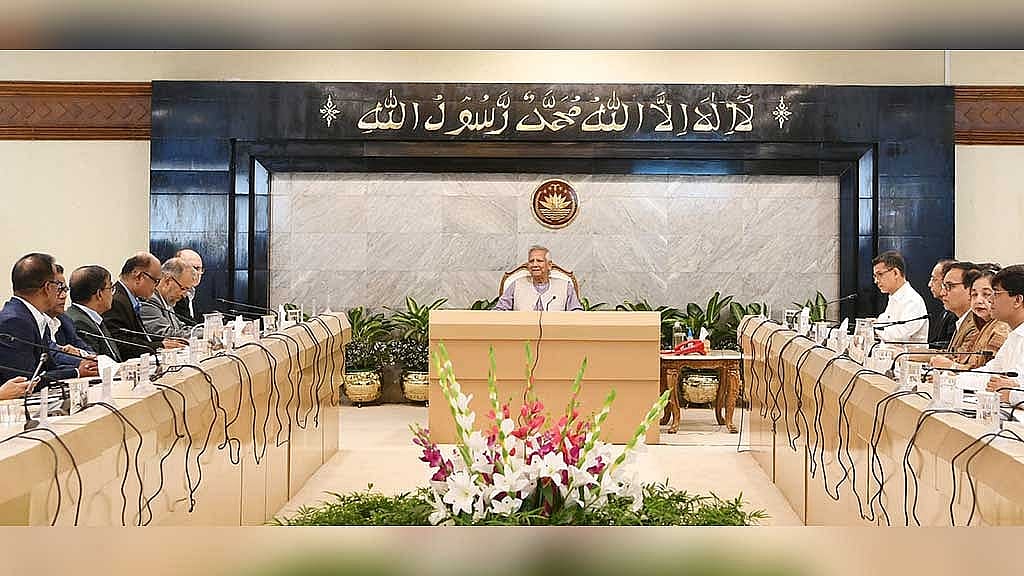
In this one month, Yunus has held at least three rounds of discussions with different political parties:
ONE MONTH OF ARRESTS
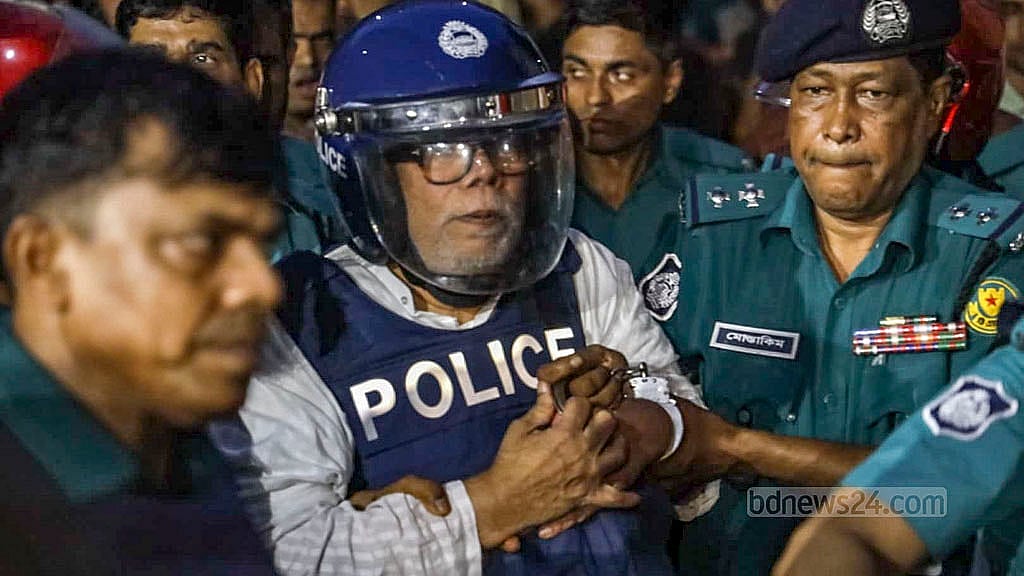
Over the past month, several key figures from the ousted government have been arrested, including former law minister Anisul Huq, social welfare minister Dipu Moni, and state minister for ICT Zunaid Ahmed Palak. Salman F Rahman, former private industry and investment advisor to Hasina, has also been detained.
Former shipping minister Shajahan Khan and state minister for liberation war affairs AB Tajul Islam are among those arrested as well.
Leaders of the Awami League-led 14-party alliance, Rashed Khan Menon and Hasanul Haq Inu, along with deputy speaker Shamsul Haque Tuku, have been jailed.
Awami League leader Ahmed Hossain and former Cox’s Bazar MP Abdur Rahman Badi are also in custody.
Former inspector general of police Abdullah Al-Mamun and his predecessor, M Shahidul Haque, have been detained.
All of them, including Awami League President Hasina, have been named as defendants in cases concerning deaths during the anti-government protests, with Hasina being charged over the deaths of more than a hundred people.
[Writing in English by Arshi Fatiha Quazi]