Published : 18 Nov 2024, 02:09 AM
Updated : 28 Aug 2026, 01:14 AM


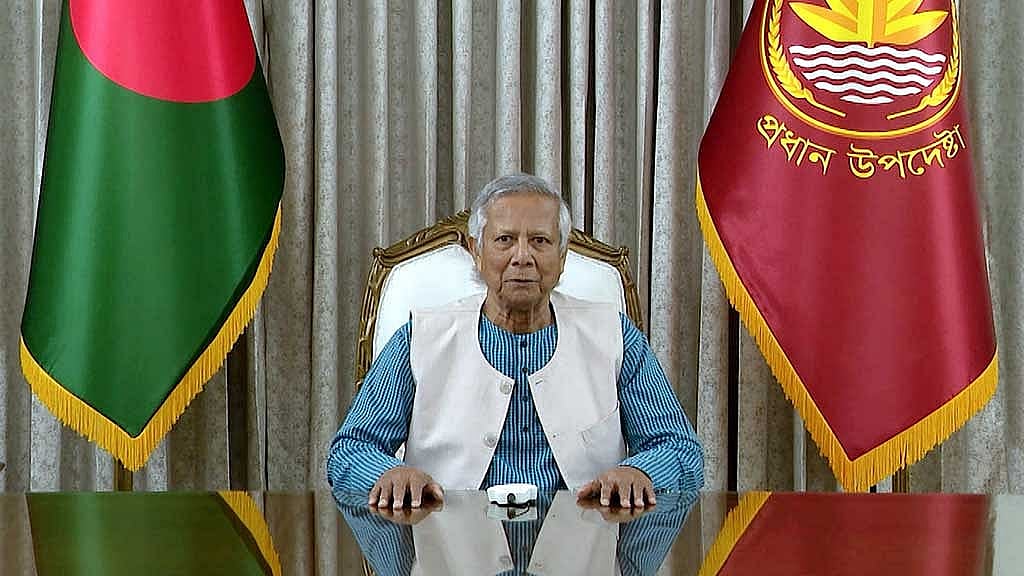
Chief Advisor Muhammad Yunus has announced plans to seek the extradition of former prime minister Sheikh Hasina from India, where she has been residing since leaving the country amid a mass uprising.
In a televised address on Sunday evening to mark 100 days of the interim government, Yunus said: “We will ensure justice for every killing during the July-August revolution. Efforts to prosecute those responsible are progressing well, and we will demand Hasina’s return from India to hold her accountable.”
The speech, broadcast live at 7pm across all state-run media, highlighted the challenges faced by the interim government in restoring order following Hasina’s ouster.
The former prime minister, who ruled for over 15 years, fled to India on Aug 5 amid an uprising led by students and the public.
Over 200 cases have been filed against the Awami League chief since she left the country.
She also faces several charges at the International Crimes Tribunal, including two accusations of “genocide,” for which arrest warrants were issued against Hasina and 46 others.
The tribunal has ordered Hasina, AL General Secretary Obaidul Quader, and other accused to appear in court by Nov 18.
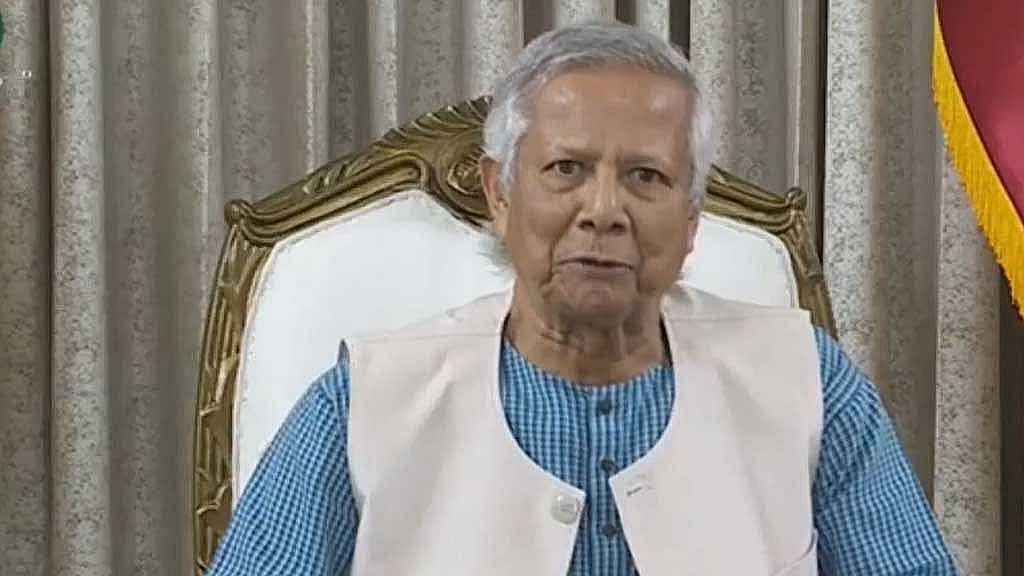
Following the issuance of the warrants, Foreign Advisor Md Touhid Hossain said efforts to bring Hasina back before the Nov 18 court deadline are already underway.
Yunus reiterated his administration’s commitment to holding all perpetrators accountable, regardless of their influence or affiliation.
“No matter how powerful the accused or which force they belong to, there is no chance of impunity,” he said.
The chief advisor revealed that a commission investigating forced disappearances has so far documented 1,600 cases, with estimates suggesting the total could exceed 3,500.
“Many victims’ families are afraid to file complaints,” he noted, assuring them, “No one will harm you. Report your cases without hesitation.”
He shared harrowing accounts gathered by the commission, saying: “The stories of those who disappeared, written on the walls of secret detention centres, are heart-wrenching. We are determined to bring all those involved to justice.”
Yunus highlighted international efforts to address these crimes, including signing an anti-disappearance convention and engaging with the International Criminal Court, or ICC.
Discussions with ICC Chief Prosecutor Karim Khan are underway to prosecute individuals responsible for murders, disappearances, and the July-August killings.
The United Nations has also pledged support, with Human Rights High Commissioner Volker Türk recently visiting Bangladesh.
“The UN has promised to submit its report on the July-August killings by early December and proposed increasing their presence in Dhaka to assist investigations,” Yunus said, confirming that the proposal has been accepted.
Reflecting on the situation when the interim government took charge, Yunus described a nation in turmoil.
“After the mass uprising, the ‘fascist regime’s leader’ fled, leaving the country temporarily without a government. Law-enforcing agencies were inactive, creating an alarming vacuum,” he said.
Yunus said around 1,500 people lost their lives, and 19,931 were injured during that time.
Treatment for the wounded has been arranged in 13 hospitals across Dhaka and other facilities. The government is meticulously documenting every death to ensure justice.
“We all must work together to rebuild this nation devastated by authoritarian rule,” Yunus emphasised, calling for unity during this critical period.