Published : 02 May 2023, 03:19 PM
Updated : 02 May 2023, 03:20 PM


As many as 328 people have died and 565 others were injured in 304 road accidents while travelling during the Eid-ul-Fitr holidays.
The combined number of accidents by road, rail, and waterways stood at 341, in which 355 people died and 620 were injured, according to a report prepared by the Passenger Welfare Association of Bangladesh.
Md Mozammel Haque Chowdhury, secretary general of the association, presented the report at a press briefing on Tuesday. The report covered the 15 days from Apr 15 to Apr 29, around the Eid holidays.
Bangladesh has seen an 18.2 percent drop in road accidents during Eid travels and a 21.1 percent fall in death due to accidents in comparison to last year. There has been a 33 percent drop in the number of people injured.
The number of rail accidents during this period stood at 27, killing at least 22 people and injuring 55. At least 5 people have died in 10 accidents on waterways, while 22 people went missing.
Like every year, the highest number of road accidents were motorcycle accidents, the report showed. A total of 167 people died and 120 were injured in 165 motorcycle crashes during the Eid holidays. Motorcycles were involved in 54.3 percent of total road accidents and 51 percent of the total death toll.
Among the dead, 88 were drivers, 16 transport workers, and 42 pedestrians. As many as 48 of them were women, 40 were children, and 17 were students. One person was a journalist, five were law enforcers, and four were teachers.
At least five activists of different political groups, two freedom fighters, and five physicians were identified among them.
As the price of essentials skyrocketed, transport costs rose and the weather became extremely hot, 30 percent of people who usually travel during Eid holidays refrained from travelling, according to the association.
Continuous development by the current government over the past 14 years has made roads and highways much better than before, the report said.
Extending the Eid holidays by a day was beneficial to the passengers, it said. As the ban on motorcycles on the Padma Bridge was lifted, 18.2 percent of the total passengers could travel by two-wheelers. Also, different regulators and law enforcers strictly monitored the Eid travel this year, making it easier and smoother. It has dragged down the number of road accidents and the death toll, the passenger welfare association said.

An analysis of the road accidents that occurred during the Eid holidays showed that 36.9 percent of the vehicles involved in accidents were motorcycles, while 16.5 percent were trucks, pickups, and covered vans.
The nature of accidents ranged from head-on collisions, which happened in 26 percent of cases, to running over a pedestrian which was the case in 37.2 percent of accidents.
For 20.4 percent of the accidents, the drivers lost control of their vehicles and fell into a ditch. Some 16.4 percent of accidents took place due to other or unknown reasons.
The report also showed that 29.6 percent of accidents took place on national highways, 37.2 percent on regional highways, and 26.6 percent on feeder roads. At least 6.6 percent of accidents took place in the Dhaka metropolitan area.
Not all road accidents that occurred in the remote areas of the country were reflected in the report as they were not published in the media, said Mozammel Haque Chowdhury, secretary general of the association.
"At least 216 motorcycle riders ended up receiving treatment at the National Institute of Traumatology and Orthopaedic Rehabilitation after they crashed on Eid day alone. Among them, 96 were in critical condition. The next day, 105 people were admitted to the same hospital after having motorcycle accidents. None of the newspapers reported the motorcycle accidents that occurred on the second day of Eid. Hence, we couldn’t portray the casualties.”
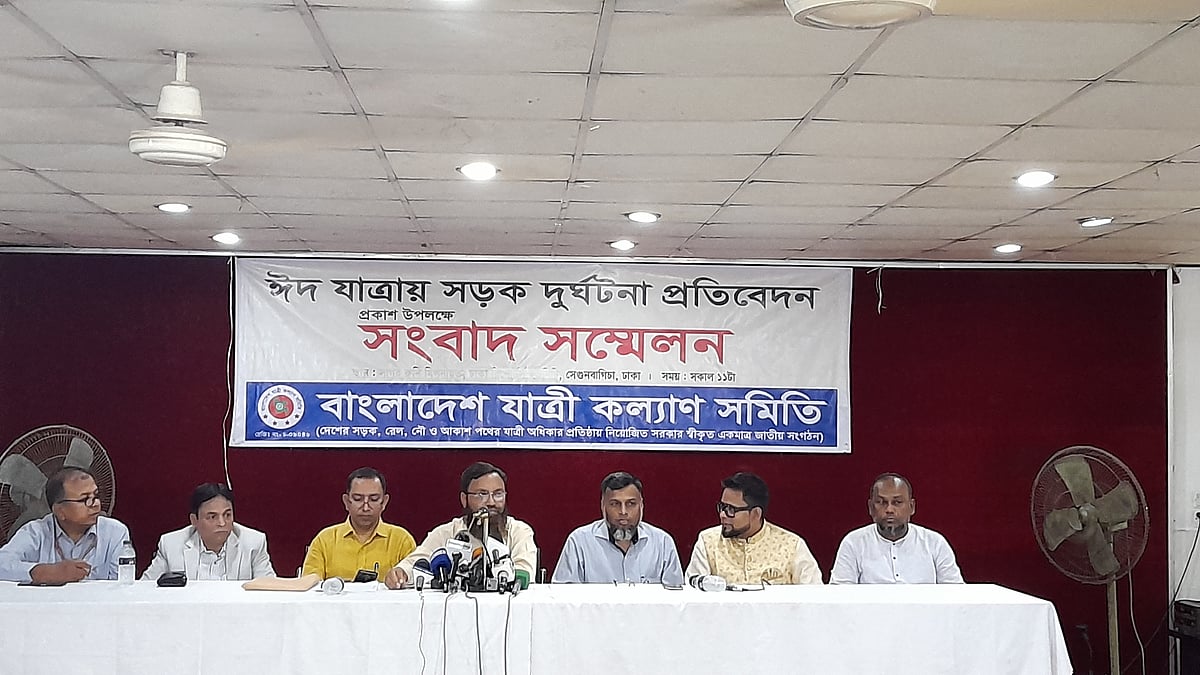
The secretary-general demanded a ban on importing motorcycles and "easy bikes" and the expansion of the public transport system.
REASONS BEHIND ROAD ACCIDENTS
Motorcycles running freely on the roads and highways
2. National highways lack road signs, markings, and lamp-posts that pose a risk to the drivers at night
3. Lack of turning signs on the national, and regional highways and feeder roads
4. Flaws in the construction of the highways and technical glitches in the vehicles along with drivers violating traffic rules cause accidents
5. Driving in the opposite lane, extortion, and carrying passengers in good-laden vehicles also cause accidents
6. Unskilled drivers, unfit vehicles, carrying additional passengers, and rash driving are other reasons behind the accidents
RECOMMENDATIONS
1. Stop the import and registration of motorcycles and "easy bikes" immediately
2. National and regional highways must have enough lights at night
3. Take the initiative to train skilled drivers and provide fitness certificates for vehicles following a digital system
4. Introduce separate lanes for slow-moving and fast-moving vehicles
5. Stop extortion on the highways, ensure proper salary and work hours for drivers
6. Install road signs, road markings
7. Implement the road transport act properly
8. Expand the public transport system and enhance the capacities of the regulatory authority BRTA. Construct quality roads and ensure necessary repair works. A regular road safety audit is needed