


Published : 20 Jul 2020, 02:38 PM
Updated : 17 Oct 2022, 11:10 AM


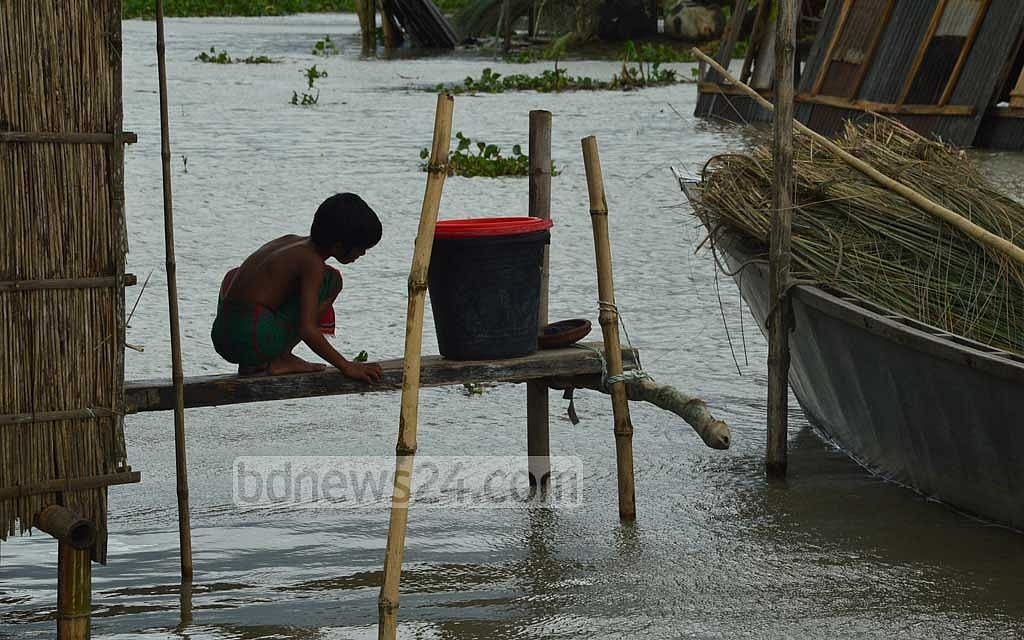
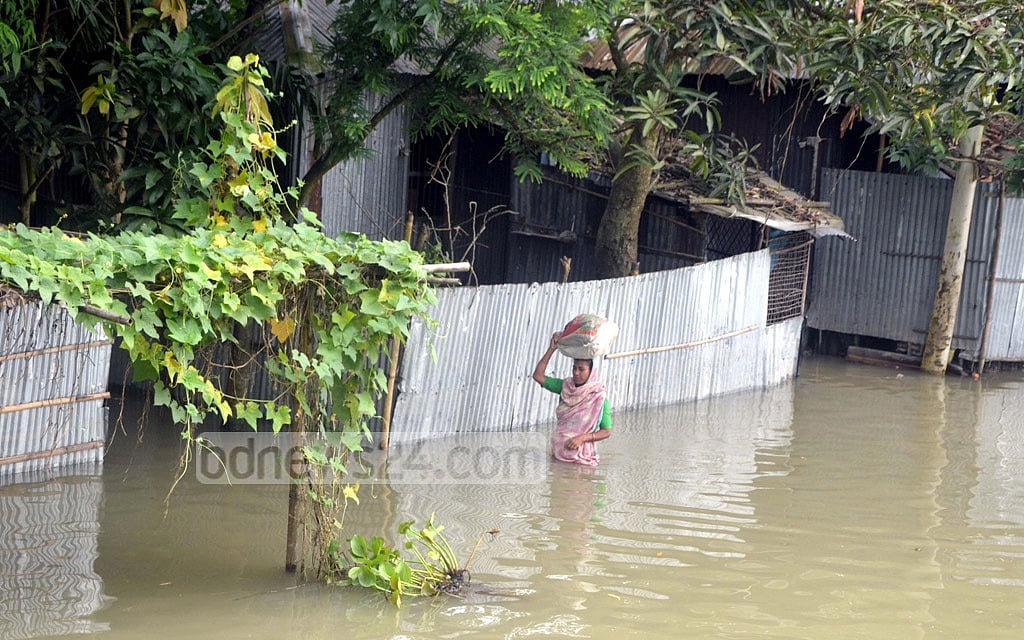
The health directorate also reported 67 deaths from drowning, diarrhoea, snakebite and lighting in this period.
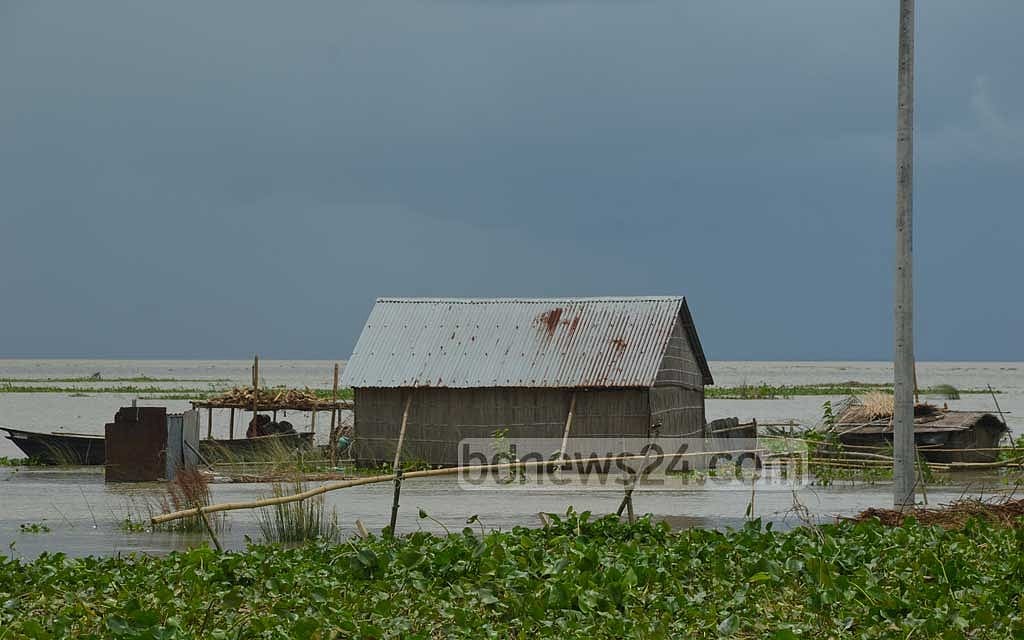
The northern, northeastern and central parts of the country experienced two rounds of floods from Jun 30 to Jul 19. Around 2.6 million people were affected in 18 districts.
"More than half of the people are diarrhoea patients. The figure may rise further in the future," Dr Niyamul Haque of the National Health Crisis Management Centre and Control Room told bdnews24.com.
People overcrowded shelters in the flood-hit areas. There will also be crowds during relief distribution. Health expert Dr Mushtaq Hossain warned of infection risks in this situation.
"The relief workers will go in from outside. The risk of transmission remains if any one of them contracts the coronavirus. Both parties need to keep an eye on this situation."
An arrangement should be in place to monitor the disease symptoms of people in water-logged areas locally or through a hotline, said Mushtaq. Quarantine and isolation can limit the spread of infection.
Workers who will visit shelters and relief camps must follow hygiene rules and care must be taken to keep the areas free from risk, the doctor said. If anyone shows symptoms or is found to be infected with the virus, he should be moved to the Upazila Health Complex or elsewhere.
Ministry Secretary Md Mohsin told bdnews24.com: "Everything is supervised by civil surgeons, local administration and people's representatives. This issue was followed even before the floods hit. The number of shelters has been increased in every area to prevent overcrowding. Besides, our people are also working at the grassroots level."
Everyone has been instructed to wear masks while abiding by hygiene and social distancing rules in shelters amid the virus crisis, said Enamur Rahman, state minister for disaster management and relief.
FLOOD SITUATION
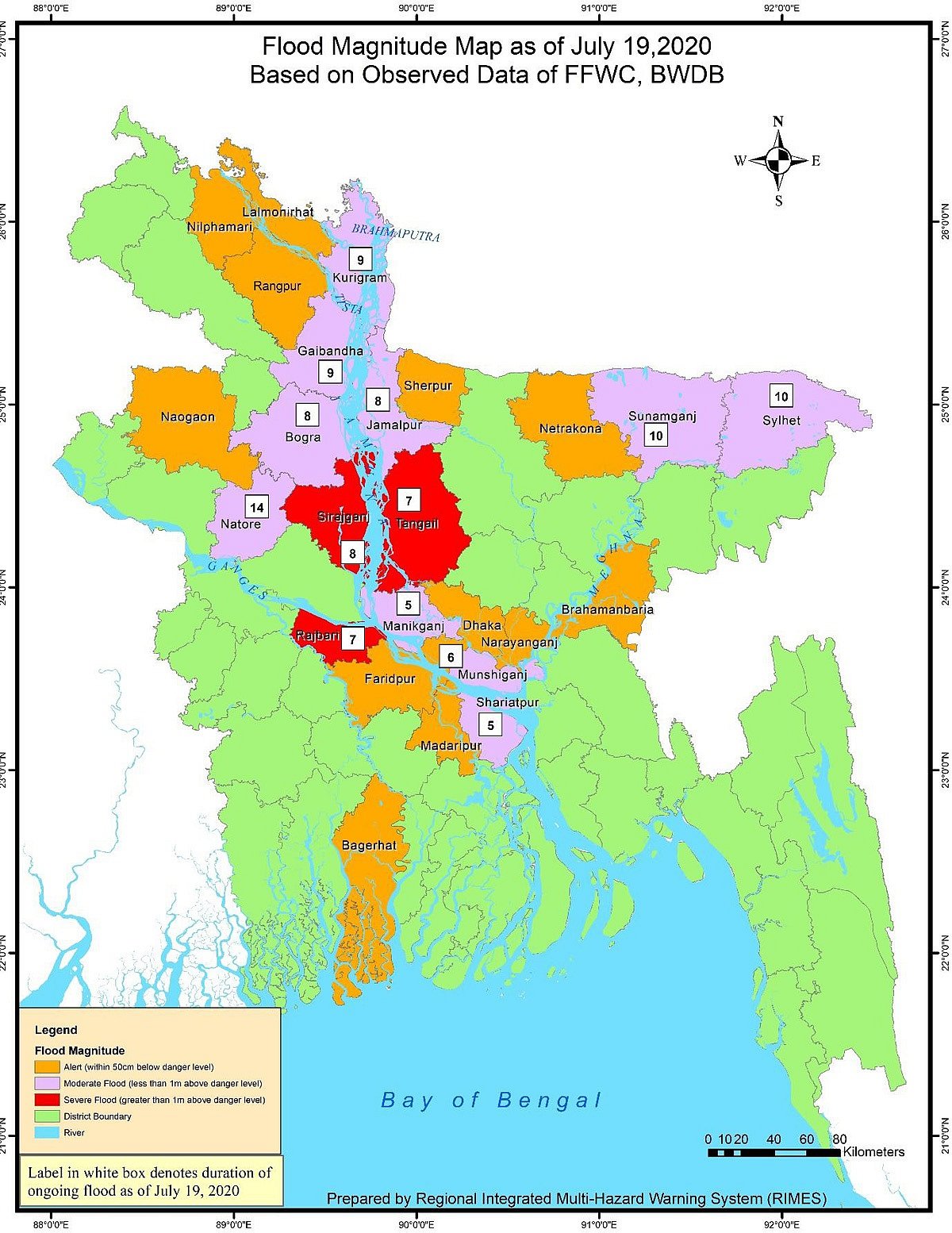
Of the 101 monitoring stations for rivers across the country, the water level had fallen in 39 and risen in 56 stations until Sunday evening. Water in 13 rivers was flowing above the danger level at 22 points.
The Brahmaputra-Jamuna river may remain stable on Monday, according to a 10-day forecast by the Flood Forecasting and Warning Centre.
The flood situation in Kurigram, Bogura, Gaibandha, Sirajganj, Jamalpur, Tangail and Manikganj districts will remain almost unchanged over the next 24 hours.
The flood situation in the seven aforementioned districts may deteriorate again. The floods could last until the end of July.
The water level of Dhaleshwari river at Jagir station in Manikganj may cross the danger level over the next five days.
The trend of declining water levels in Ganges-Padma Basin and Upper Meghna Basin in the northeast continued on Sunday.
The water level at Goalondo Point in Rajbari district, Bhagyakul point in Munshiganj district and Sureshwar point in Shariatpur district may remain static over the next 48 hours and then rise again. The flood situation in the lower parts of these districts may stay steady for the next 10 days.
The water levels of the rivers around Dhaka may also rise in the next few days. Balu river at Demra point, Turag river at Mirpur point and Dhaleshwari river at Rekabi Bazar point may cross the danger levels in the next seven days.
The water level of Lakshya river in Narayanganj may cross the danger level within the next five days.













