Published : 17 Aug 2026, 09:25 PM
Updated : 08 Sep 2026, 09:33 AM


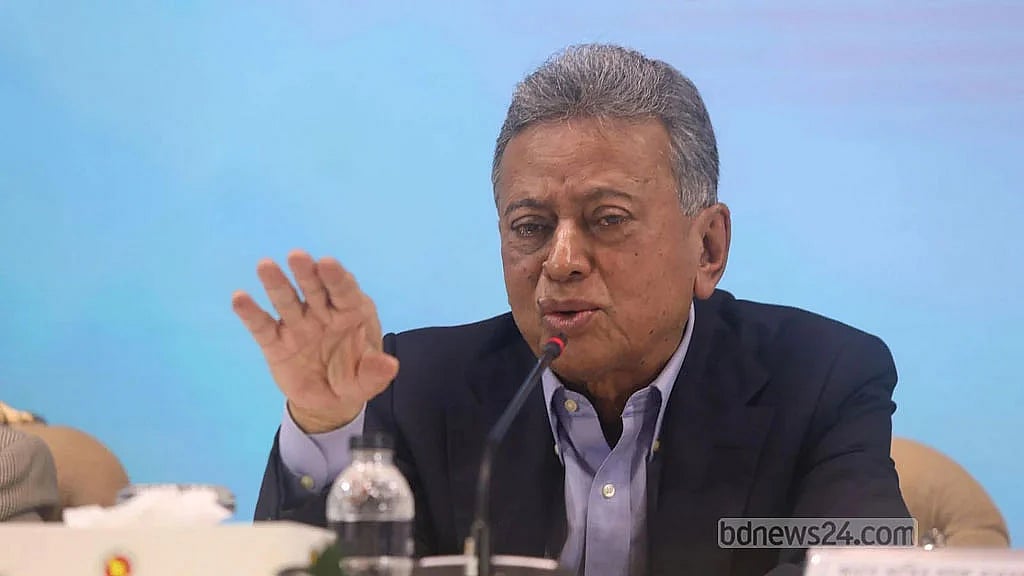
The government will implement the new pay scale for public servants this year, Finance Minister Amir Khosru Mahmud Chowdhury has said, although he indicated that more discussions are needed before a final decision.
He made the assurance on Monday after a meeting at the finance ministry in Dhaka to review the judicial pay scale, saying the government would present the full decision once discussions on different aspects of the National Pay Commission's recommendations are complete.
"We had a long discussion [on Monday], and more discussion is needed," Khosru said. "It will happen in time, certainly within this year."
Home Minister Salahuddin Ahmed, Law Minister Md Asaduzzaman, Finance Advisor Rashed Al Mahmud Titumir and Finance Secretary Md Khairuzzaman Mozumder attended the meeting.
Khosru said the day's discussion covered one aspect of the pay scale, with other issues still to be examined before the government makes a final decision.
A day earlier, the Prime Minister's Principal Secretary ABM Abdus Sattar had said a new pay scale for public servants could be announced "at any moment".
He also acknowledged that raising salaries could put further pressure on inflation and make things harder for ordinary people.
Twenty days before the February election, the Ninth National Pay Commission recommended raising the minimum basic salary for public servants to Tk 20,000 from Tk 8,250 and the maximum to Tk 160,000 from Tk 78,000.
The previous interim government's finance advisor Salehuddin Ahmed had said funding would be allocated to implement the commission's recommendations.
He had also said a committee would be formed to examine the proposals.
The post-election government has since begun implementing its pledges on social security, creating additional spending needs.
As the previous government's budget had not made provisions for those expenses, media reports said money earmarked for the new pay structure was being considered for other allocations.
The government's spending has also come under pressure from higher costs of fuel and essential imports amid the war in West Asia and a fuel supply crunch.
Although the new fiscal year's budget included plans to implement the new pay structure, questions have emerged over whether sufficient funds are available.
The government is also discussing a possible new loan agreement with the International Monetary Fund, with questions raised over how the additional salary costs would be financed.
A new Pay Commission was formed in 2025, 12 years after the Eighth Pay Commission was set up in 2013.
The commission submitted its report to the then interim government chief advisor Muhammad Yunus on Jan 21.
The commission's chief had said at the time that implementing the proposals would require Tk 1.06 trillion.
The government currently spends Tk 1.31 trillion annually on 1.4 million government employees and 900,000 pensioners.
After the finance minister left, reporters asked the home minister about other issues, including the law-and-order situation six months into the BNP government.
Salahuddin said the public would judge if the situation had improved, while claiming the government had made progress but needed more time to meet public expectations.
"We're barely six months in, and we've already carried out a lot of reform work. You've seen many praiseworthy steps on law and order.
“We expect much of what we've implemented, and what we've started, within 180 days to be widely appreciated."
He added, "Under the prime minister's leadership, we've handled a couple of critical moments very successfully. The war in West Asia triggered a global crisis in oil and gas supply, and Bangladesh wasn't spared either.
“But we held off raising fuel prices for a full month."
Prices were later raised at a "tolerable" level once the peak season had passed, he claimed.