Published : 21 Sep 2026, 11:43 PM
Updated : 21 Sep 2026, 11:43 PM


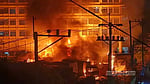
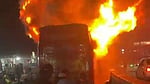
A mobile vehicle loaded with CNG cylinders caught fire inside Preety Group’s S Suhi Industrial Park at Ashulia’s Jamgora in Savar on Sunday.
It was followed by a deafening explosion that killed seven people and injured at least 16, according to Fire Service and Civil Defence.
The Fire Service began a preliminary investigation after containing the blaze on Monday and identified possible causes.
Jirabo Modern Fire Service Senior Station Officer Shahabuddin said the factory had a Titas gas connection, but low pipeline pressure meant gas was supplied from cylinder-loaded lorries as an alternative.
“Diesel prices have risen 17.4 percent, from Tk 115 to Tk 135. The cylinders used in these lorries were expired and extremely risky. We suspect the fourth lorry suddenly exploded because of excess pressure inside a cylinder or a technical fault,” he said.
The blast scattered parts of the vehicle and cylinders, with one fragment landing on the roof of a 10-storey building. The main supply line also caught fire.
Seven to eight such vehicles, each carrying 25-30 CNG cylinders, had been parked beside the factory wall.
Fire Service said gas was unloaded directly from the cylinders. Six units fought the fire for nearly two hours after receiving the alert around 6:45pm Sunday; the rescue operation ended around 11:45pm.
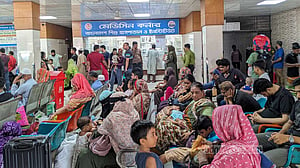
Five charred bodies were recovered from the lorry, including one from the driver’s seat. A woman, Zainab Begum, 55, died after being struck by flying cylinder debris, while Bulbul died later at Dhaka Medical College Hospital’s burn unit, taking the toll to seven.
At least 16 people, including transport workers, pedestrians and Ansar members, were injured; three remain at the burn unit.
‘It Was an Illegal Method’
Fire Service Deputy Assistant Director Hafizur Rahman said, “Bringing CNG to factories in cylinders in this way is completely illegal.”
Bangladesh Petrol Pump Owners Association Joint Convenor Mizanur Rahman Ratan said, “These are illegal, so our association prohibits them. But this cannot be stopped. Factories use CNG this way for generators, boilers and other needs. I think the government knows about it unofficially.”
Five or six vehicles were completely burned out, with twisted wreckage and shattered cylinders strewn across the compound.
Glass shattered at Preeti Composite and nearby FNF Trend Fashion Ltd, around 50m away. Shops and market sheds were also damaged.
Witness Abdur Rahman said, “At first I thought bombs were exploding one after another.”
Bangladesh Garment and Sweater Workers Trade Union Centre leader Khairul Mamun Mintu demanded identification of the dead, compensation and medical costs, as well as action against those responsible for using expired cylinders.
Police said the bodies were badly burned. Hafizur said DNA testing would be needed for identification.
The Fire Service formed a four-member probe committee led by Assistant Director Kazi Nazmul Zaman. A separate five-member administrative committee is also being formed.
5 Factories Closed
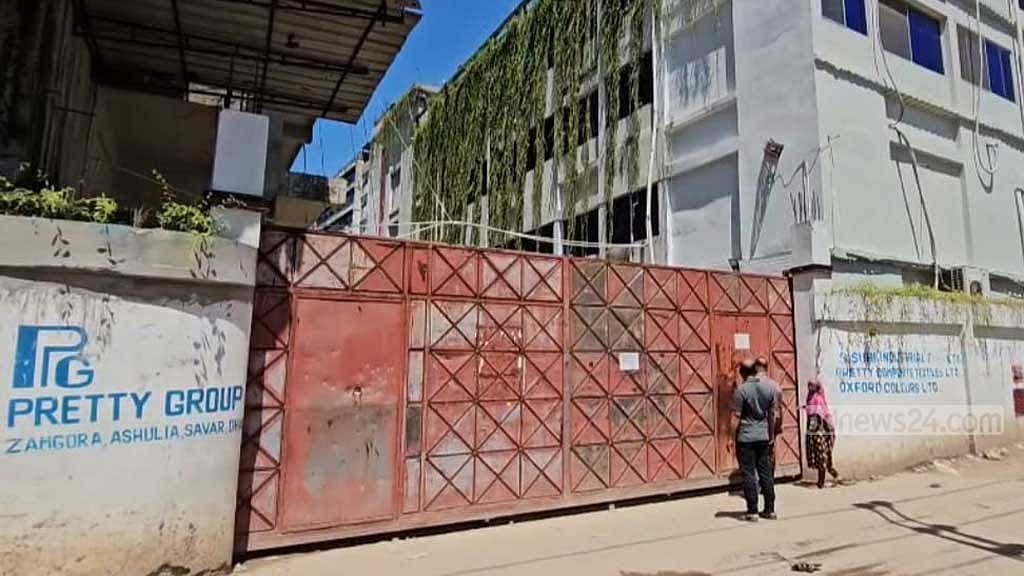
Preety Group closed five factories on Monday: Preety Composite Textile Ltd, Preety Composite Garments Ltd, Oxford Colors Ltd and S Suhi Industrial Park Ltd were named in the notice, which gave no specific reason. The group’s HR manager did not respond to calls.
An unsigned factory statement blamed a spark from an external 11kV power-line transformer affecting an LPG system. It said the incident occurred about 500 feet from the main factory and caused no damage to production facilities or export goods.
Dhaka Palli Bidyut Samity-1 General Manager Akhtaruzzaman Laskar rejected that claim, saying the fire began with the cylinder explosion and accusing the factory of blaming electricity to cover its own wrongdoing.
A workers’ federation later held a human chain and mourning procession in Jamgora, demanding compensation for victims’ families and treatment for the injured.