Published : 19 Oct 2026, 09:41 PM
Updated : 19 Oct 2026, 09:41 PM


Egypt's parliament is expected to vote next week on whether to authorise the armed forces to help defend Saudi Arabia against attacks by Yemen's Houthis if Riyadh requests its support.
The move would bring the Arab world's most populous country closer to direct military involvement in the widening conflicts unleashed by the US-Israeli air assault on Iran in February.
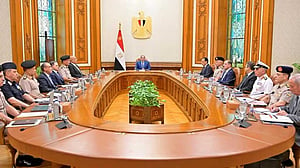
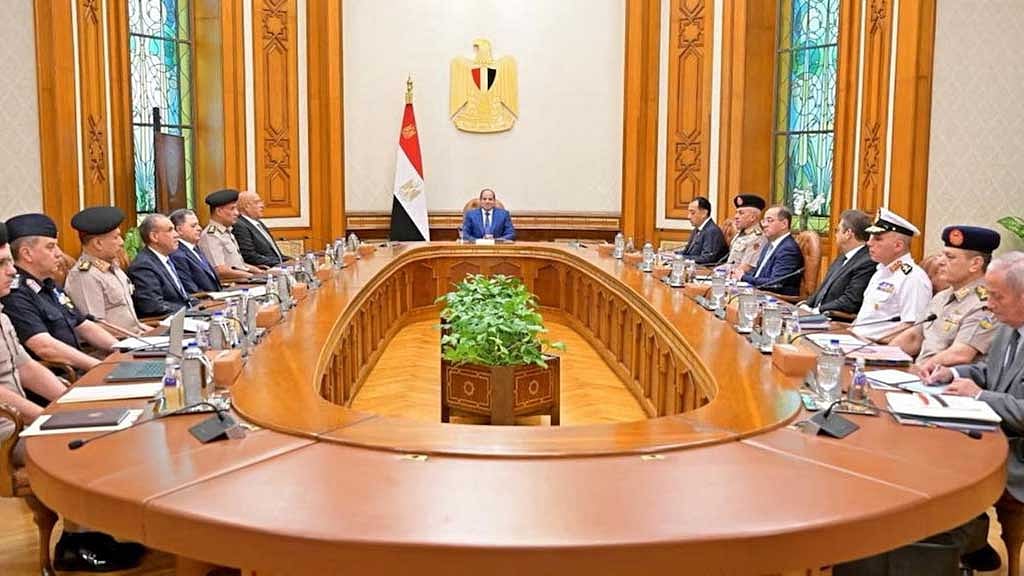
President Abdel Fattah al-Sisi requested the approval in a speech on Saturday, saying Egypt would "never, never forget our brothers in the Gulf" and telling Saudi Arabia's leaders that Cairo would "take any measure to protect you".
Like the Gulf states that have come under attack from Tehran in the Iran war, Egypt is a longstanding partner in the US-led security order that is being tested by the conflict.
WHAT IS EGYPT'S STANCE ON THE IRAN WAR?
Sisi's comments marked a clear escalation from the more measured tone authorities have tended to adopt since the Iran war started. Though Egypt has repeatedly voiced strong support for its Gulf allies, Cairo has stopped short of publicly committing itself to a direct combat role in the conflict.
In May, the presence of Egyptian Rafale fighter jets in the United Arab Emirates was disclosed in Emirati state media coverage of an official visit by Sisi.
Egyptian coverage of the visit did not mention the deployment. When Saudi Arabia signed a joint defence agreement with Turkey and Pakistan in August, Egypt did not join, though it said it was considering it.
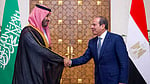
The tone started to shift after the Houthis stepped up attacks on Saudi oil and other infrastructure. Saudi Arabia’s Crown Prince Mohammed bin Salman last month visited Egypt, where he discussed the need to ensure freedom and security of navigation in the Bab el-Mandeb Strait and the Red Sea, on which both countries have long coastlines.
WHAT'S AT STAKE FOR EGYPT?
Egypt's economic stability has long been tied up with the oil-producing Gulf. Remittances from Egyptian expatriate workers there are an important source of foreign currency and income for families back home at a time of double-digit inflation worsened by surging food and fuel prices.
Saudi Arabia, the UAE and other Gulf countries have been among Sisi's key financial backers, providing tens of billions of dollars of aid, central bank deposits and investments since the army overthrew President Mohamed Morsi, a senior Muslim Brotherhood figure, in 2013.
"We can never forget how our brothers in the Gulf states stood by Egypt during that period," Sisi said in his speech.
Saudi Arabia has a $5.3 billion deposit at Egypt's central bank due this month along with $267 million in interest, central bank data shows.
WHAT ABOUT SECURITY?
Growing security concerns have also pushed Cairo towards a more active stance, analysts say. A drone strike on two gas vessels at the Mediterranean port city of Damietta in July underscored that Egypt could not expect to keep itself fully isolated from the conflict.
"I think they realise that they can't be on the sidelines about this indefinitely," said H. A. Hellyer, a scholar at the Royal United Services Institute think tank.
For the authorities, the economic and security concerns were "one and the same," he said.
Saudi Arabia and Egypt also have a shared interest in securing shipping through the Red Sea, an outlet for Saudi oil blocked from leaving the Strait of Hormuz. Egypt earns billions of dollars a year from fees on Suez Canal traffic.
These overlapping concerns mean "Saudi Arabia's security constitutes a dimension of Egyptian national security," said Sherif Aref, an Egyptian political researcher and journalist.
WHAT SORT OF MILITARY DOES EGYPT BRING TO THE TABLE?
Egypt has one of the Arab world's largest armed forces, with hundreds of thousands of active personnel and large air, land and naval inventories, according to military analysts. Egypt sources equipment from a range of countries, and its air force operates US-made F-16s, French Rafales and Russian-made MiG-29s.
Egypt receives about $1.3 billion a year in US military aid, which helps fund its purchases of American military equipment. Washington waived human rights conditions on a tranche of the funds this year after what it called Cairo's "helpful role" since the Iran war began.
In the years after the 2011 uprising that ousted President Hosni Mubarak, the armed forces fought a counterinsurgency campaign against Islamist militants in the Sinai Peninsula.
Egypt also contributed air and naval forces to the Saudi-led coalition that intervened in Yemen in 2015, and conducted airstrikes against Islamic State targets in Libya during that country’s civil war.
Egypt has not undertaken a large-scale foreign ground deployment since the 1991 Gulf War, when its troops joined the US-led coalition to drive Iraqi forces from Kuwait. Nearly three decades earlier, President Gamal Abdel Nasser had sent Egyptian forces into Yemen in a costly intervention later than the US involvement in the Vietnam War.
WHAT SORT OF SUPPORT IS LIKELY?
Sisi's speech and subsequent statements have not specified what sort of military forces, if any, Egypt would ultimately intend to send. A deployment of Egyptian troops inside Yemen itself is unlikely, military analysts say.
More likely interventions might include air defence and naval support, said Samir Ragheb, a retired Egyptian military officer who heads the Arab Foundation for Development and Strategic Studies think tank.
"The threats, missiles and drones, require air defence and air forces," he said, adding that the navy could be used for protecting ships, naval operations against piracy and protecting the Saudi coastline.
Still, the entry of another large conventional Arab military would not "suddenly solve the Houthi problem", said Andreas Krieg, senior security studies lecturer at King's College London.
"The Houthis are difficult precisely because they generate disproportionate effect through missiles, drones, dispersed forces and geography. Egypt cannot bomb that problem away," he said.
"What Cairo can do is strengthen Saudi resilience, improve Red Sea control, share the defensive burden and increase the political cost of continued attacks."