


Published : 18 Dec 2014, 12:16 AM
Updated : 19 Oct 2022, 07:46 PM


Also Read:
How Obama will relax US-Cuba policyAlso Read:
Who is Alan Gross and what did he do?Announcing the end of what he called a "rigid" policy of isolation of Cuba that had been ineffective, Obama said the United States would move toward normal ties and would open an embassy in Cuba.
Obama discussed the changes with Cuban President Raul Castro on Tuesday in a nearly hour-long telephone call.
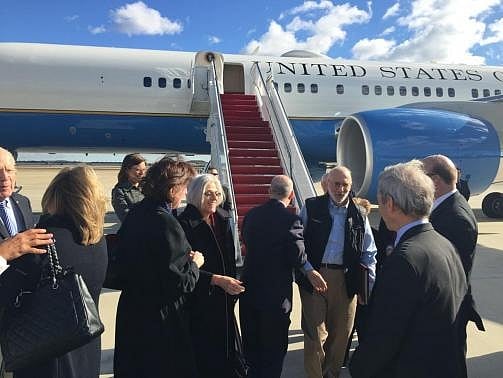
Castro spoke in Cuba as Obama made his announcement on a policy shift made possible by the release of American Alan Gross, 65, who had been imprisoned in Cuba for five years.
Cuba is also releasing an intelligence agent who spied for the United States and was held for nearly 20 years, and the United States in return freed three Cuban intelligence agents held in the United States.
Gross' case had been a block to any movement by Washington toward improved ties.
Obama said Pope Francis had played an active role in pressing for his release. Francis congratulated both countries on their forging of diplomatic ties.
The policy shift will mean a relaxation in some aspects of commerce and transportation between the United States and Cuba, but it does not mean an end to the longstanding trade embargo, which needs congressional approval that Obama may face a struggle getting.
And while travel restrictions that currently make it hard for most Americans to visit will be eased, the door will not yet be open for broad US tourism on the Caribbean island.
Cuba and the United States have been ideological foes since soon after the 1959 revolution that brought Raul Castro's older brother, Fidel Castro, to power.
They have not had diplomatic relations since 1961 and the United States has maintained its trade embargo on the island, 90 miles (140 km) south of Florida, for more than 50 years.
Obama said he would ask Congress to lift the embargo.
Obama will likely face resistance on this.
Although a growing number of US lawmakers favour more normal ties with Cuba, those lawmakers are still mostly Democrats, and after big midterm election gains in November, Republicans will control both houses of Congress in the new year.
Senator Marco Rubio, a Cuban American Republican, said he would use his role as incoming chairman of a key Senate Foreign Relations Committee to try to block the plan and was committed to doing all he could to "unravel" it.
Cuban Americans
News of the changes rippled fast through the 1.5 million-strong Cuban American community in the United States, hailed by some who are keen to see closer ties with the island and condemned by others who have opposed any warming while either of the Castro brothers is in power.
"It's amazing," said Hugo Cancio, who arrived in Miami in the 1980 Mariel boatlift and runs a magazine with offices in Miami and Havana.
"This is a new beginning, a dream come true for the 11.2 million Cubans in Cuba, and I think it will provoke a change of mentality here too in this community."
Flashpoints in US-Cuba hostilities included the Cuban missile crisis of October 1962 that brought the world to the brink of nuclear war.
Washington's policy has survived the demise of Soviet communism and the end of the Cold War as the United States pushes for democratic reform in Cuba.
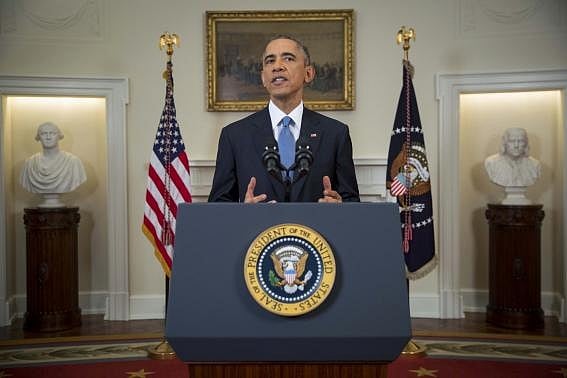
US President Barack Obama announces a shift in policy toward Cuba while delivering an address to the nation from the Cabinet Room of the White House in Washington, Dec 17, 2014. Reuters







