


Published : 09 Oct 2021, 12:17 PM
Updated : 08 Apr 2022, 01:15 PM


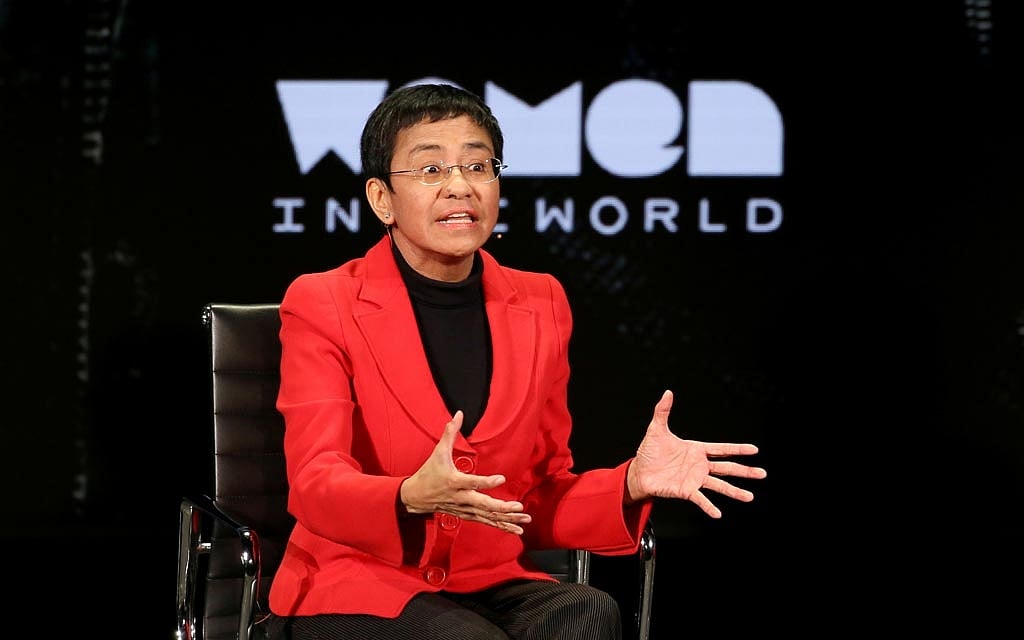
In an interview, Ressa said she was “breathless, stunned and happy” upon hearing about the honour, which she shared with Russian journalist Dmitry Muratov. She said she was in the middle of a live panel discussion about a PBS documentary — which follows her struggles in the war that President Rodrigo Duterte of the Philippines has waged on the press — when she got a call telling her that she had been awarded the prize.
“I didn’t know how to react, and then, wow,” Ressa said. “The folks clapped and asked me for a reaction and it hit me. It’s so much that we’ve gone through in the last 5 1/2 years and then this. These highs and lows are making me crazy.”
Ressa, a co-founder of the independent news site Rappler, said that the Philippine government had filed 10 arrest warrants against her, with seven legal cases still pending. Authorities have essentially banned her from travelling, denying her last four requests to go overseas.
“I’ve just seen my rights being taken away, very slowly,” she said. “What we’re seeing is a thousand cuts to the body politic, to our democracy.”
In selecting two journalists for the Peace Prize, Ressa said, the Nobel committee showed the world “how dangerous it is to be a journalist today. We’ve never been under attack as much as we have been in the last few years.”
Speaking earlier on her publication’s Facebook Live platform, Ressa referred to Duterte’s sweeping crackdown on drugs, which Rappler has covered extensively, uncovering evidence of extrajudicial killings.
She called it a “moment that is so existential, the defence of our democracy in the Philippines, the defence of our rights, human rights, the fact that we have no idea exactly how many people have been killed in a brutal drug war.”
In the drug campaign, she said, police had issued conflicting figures on the numbers of people killed — while rights groups have said that the true toll could reach 30,000.
“This hall of mirrors has to change at a time when accountability does count,” she said. “And I think that what we have to do as journalists is to just hold the line.”
“When you don’t have facts, you don’t have truth,” she added. “You don’t have trust. Trust is what holds us together to be able to solve the complex problems our world is facing today.”
© 2021 The New York Times Company













